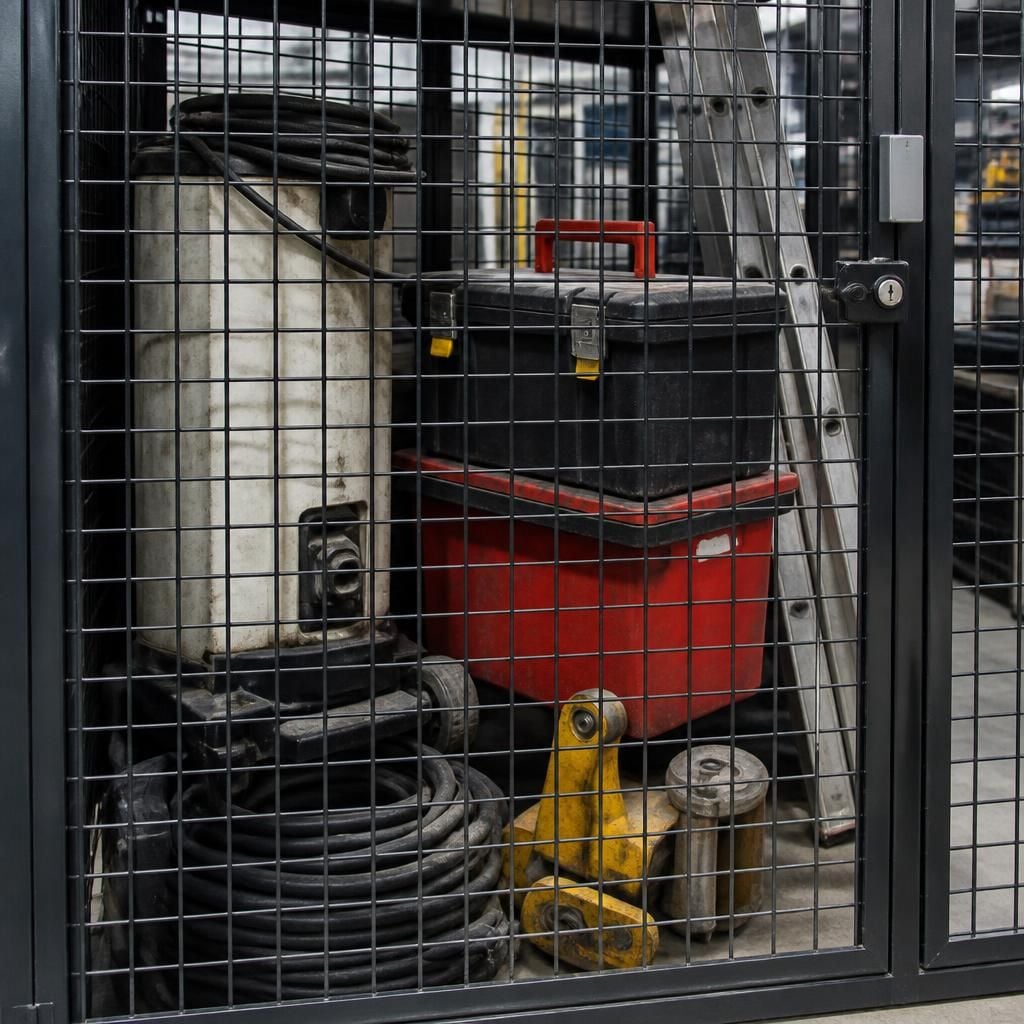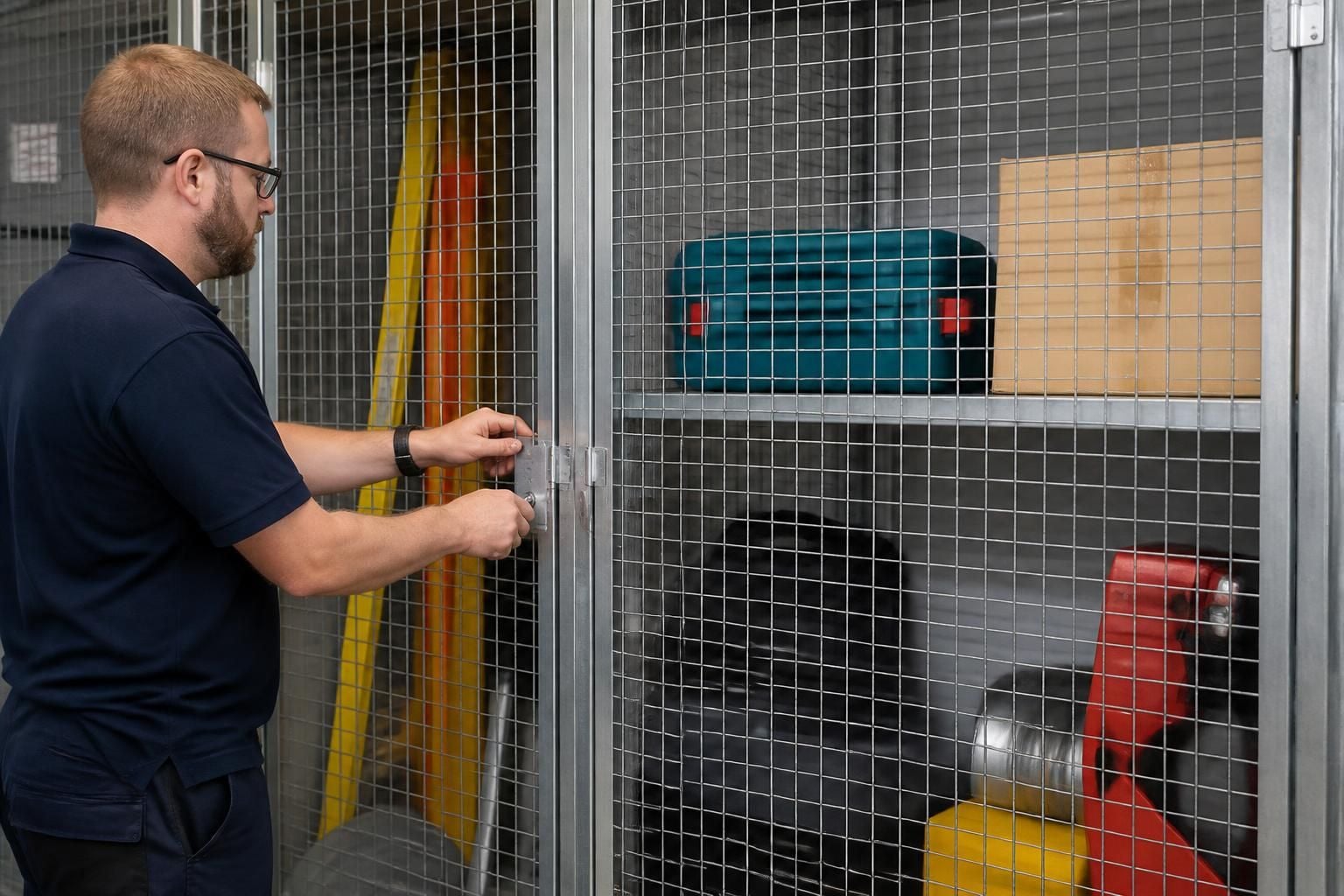
Are steel mesh lockers suitable for storing bulky or irregular items?
Steel mesh lockers can suit bulky or irregular items when their dimensions, access openings and load capacity match the stock. For oversized or awkwardly shaped goods, we assess the storage requirement and may recommend specialist storage or pallet racking instead.
Steel mesh lockers can accommodate bulky or irregular stock when the internal space, door opening and load rating suit the items. The shape alone does not determine suitability.
Start by checking the items’ full dimensions, including handles, packaging, protruding parts and anything removed before storage. Compare these measurements with the locker’s clear internal dimensions, not only its external size.
- Door opening: An item may fit inside the locker but fail to pass through the door.
- Internal layout: Shelves, dividers or compartments can reduce usable space and restrict awkward items.
- Load capacity: The combined weight must remain within the stated capacity for the locker and any internal components.
- Access: Staff should be able to place and remove stock without forcing items, overreaching or obstructing nearby routes.
- Handling: Heavy or unstable items may need a different storage method or additional handling controls.
Mesh construction can make stored goods easier to see and identify. It does not automatically provide protection from dust, moisture or impacts, so the environment matters.
Loose, long or unusually shaped items may be difficult to organise in standard compartments. In those cases, pallet racking, cantilever racking or specialist storage may provide clearer separation and easier access. The correct option depends on the stock, handling method and available layout.
Lockers may suit occasional-access equipment, tools or grouped workplace items. They may be less suitable where goods need frequent picking, pallet movement or direct access with handling equipment.
We can review the requirement through a no-obligation consultation, including a site meeting or survey where needed. We then prepare a written proposal and working drawings showing the proposed arrangement.
That review can consider locker position, access routes, surrounding equipment and future changes to the layout. Where the locker forms part of a wider storage project, pallet racking, mezzanine floors, partitioning or safety barriers may also need consideration.
The practical test is simple: each item must enter, sit safely and come out without creating an access or workflow problem. If it does not, another storage solution should be assessed before installation.
Bulky stock often loses usable capacity when stored in small compartments. A steel mesh locker suits items that need a defined, enclosed location rather than stacked storage.
Consider how each group is stored and retrieved. Keeping related equipment together can make a locker practical, while mixed irregular stock may leave unused gaps and slow identification. This distinction helps you judge whether lockers support the working layout.