Are steel mesh lockers suitable for shared commercial storage areas?
Yes—steel mesh lockers can suit shared commercial storage areas when users need defined compartments, visible contents and controlled access.
Choose the layout, lock type and allocation to match stock, user numbers and workplace rules.
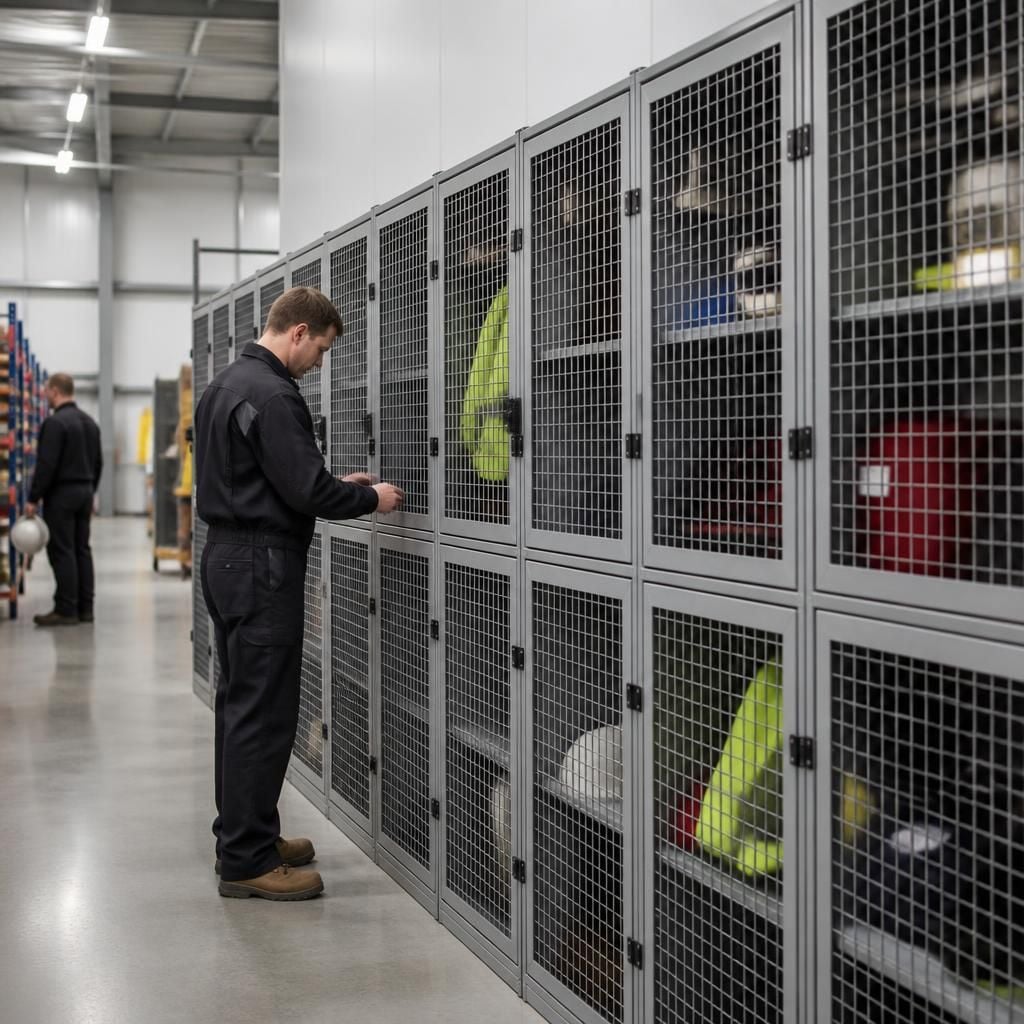
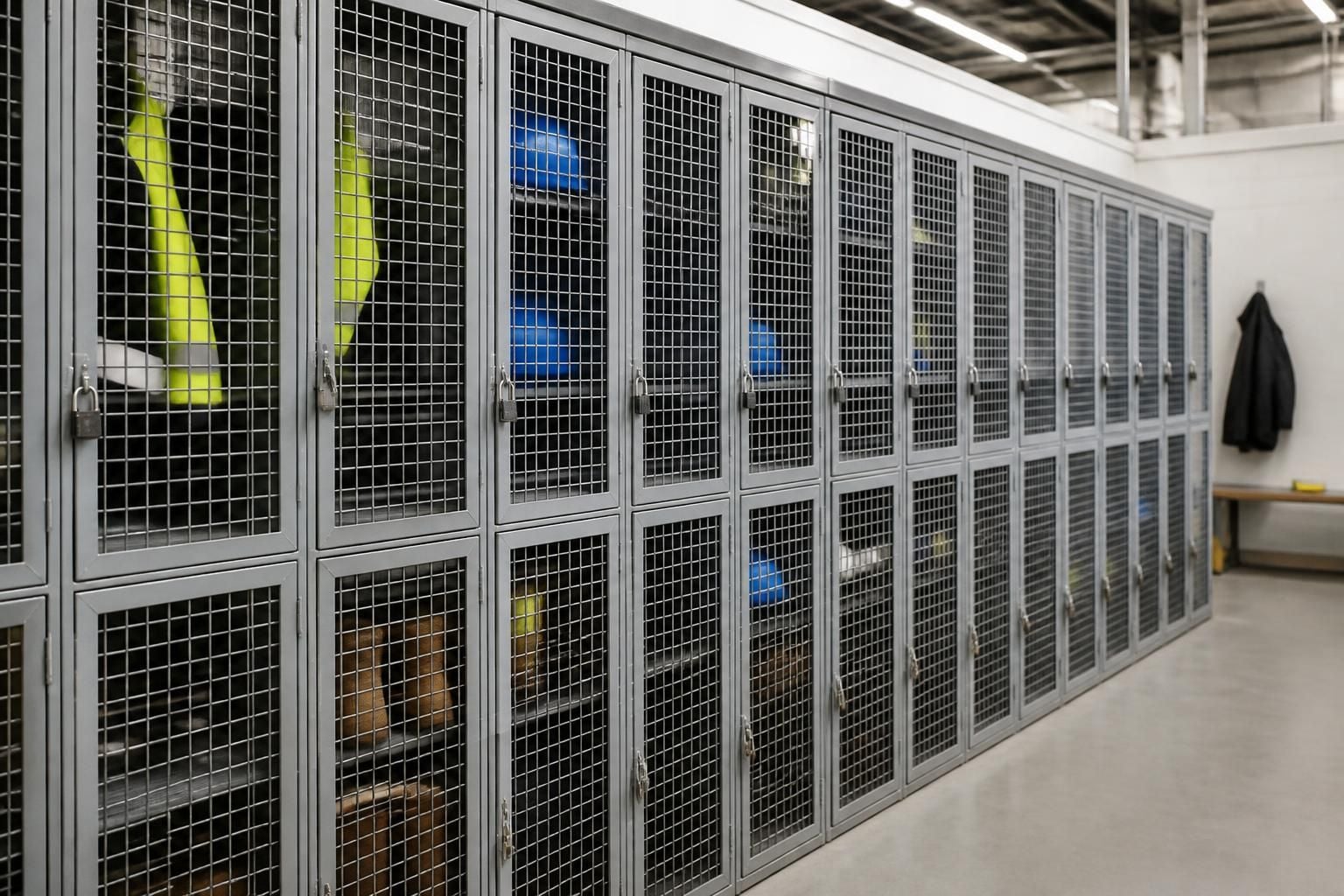
Steel mesh lockers can suit shared commercial storage areas when the layout, contents and access arrangements support communal use. They work best where several people need separate compartments within one organised storage zone.
Why shared users may benefit
- Individual compartments separate personal equipment, workwear, tools or small stock.
- Mesh construction lets users identify contents without opening every locker.
- Open mesh supports air movement around stored items.
- A numbered layout makes allocation and day-to-day control easier.
- Lockers can place shared storage beside the relevant work area, reducing unnecessary movement.
This arrangement can support warehouses, production areas and offices. It suits stock that needs separation but does not require concealed storage. It may be less suitable where contents must remain hidden from view.
Plan access for several users
Shared storage needs clear rules, not simply a row of lockers. Decide who receives each compartment and whether access belongs to an individual, team or shift. Record locker numbers and key allocations where this supports site control.
Consider how people approach the lockers, open doors and carry items away. Leave suitable circulation space around the installation. Keep locker doors away from fire routes, machinery access and busy picking paths. A site review can identify conflicts before installation.
The lock type should reflect the way the area operates. Key locks may suit fixed allocations, while other arrangements may suit changing users. Your site rules, user numbers and replacement-key process should inform the choice.
Consider the contents and working environment
Steel mesh lockers provide defined compartments, but they do not replace racking or shelving for larger stock. Heavy, long or irregular items may need another storage system. Small equipment and personal items are generally easier to manage within locker compartments.
Check the likely weight and dimensions before selecting the locker arrangement. Ensure users can place and remove items without unsafe reaching, lifting or obstruction. The installation position should also support cleaning and routine inspection.
Mesh visibility can assist informal checks in shared areas. It also means that stored items remain visible to nearby users. If equipment has a high value or requires privacy, consider whether mesh construction provides the protection and concealment required.
Use the layout to support workplace organisation
Group lockers by team, task or work zone where this matches the workflow. Keep frequently used items close to their point of use, without narrowing movement routes. Separate personal storage from materials that require controlled handling.
In an office, lockers can give staff a defined place for personal belongings without taking desk space. In a warehouse or industrial setting, they can separate workwear and smaller equipment from palletised or bulk storage.
Where lockers form part of a wider workplace layout, partitioning, office fit-outs or safety barriers may help define the surrounding area. These elements should support movement, visibility and site safety rather than create isolated obstructions.
Check suitability before ordering
Start with the available wall or floor area, the number of users, stored items and access arrangements. Review cleaning needs, surrounding equipment, floor condition and any workplace rules that affect the location.
Our consultation may include a site meeting and survey. We can then prepare a written proposal and working drawings showing the planned arrangement. This gives you a clearer basis for reviewing compartment sizes, positioning and access before installation.
For shared commercial storage, steel mesh lockers are most suitable when they create orderly individual storage without obstructing the wider workflow. The right choice depends on the contents, users and site layout rather than the locker material alone.
Shared use depends on simple locker management. Agree how compartments are released when staff, contractors or shifts change. A documented process can cover unclaimed items, damaged locks and locker condition without relying on informal arrangements.
Use consistent labels and keep the allocation record current. Periodic checks can identify blocked compartments, unsuitable contents or emerging housekeeping issues. This matters in offices, warehouses and production areas where several people use the same storage zone. Steel mesh lockers suit shared storage best when the physical layout and the management process work together.