What safety checks should be made when inspecting metal lockers?
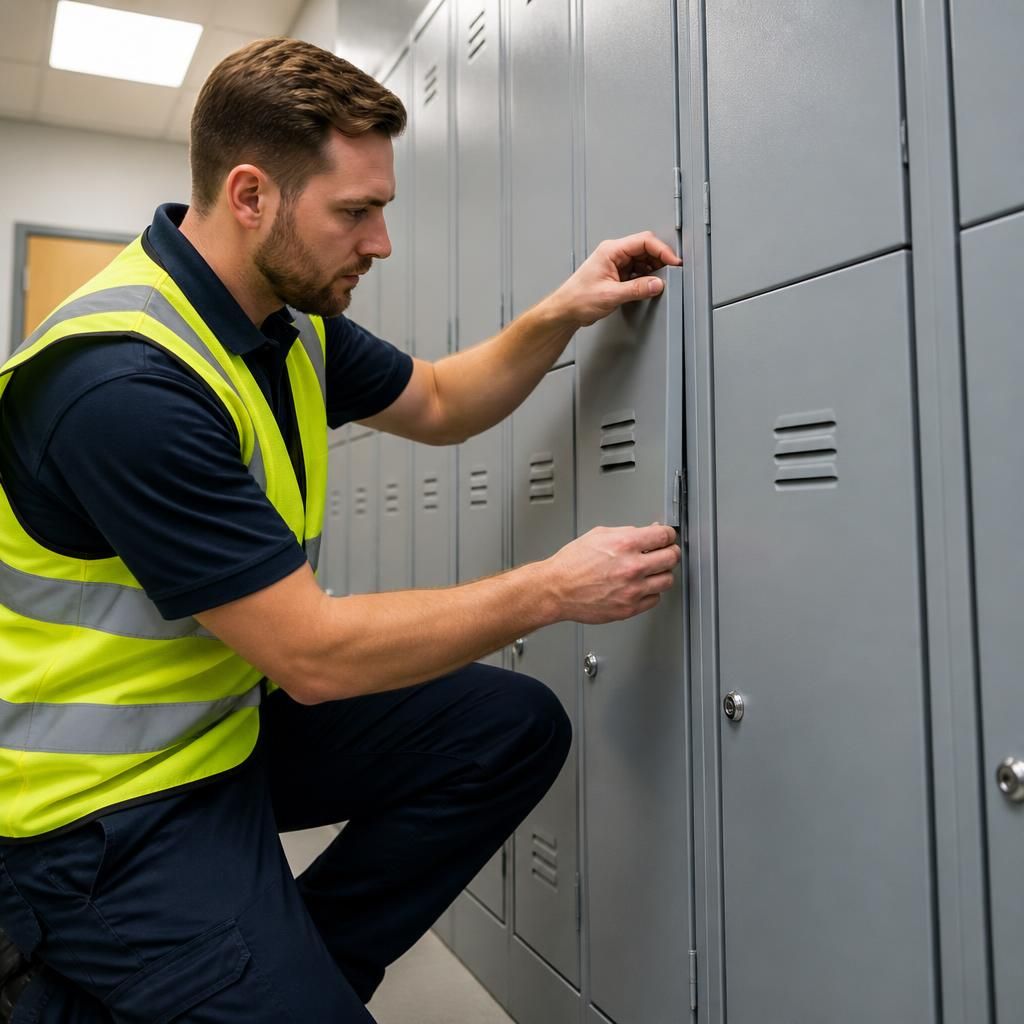
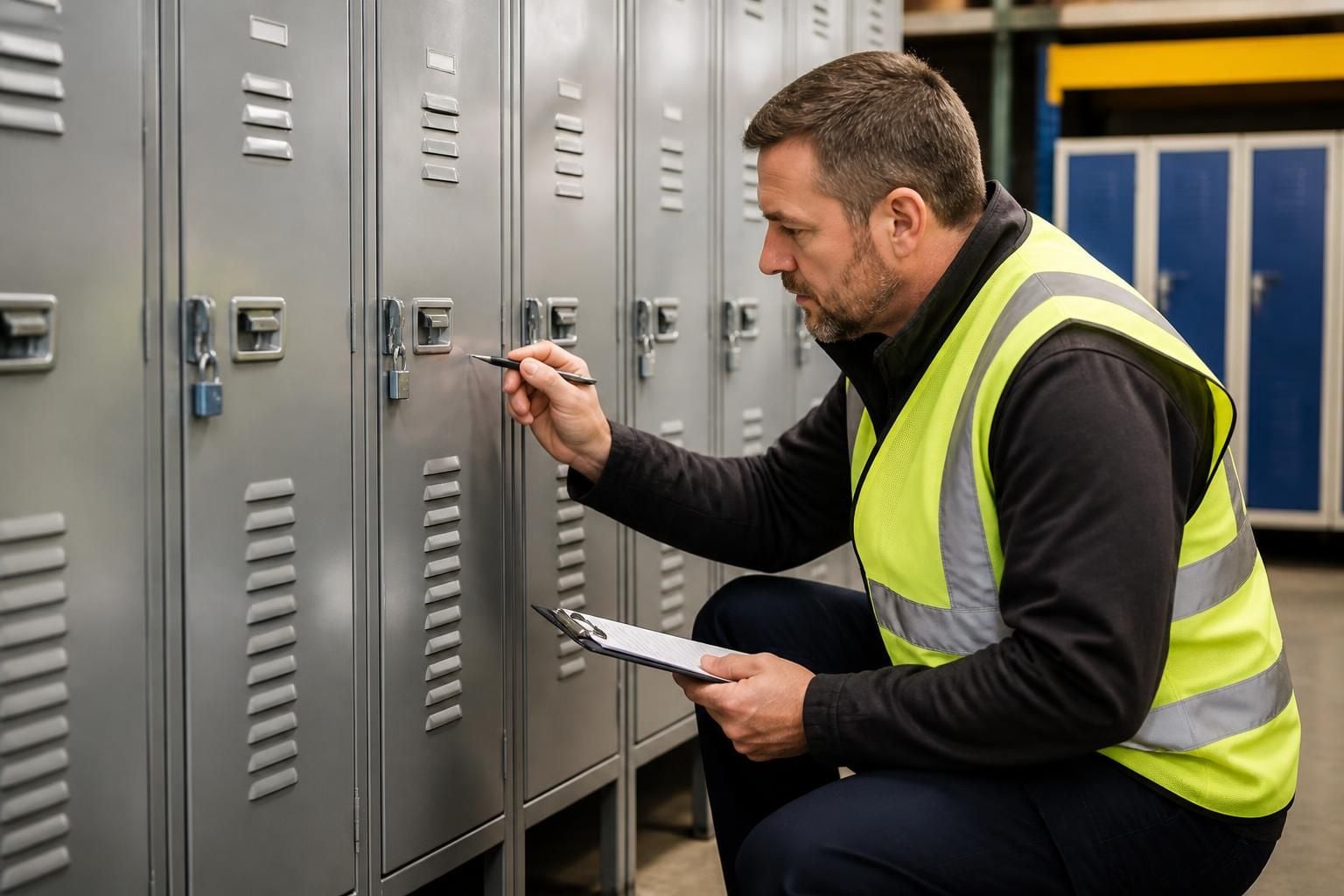
Check each locker for corrosion, dents, sharp edges, damaged doors, faulty locks, loose fixings and signs of instability.
Also confirm clear access, safe positioning and secure anchoring, then remove defective lockers from use until repairs are completed.
A thorough metal locker inspection checks operation, internal condition, use, surroundings and follow-up actions. It should assess more than visible damage.
Start with the inspection record
- Identify each locker, bank or compartment inspected.
- Record the inspection date, inspector and relevant workplace area.
- Check previous findings, reported problems and outstanding repairs.
- Note changes in use, staffing, stored items or surrounding equipment.
This information helps you identify repeated problems instead of treating each defect as an isolated event.
Check doors and internal operation
- Open and close each door through its full movement without forcing it.
- Confirm doors stay open when intended and close without trapping fingers.
- Check hinges, catches and handles for restricted movement or unusual resistance.
- Inspect shelves, hooks, rails and compartment floors for movement or overloading.
- Confirm internal fittings suit the items placed inside each compartment.
Do not allow users to climb on lockers, hang excessive weight from doors or force compartments shut.
Assess storage contents
- Check that stored items do not project into walkways when doors open.
- Look for wet clothing, leaking containers or residues that could damage the locker.
- Check whether chemicals, flammable materials or other hazardous items require separate storage arrangements.
- Make sure heavy items sit securely and do not fall when the compartment opens.
- Remove items that create pressure against doors, fittings or compartment dividers.
The locker should match the work taking place around it. A clothing locker, equipment locker and specialist storage unit may need different controls.
Review ventilation and environmental conditions
- Check that designed ventilation openings remain unobstructed.
- Look for condensation, persistent dampness or airless compartments.
- Consider whether nearby heat, moisture, dust or cleaning chemicals affect the locker.
- Inspect the floor beneath and around the locker for pooling water or contamination.
Environmental problems can affect stored items, user hygiene and the locker’s serviceable condition.
Consider fire and emergency risks
- Confirm lockers do not obstruct emergency equipment, escape routes or access to workplace controls.
- Check that users are not storing ignition sources or unsuitable combustible materials inside.
- Review any locker location near machinery, heating equipment or processes creating additional risk.
- Include locker use within the relevant workplace risk assessment.
Where the inspection identifies a serious risk, control the affected compartment or area immediately. Do not wait for routine maintenance.
Record findings and close actions
- Describe the defect or risk clearly, using the locker identification reference.
- Set out the required action, responsible person and target completion date.
- Record temporary controls, such as restricted use or supervised access.
- Reinspect the locker after repair or alteration.
- Keep evidence that the action was completed and the risk reviewed.
Inspection frequency should reflect the locker’s environment, intensity of use, stored contents and previous findings. Follow relevant workplace procedures and manufacturer instructions where available.
Repeated failures may indicate unsuitable locker design, incorrect use or a wider layout problem. A site survey can review the storage arrangement, user movement and replacement requirements. We can then prepare written proposals and working drawings where a revised installation is needed.
Check for alterations as well as damage. Look for drilled holes, removed panels, added fittings or replacement parts that differ from the original specification.
Compare the locker with available manufacturer instructions and site records. An alteration can affect door movement, compartment strength or safe use without obvious external damage. Record the change and restrict use until the responsible person confirms that the locker remains suitable.