


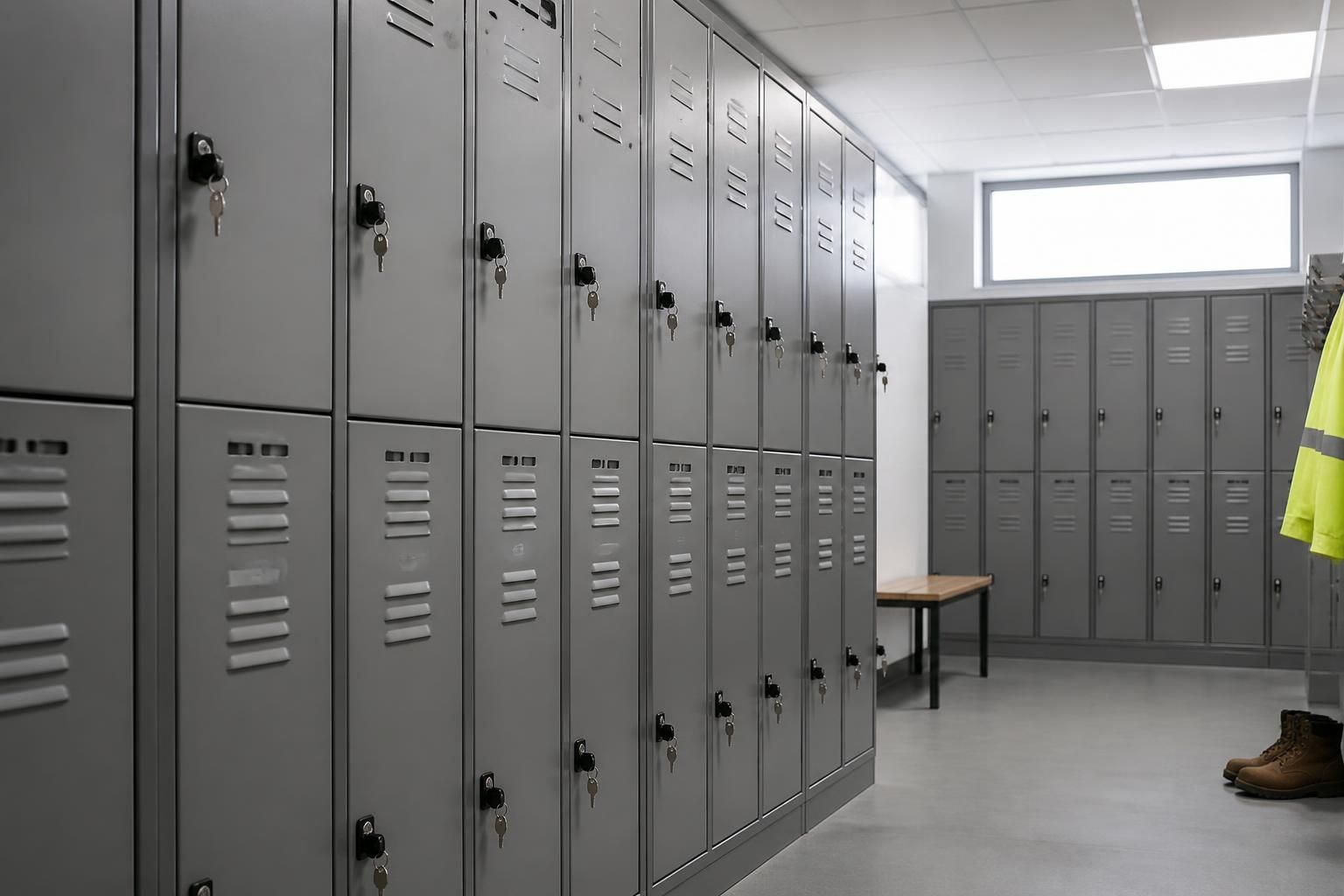
What affects the cost of secure metal lockers?
The cost of secure metal lockers is mainly affected by their size, construction, finish, locking system, internal features, quantity and installation requirements. A site assessment can establish the appropriate specification, including whether lockers need fixing, ventilation, specialist security features or fitting into a restricted space.
The cost of secure metal lockers depends on the total specification and the work needed to place them safely in the building, not just on the price of the locker units. A like-for-like comparison should therefore consider the intended use, site conditions, delivery arrangements, accessories, preparation and any future changes to the installation.
Intended use and level of security affect the specification before a price can be calculated. Lockers for personal belongings may require a different construction and locking arrangement from units used for tools, equipment, documents or controlled stock. The environment also matters: areas exposed to dirt, moisture, impact or frequent use may call for more robust materials or protective treatments. A higher level of physical security can involve stronger doors, reinforced components or more controlled access, all of which may increase the cost compared with a basic locker.
The layout of the locker bank can influence the amount of supporting work involved. A straightforward run against an unobstructed wall is generally simpler to plan than an arrangement around columns, doorways, machinery, walkways or changes in floor level. The available clearance in front of the lockers is important too, because doors must be usable without obstructing circulation routes or creating conflicts with nearby equipment. Where the space is irregular, working drawings may be needed to confirm how the proposed arrangement will fit before manufacture or installation.
Site conditions can add to the project cost. A survey may identify uneven floors, weak or unsuitable fixing points, restricted access, low ceilings, narrow stairways, lifts that cannot take the required load, or other obstacles affecting delivery and assembly. Existing partitions, skirting, services and floor finishes may also need to be considered. If preparation, protection or minor alterations are required, these should be identified separately in the proposal rather than assumed to be included in the locker price.
Delivery and handling arrangements are another part of the calculation. The distance from the unloading point to the final position, the need to move units through an occupied workplace and restrictions on vehicle access can affect labour and logistics. Fully assembled units may need more room to manoeuvre, while units assembled on site can involve additional fitting time. The most suitable approach depends on the building and the proposed layout.
Accessories and internal arrangements can change the overall value of the order. Shelves, hooks, hanging rails, compartments, label holders, sloping tops, plinths and seating may be useful for particular users, but each adds to the specification. Accessories should be selected according to what the lockers need to store rather than added automatically. For example, a locker intended for clothing may need a different internal arrangement from one used for small tools or personal protective equipment.
Quantity and phasing should be considered alongside the immediate requirement. A larger order may need a more detailed delivery and installation plan, while a phased project may involve returning to the site or matching new units to an earlier installation. The lowest initial price is not necessarily the most useful comparison if different suppliers have allowed for different quantities, accessories, site works or completion arrangements. Requesting an itemised quotation makes these differences easier to identify.
Compliance and workplace planning may affect the specification even where they are not visible in the product price. Locker positions should not narrow escape routes, interfere with fire equipment, obstruct access to plant or create avoidable trip and collision risks. A business may also need to consider cleaning access, supervision, user capacity and how damaged or faulty units will be dealt with. These planning requirements can influence the layout and the work needed before the lockers are installed.
It is also sensible to distinguish the initial purchase cost from the longer-term cost of ownership. A cheaper unit may be unsuitable for the frequency of use or the conditions in which it will be installed, leading to replacement parts, repairs or earlier renewal. Conversely, adding features that are not needed can increase the initial cost without providing a practical benefit. The appropriate choice is the specification that matches the security, durability and usability required by the workplace.
A structured assessment helps establish the relevant costs. Spartan Direct’s consultation may include a site meeting and survey, followed by a written proposal and working drawings. These documents can clarify the proposed layout, specification, site assumptions and any work that falls outside the supply of the lockers. Where the project requires it, project management may extend from proposal and tender stage through installation and final commissioning.
When comparing quotations, check whether they clearly state the locker specification, accessories, delivery, assembly, preparation, fixing, removal of packaging and any exclusions. Confirm whether taxes, alterations and additional site visits are treated separately, and ask how changes to the agreed specification would be priced. Spartan Direct’s quotations are valid for 14 Business Days from issue, so the date and specification should be checked before approval. A site survey and written proposal provide a more reliable basis for budgeting than a broad per-unit estimate alone.
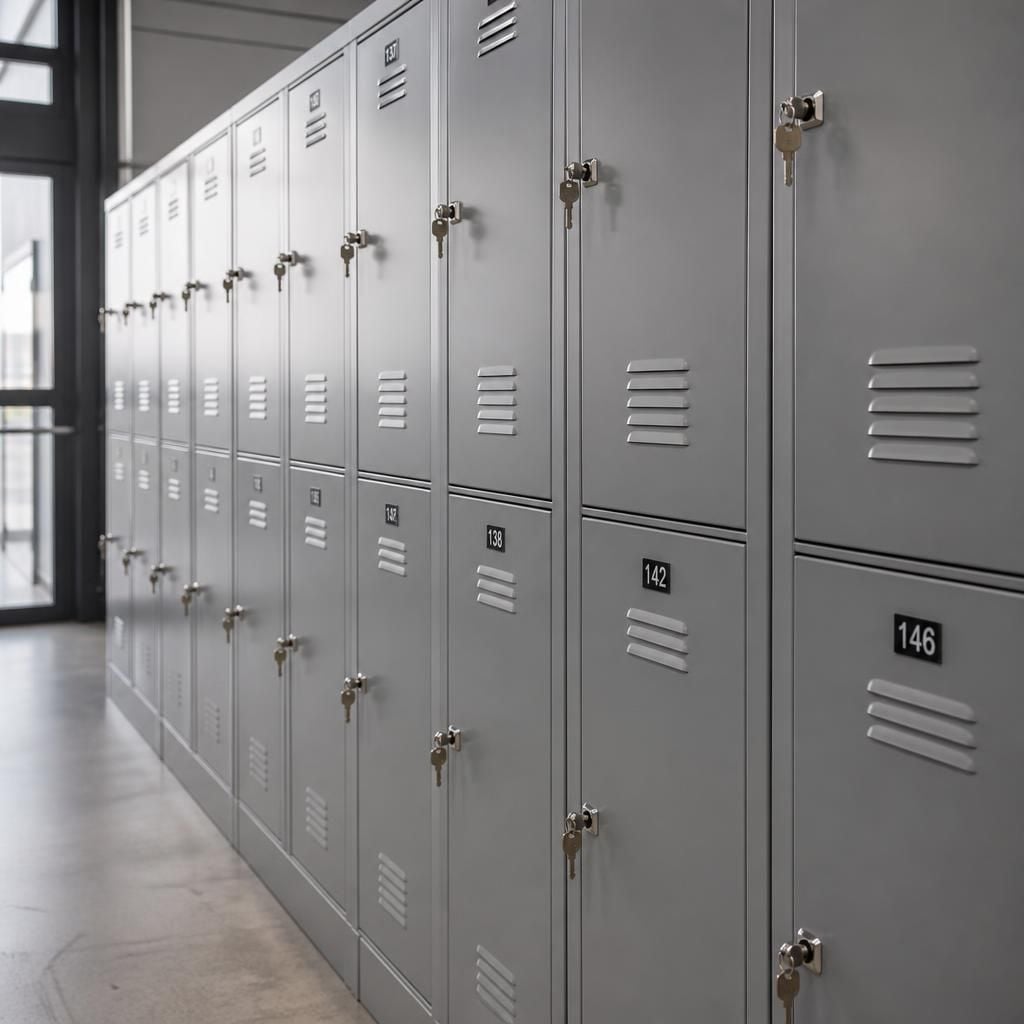
A locker bank’s cost can be affected by how compartments are grouped into a run, not just by the total number of doors. A quotation should make clear whether the price is based on individual compartments, complete locker units or a bank assembled from several sections.
Grouped lockers may require shared sides, end panels, divider sections, plinths or a suitable top treatment. These components can change the total specification, particularly where a bank finishes against a wall, sits beside another unit or needs a defined end for appearance and protection. A shorter run may also require different finishing components from a continuous arrangement.
When comparing prices, check the number of compartments, the number of sections and all external panels included. This prevents a lower apparent unit price from masking omitted components that are needed to complete the planned locker bank.



