What maintenance plan should accompany mobile tool storage lockers?
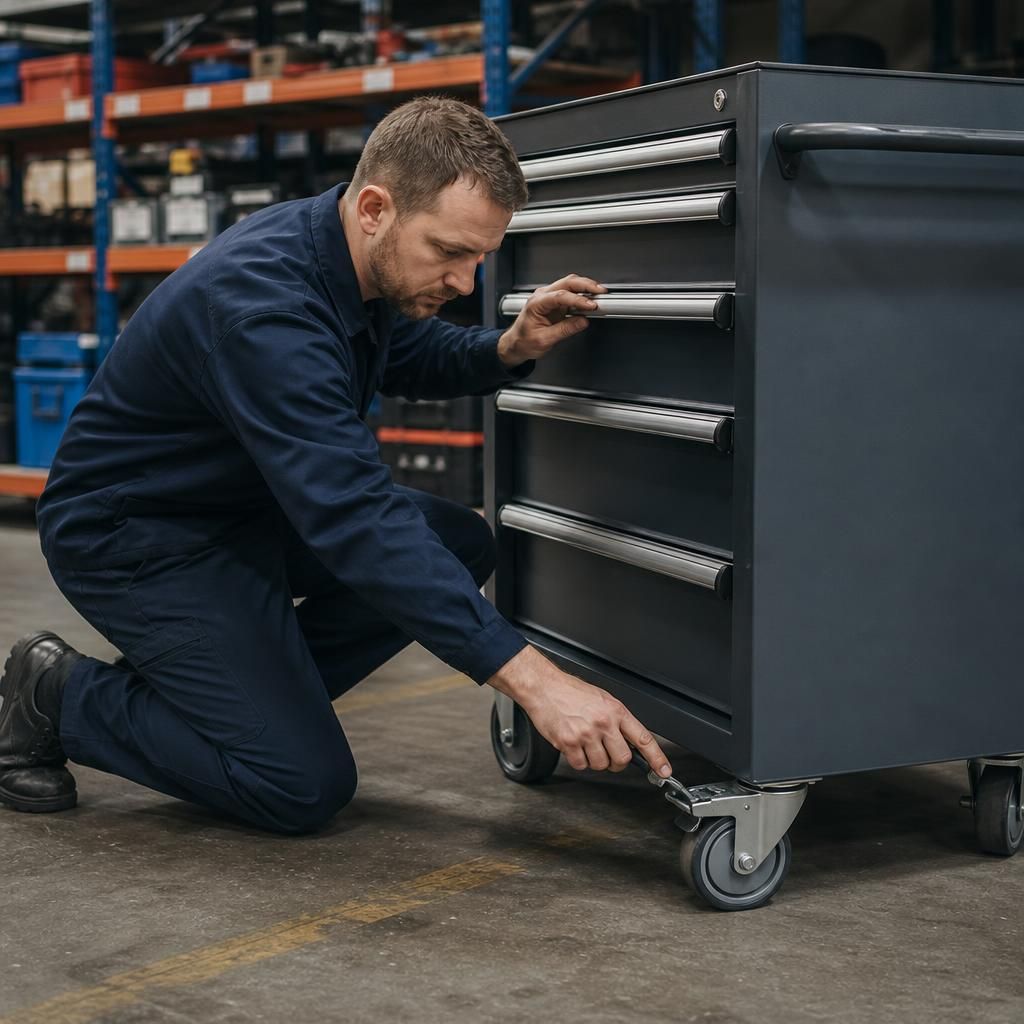
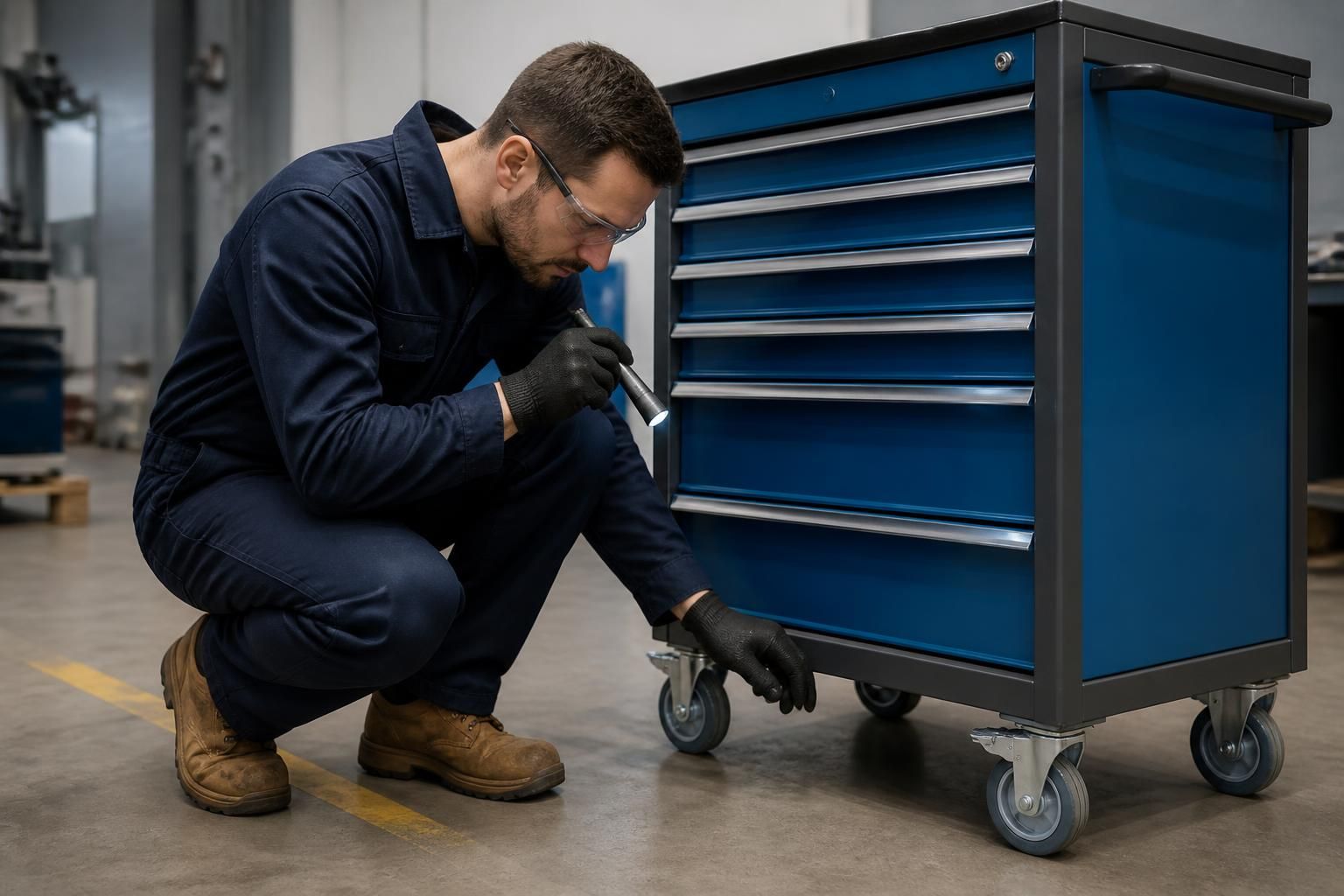
A maintenance plan should schedule routine checks of the locker, castors, brakes, drawers, locks, handles and load-bearing parts.
Record findings, address damage promptly, and remove any locker from use where movement, access or structural condition presents a safety concern.
An effective maintenance plan sets out who checks each mobile tool storage locker, what triggers attention, how findings are recorded, and who authorises return to service.
Start with an equipment record
Give each locker an identifiable reference and record its location, intended use, stated load limits and responsible department. Note the number of drawers, storage compartments and moving components. Keep supplier information, assembly details and relevant instructions with the record.
This information gives maintenance staff a clear reference when a locker moves between work areas. It also helps you identify repeated faults, unsuitable locations or changes in how teams use the storage.
Set inspection triggers around actual use
- Ask users to report faults, impact damage, contamination or unusual operation as soon as they notice them.
- Use planned inspections at intervals suited to traffic, handling, loading and the workshop environment.
- Arrange an additional inspection after relocation, collision, building work or a significant change in stored equipment.
- Review the plan when the layout, workflow or storage requirement changes.
High-use lockers in busy warehouse or manufacturing areas may need closer attention than lightly used office storage. The site’s risk assessment should inform the inspection frequency.
Separate cleaning from corrective maintenance
Include cleaning instructions for surfaces, drawer interiors and moving areas. Remove swarf, dust, oil and other contaminants using methods suitable for the locker’s materials and stored tools.
Do not treat cleaning as a substitute for repair. A sticking drawer, damaged fixing or distorted panel needs assessment and a recorded action. Maintenance staff should use suitable replacement parts and follow the applicable supplier instructions.
Control faults before work continues
Define a clear process for reporting and assessing defects. The person responsible should record the fault, location, date, immediate control and required action. Where safe operation cannot be confirmed, identify the locker clearly and prevent further use until the issue is resolved.
Repairs should address the cause rather than simply making the symptom less noticeable. Do not drill, weld, modify or overload a locker as an informal remedy. Record who completed the work and what was changed.
After repair, include a return-to-service check. Confirm that the affected components operate correctly and that the locker remains suitable for its intended position, contents and movement pattern.
Give users simple operating rules
- Store tools within the stated load limits and distribute weight sensibly.
- Keep heavy items low where the storage arrangement allows it.
- Close drawers and compartments before moving the locker.
- Keep travel routes clear and report floor damage that affects movement.
- Do not use the locker as a work platform, step or improvised support.
- Report impacts, instability, damage or restricted access instead of continuing to use the equipment.
Place the rules where users can see them, and include them in local induction or toolbox briefings. Clear responsibilities reduce the chance that a minor fault remains unreported.
Review records and the wider workplace
A maintenance record should show completed checks, reported defects, repairs, outstanding actions and review dates. A supervisor should examine recurring issues and decide whether the locker’s location, contents or use needs changing.
Consider the locker alongside workplace segregation, pedestrian routes and nearby equipment. Maintenance findings may identify a need to adjust the layout, improve protection or reconsider how tools move through the area.
During a no-obligation consultation, we can discuss intended use and inspect the site where required. Our written proposals and working drawings can reflect storage positions and workflow considerations, while project management may continue through installation and final commissioning where required.
A documented plan should remain practical. It needs clear ownership, proportionate inspection intervals, controlled repairs and records that show when each issue reached a proper conclusion.
Make each inspection lead to a clear decision. A tick-box record is not enough if it does not state what happens next.
- Accept: the locker remains suitable for its recorded use.
- Monitor: a minor issue receives a named review date and owner.
- Repair: planned work is assigned before the defect worsens.
- Withdraw: the locker is identified and kept out of service until its condition is confirmed.
This structure helps supervisors distinguish routine upkeep from defects that require immediate control. It also gives you a clear audit trail when reviewing maintenance decisions across a busy workplace.