


What access features should mobile tool storage lockers have?
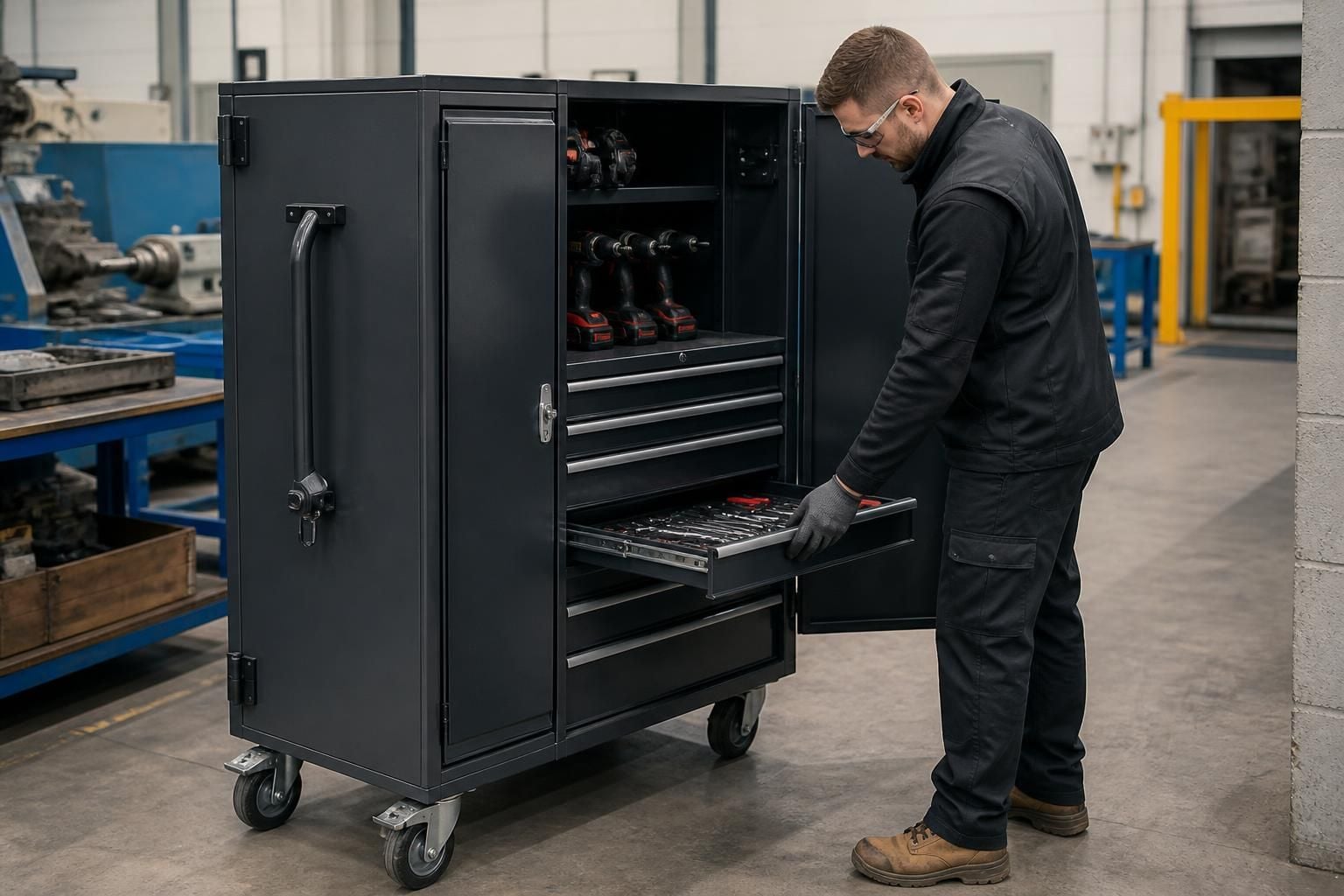
Mobile tool storage lockers should provide lockable compartments, clear labelling, accessible drawer heights and handles that support controlled movement.
Check that the layout suits your tools, staff access patterns and available space, without creating obstructions around work areas.
Mobile tool storage lockers should combine controlled entry, stable use and practical internal access. The right features depend on the tools stored, who needs them and how the locker moves through the workplace.
Choose a lock that matches the control needed. A keyed lock may suit a small team, while a shared key system can reduce the number of keys in circulation. Electronic access may suit sites needing individual user records, but it requires suitable power, administration and maintenance.
- Separate access levels: Individual compartments or drawers can help keep personal tools apart from shared equipment.
- Secure closure: Doors and drawers should remain closed during movement, reducing the risk of tools falling into circulation routes.
- Drawer retention: Retention features help prevent drawers opening unintentionally when the locker changes position.
- Anti-tilt protection: An interlock can restrict multiple drawers opening together, supporting stability during use.
- Full internal reach: Drawers should open far enough to let users see and remove tools without reaching behind stored items.
- Clear door swing: Hinged doors need enough room to open fully without striking nearby equipment or workstations.
- Stable positioning: Castors with brakes let users secure the locker before opening a drawer or compartment.
Consider access for different users, including reach, grip and the force needed to open drawers. Heavy items should not require awkward lifting from low or deep storage areas.
Access also depends on the locker’s position. A site survey should record floor conditions, travel routes, turning areas, nearby equipment and the points where users collect or return tools. This helps relate the locker to the wider workflow.
Spartan Direct can discuss these requirements during a no-obligation consultation. A site meeting and survey can inform written proposals and working drawings, showing how the access arrangement fits the available space.
After installation, include locks, drawer runners, castors, brakes and anti-tilt features in routine checks. Damaged or stiff components can make tool retrieval slower and encourage unsafe workarounds.
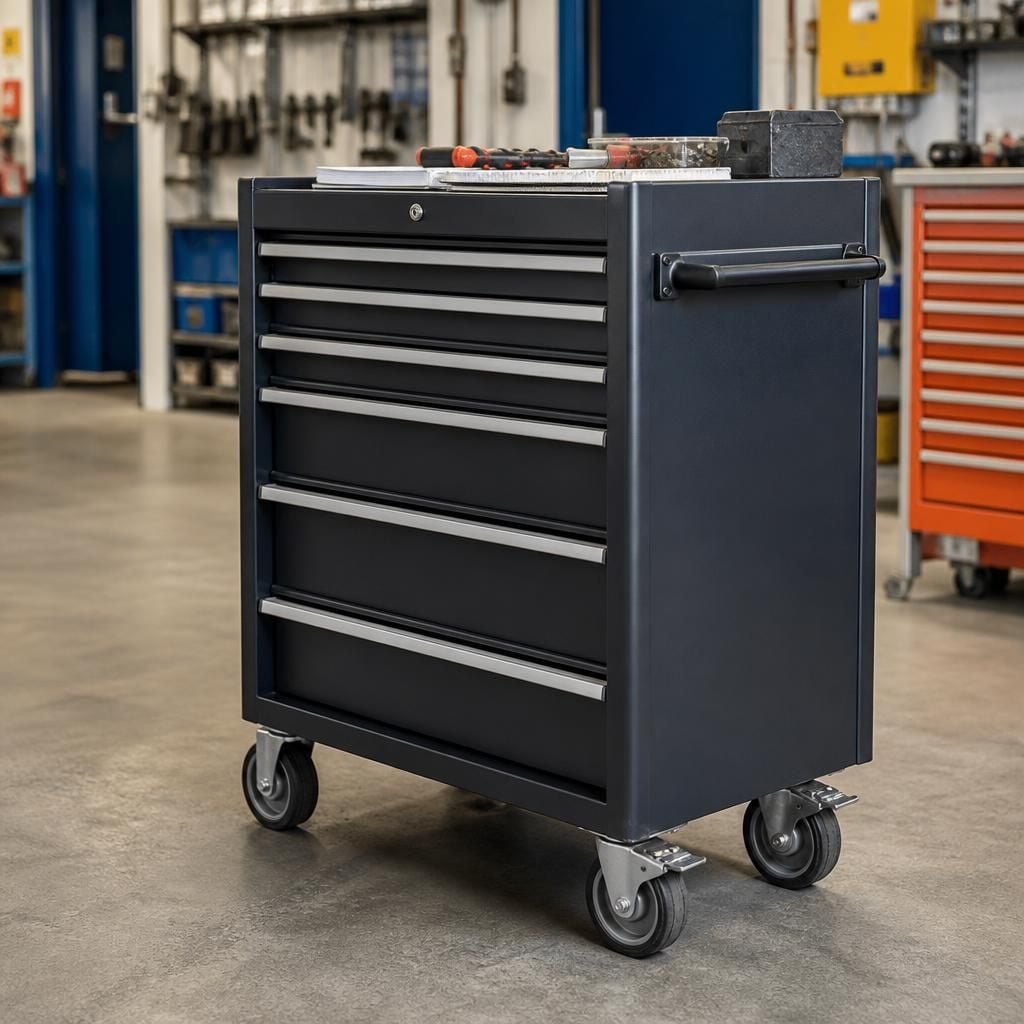
A mobile tool storage locker should place frequently used tools where users can reach them without repeated bending, stretching or unnecessary movement.
Keep occasional-use equipment in less accessible compartments, while arranging daily tools in the order each task requires. This supports orderly retrieval and returns without obstructing nearby work.



