


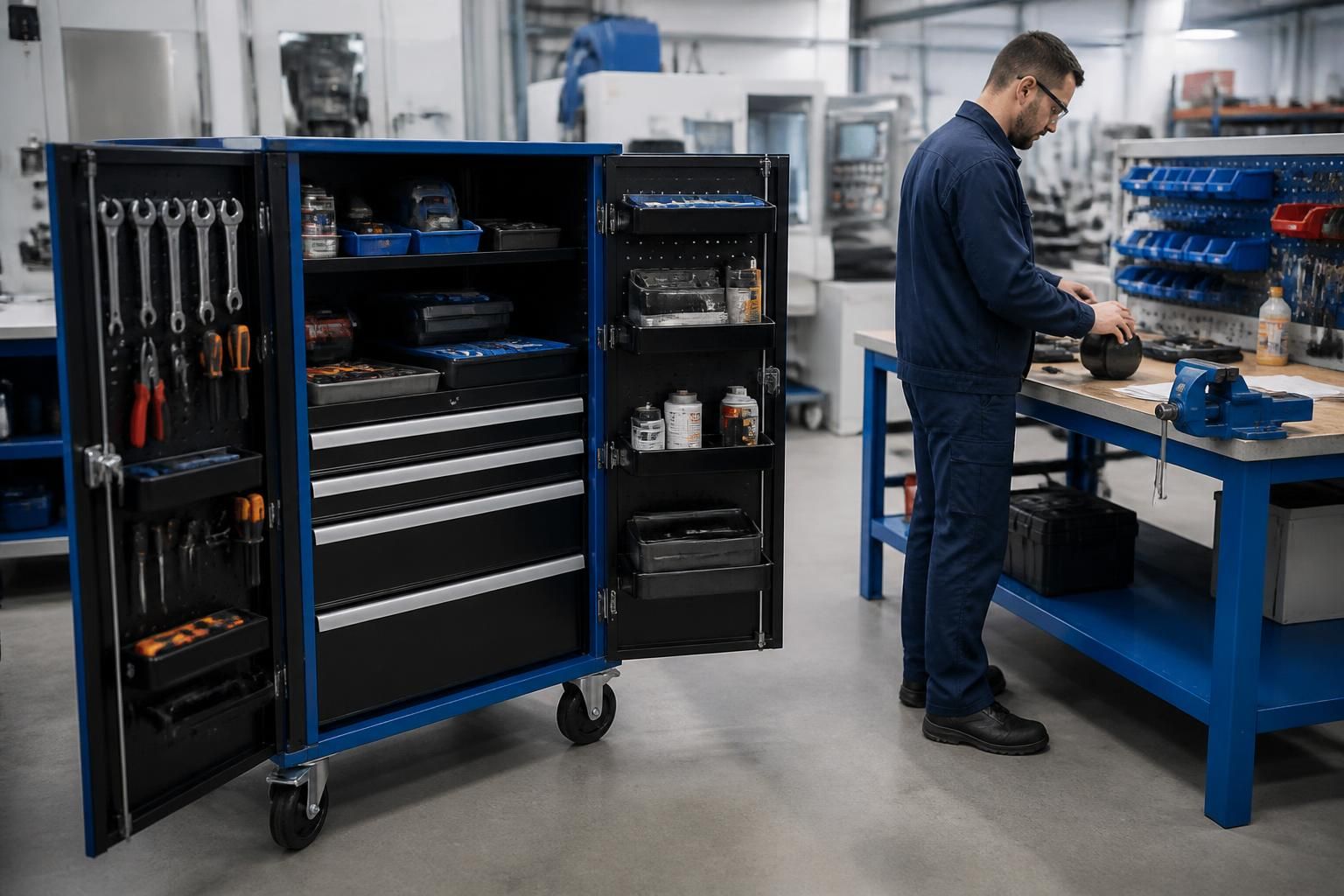
How will installing mobile tool storage lockers affect daily operations?
Installing mobile tool storage lockers can bring tools closer to work areas, helping organise access and reduce unnecessary movement during routine tasks. They also allow storage positions to change with workflow, provided the layout, floor and security arrangements suit the site.
Mobile tool storage lockers can make daily operations more controlled by giving teams a defined way to issue, return and manage tools. The main benefit comes from fitting the locker into working routines, rather than simply adding another storage unit.
Daily tool control becomes clearer. A designated locker can support a consistent handover process between shifts, teams or work areas. Labels, internal compartments and agreed return points can show where tools belong. This helps you identify missing items sooner and reduces uncertainty when several people use the same equipment.
That structure also supports preparation before work begins. Teams can check a locker against the job requirements, remove unsuitable items and return equipment after use. You can create simple local rules for issuing tools, reporting damage and leaving the locker ready for the next user.
Work areas can adapt without losing order. A mobile locker may support changing production tasks, maintenance work or temporary projects. However, moving it should follow an agreed process. Staff need to know who can relocate it, where it may stand and how walkways remain clear afterwards.
Designated parking positions are particularly important. They help prevent lockers being left beside access routes, machinery controls, emergency equipment or loading areas. If the unit has wheel brakes, users should apply them when the locker reaches its working position. Your site requirements should determine the parking arrangement and operating rules.
Tool access can support consistent work methods. Keeping commonly used items together may reduce repeated trips between a workstation and a distant store. It can also help supervisors identify gaps in standard tool sets. The effect depends on the locker’s internal layout, the tools being stored and the distance between work areas.
Mobile storage does not remove the need for good housekeeping. Heavy items should remain stable, doors and drawers should close correctly, and users should avoid overloading compartments. Clear weight information and sensible loading rules help protect the unit and the people handling it.
Security routines may change. If tools have significant value or require controlled access, you need a clear locking and key-management arrangement. Users should understand who holds keys or access details, how lost access is reported and how the locker is secured when unattended.
Security also depends on location. A locker positioned in a visible, suitable area may be easier to monitor than one placed behind stock or inside an uncontrolled passage. The right arrangement must consider your workflow, access requirements and the areas where tools are used.
Installation can affect operations during the changeover. The impact depends on access routes, floor conditions, delivery arrangements and the number of working areas involved. A site survey can record these points before ordering, including routes for moving the locker and suitable parking locations.
Our no-obligation consultation may include a site meeting and survey, followed by written proposals and working drawings. Where required, we can coordinate project management from proposal and tender stage through installation and final commissioning. This gives you an opportunity to consider operational changes before the locker enters service.
Before implementation, record which tools each team uses, where handovers occur and which routes must remain unobstructed. Decide whether one locker serves a defined team, workstation or task. This prevents mobile storage from becoming an unplanned shared store with unclear ownership.
After installation, review the working routine. Check whether staff return tools consistently, whether the chosen position remains suitable and whether the locker creates congestion. Review wheels, brakes, doors, locks and internal fittings as part of the maintenance plan. Record defects and remove damaged equipment from use where necessary.
Mobile tool storage lockers work best when the physical unit and the operating rules support each other. Spartan Direct can discuss the space, workflow and site requirements before preparing a proposal, helping you assess the likely effect on daily operations.
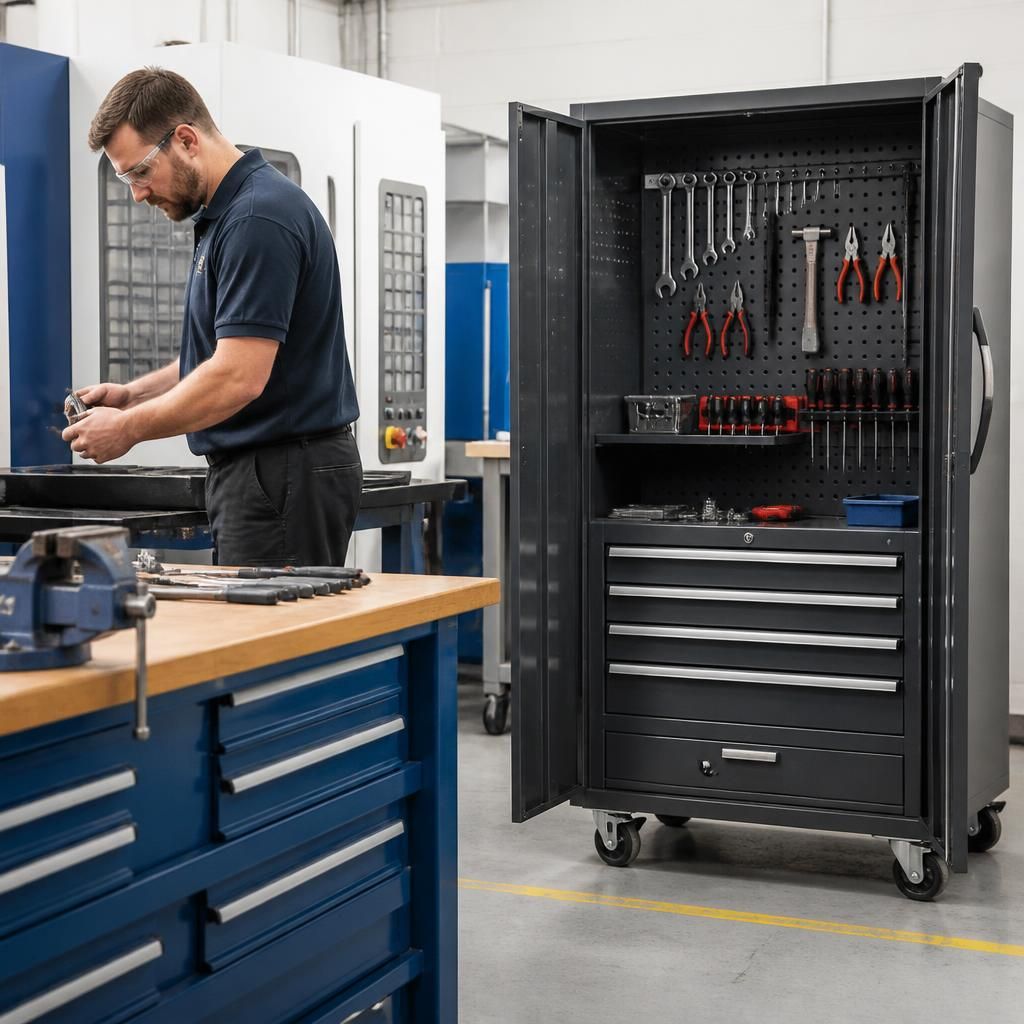
A mobile tool storage locker can support clearer task preparation when its contents follow the order of work. Keep frequently used tools together, separate specialist items, and identify spaces for equipment that needs checking.
This arrangement gives operators a practical starting point for each job. It also makes changes easier to spot when a tool has been removed, misplaced or returned to the wrong compartment.
Review the layout with the people using the locker. Their working sequence can reveal which tools need the easiest access and which items can stay secured until required.



