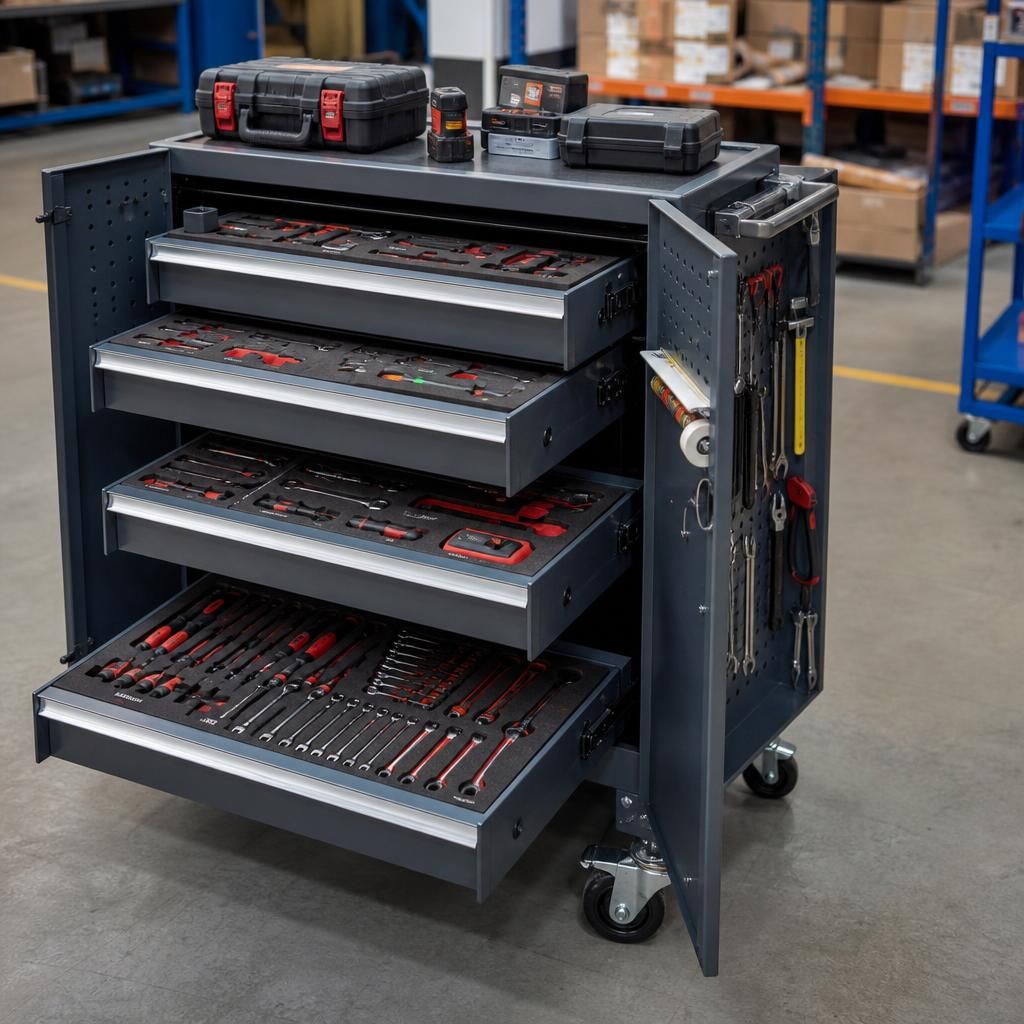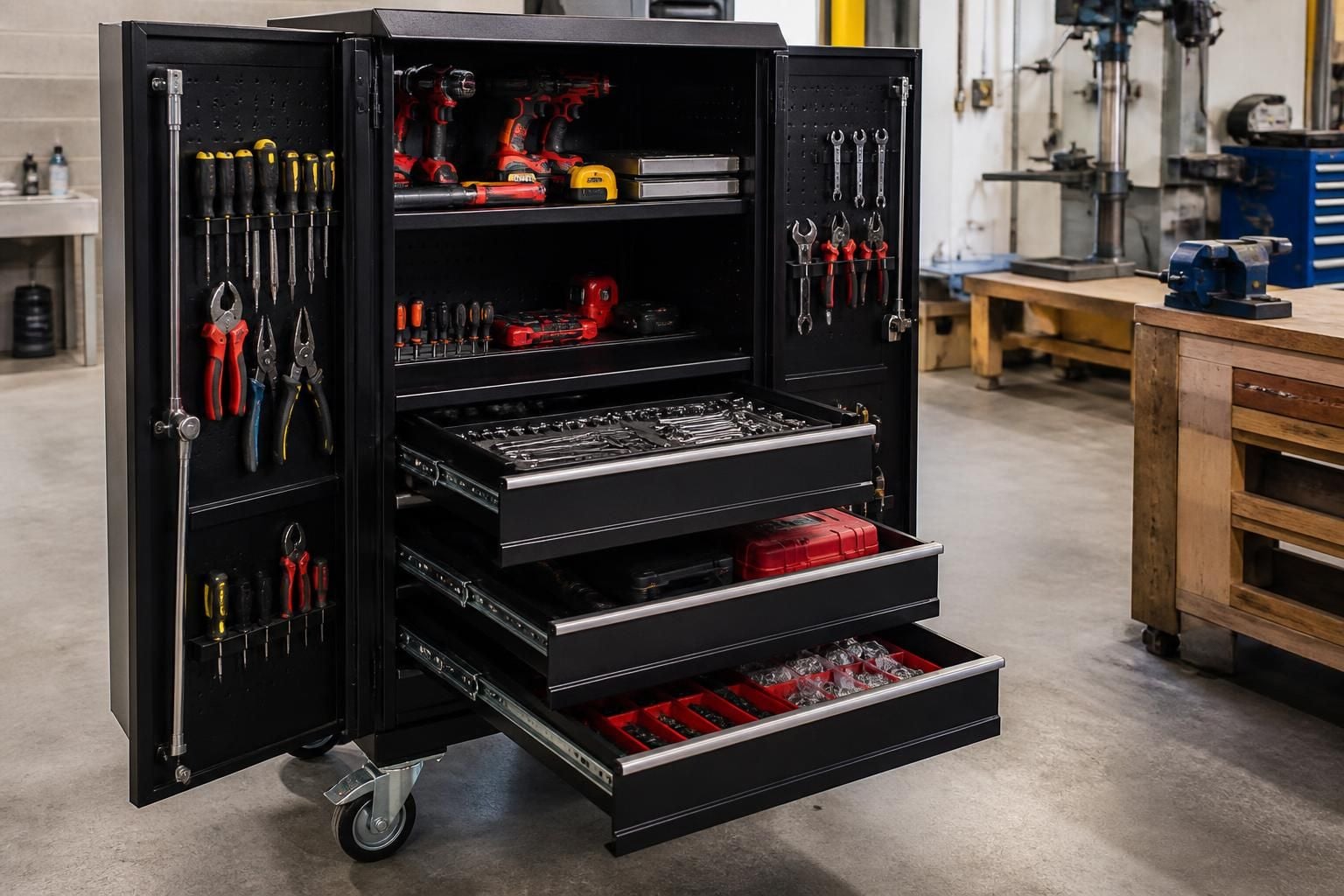
How much tool storage capacity can a rolling locker provide?
A rolling locker’s capacity depends on its dimensions, internal layout, shelf or drawer arrangement, and the size and weight of the tools stored. We can assess your space, stock and workflow through consultation and a site survey before preparing working drawings and a written proposal.
A rolling locker has no standard tool capacity. The usable amount depends on internal clearances, storage positions, load limits and access space.
Measure usable capacity, not external size
External dimensions include the cabinet walls, doors, runners, castors and structural clearances. These features reduce the space available for tools.
Internal capacity should therefore be assessed by usable compartments, shelf areas and drawer positions. A tall cabinet may hold more equipment, but poorly matched compartments can waste space.
Allow room for handles, cases, protective packaging and safe hand access. Overfilling makes tools harder to identify and can obstruct drawers or doors.
Consider the types of tools stored
- Small hand tools use space efficiently when separated into drawers, trays or compartments.
- Long tools need clear vertical or horizontal storage, depending on their shape.
- Power tools may need deeper compartments because of their bodies, batteries and cases.
- Heavy items require suitable support and an even distribution of weight.
- Shared tools need visible, accessible positions that reduce searching and unnecessary movement.
The same locker volume can hold very different quantities. A locker for loose hand tools uses space differently from one holding boxed equipment.
Check load capacity separately
Volume does not confirm whether the locker can safely carry the stored equipment. The cabinet, shelves, drawers, runners and castors must suit the intended loads.
Heavier items may reduce practical capacity before the internal space is full. Weight should remain distributed so the locker stays manageable during movement.
Record the heaviest items, typical contents and expected future additions. This gives the design process a sound basis for selecting internal arrangements.
Protect access and daily workflow
A locker provides useful capacity only when people can reach and return tools without unsafe handling. Leave space for opening drawers, moving the unit and transferring equipment.
Position frequently used tools between convenient working heights. Reserve lower positions for heavier items where this supports stable loading and safer handling.
Separate clean tools, maintenance equipment and specialist items where different users or tasks require clear control. Labelling can make each position easier to manage.
Several smaller mobile tool storage lockers may suit a workplace better than one large unit. This can place equipment closer to work areas and divide loads.
That choice depends on available floor space, travel routes, storage needs and the number of people sharing the equipment. It should not be based on volume alone.
How we establish the right capacity
We can review the stock list, tool dimensions, handling requirements and intended positions during consultation. A site survey can examine routes, clearances and working areas.
We then use the recorded information to prepare working drawings and a written proposal. These documents show the planned arrangement before supply and installation.
This process helps you compare usable storage with the space available, without assuming that a larger external cabinet provides better capacity. It can also support growth within existing premises instead of relocation.
For workplaces in the West Midlands, speak with us about the stock, layout and workflow that the rolling locker must support.
A practical capacity check compares the proposed layout with representative tools, cases and accessories before the locker is ordered. This reveals awkward gaps that a simple volume estimate can miss.
Marking each storage position on working drawings shows how different items will sit within drawers, shelves or compartments. You can then assess whether the arrangement provides usable capacity, rather than space that remains difficult to access.