Can a tool locker on wheels be secured in position?
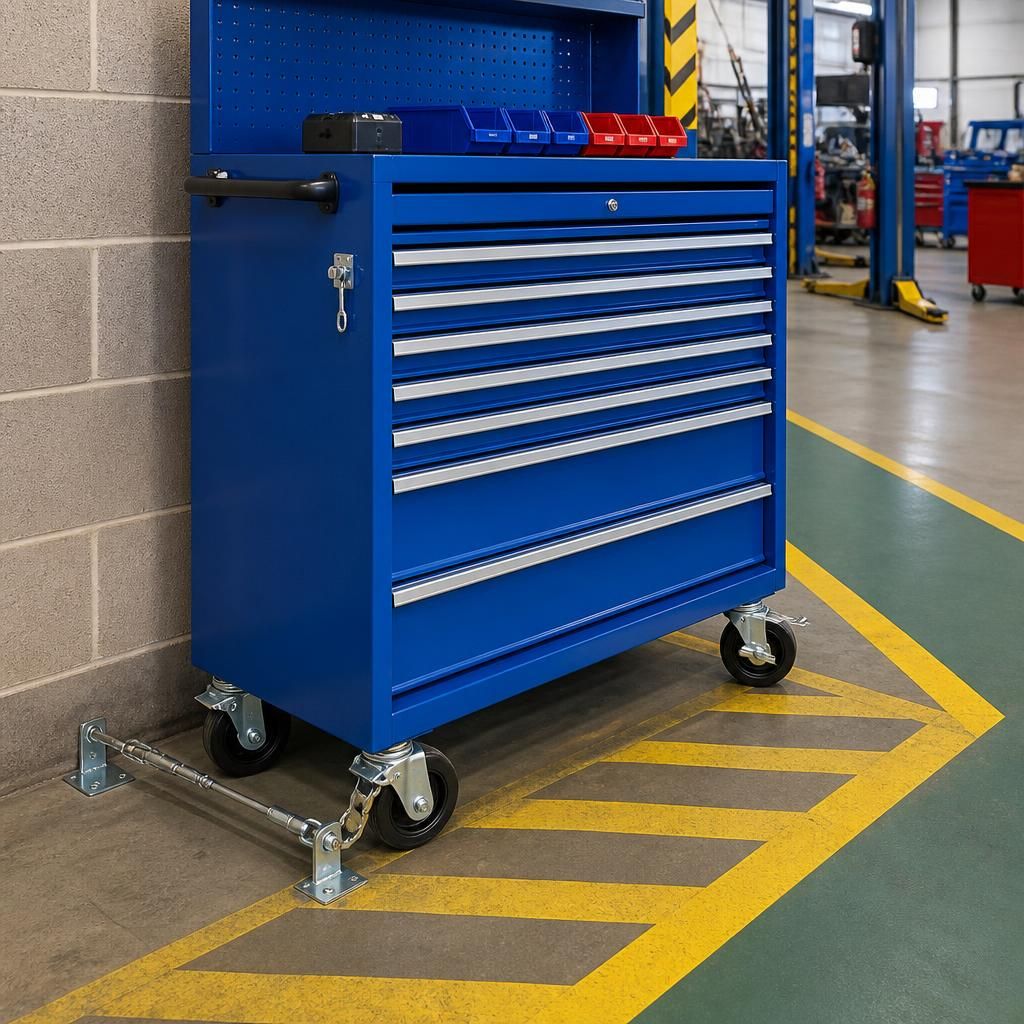
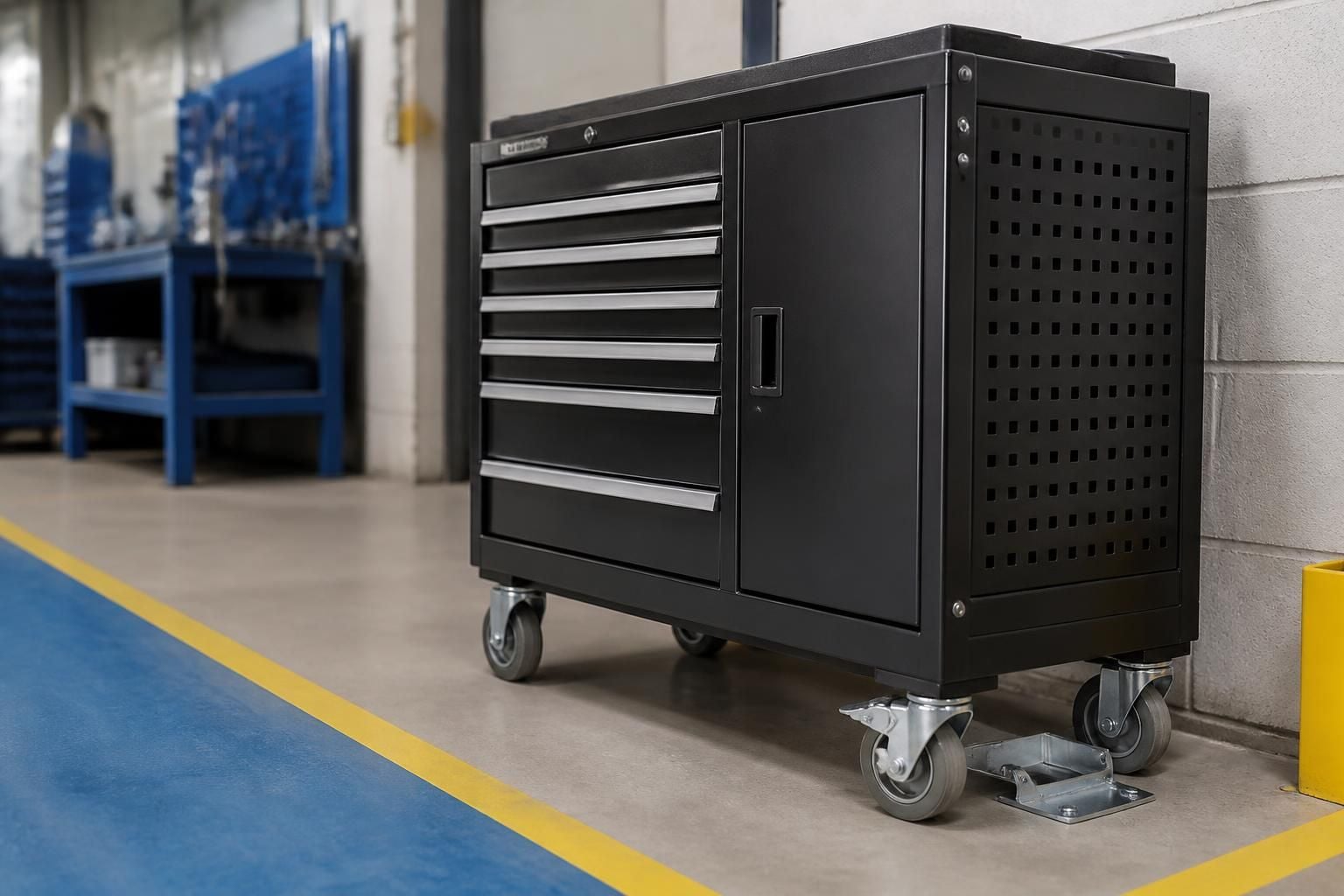
Yes. A tool locker on wheels can be secured using lockable castors, floor restraints or both, subject to the locker, floor and workplace requirements.
Securing a rolling tool locker involves controlling movement, confirming its parked position and protecting access around it. The suitable arrangement depends on the locker design, floor construction, loads and workflow.
Movement control and content security are separate considerations. Braked castors can help prevent unintended rolling when the locker is parked. They do not necessarily secure the locker against deliberate movement or protect its contents. A separate locker lock may therefore remain necessary.
Where the locker must stay in a defined position, a floor restraint can provide a more controlled arrangement. This may involve a fixing point, restraint bracket or another connection suited to the locker and floor. The fixing must not damage hidden services, interfere with the building structure or create a trip hazard.
A restraint also needs to suit the locker’s normal use. If you regularly move the unit between work areas, a permanent fixing could restrict access and slow down the workflow. If the locker remains within one work zone, a designated parking position can make the restraint easier to use consistently.
Consider these points before selecting the arrangement:
- Locker construction: confirm where a restraint can connect without interfering with doors, drawers, castors or internal storage.
- Floor condition: check the surface, construction and available fixing locations before specifying any floor connection.
- Stored items: consider how tools and equipment will be distributed inside the locker, including any change in weight during use.
- Working space: keep doors, drawers, walkways and nearby equipment accessible when the locker is secured.
- Vehicle and pedestrian routes: position the locker outside routes where contact could cause movement or obstruction.
- Release procedure: make sure authorised users can release the restraint without reaching through an unsafe area.
Floor markings can identify the intended parking location, but marking alone does not physically secure the unit. Protection may also be needed where the locker sits near vehicle movements or handling equipment. This should form part of the wider workplace segregation and safety arrangement.
A site survey can record the locker dimensions, castor layout, floor details, storage position, surrounding clearances and movement routes. It can also identify whether securing the unit affects daily access or planned changes to the workspace.
We can use the survey to prepare a written proposal and working drawings where required. These documents can show the proposed position, restraint arrangement and associated protection before installation proceeds.
For projects requiring installation, project management may cover the proposal and tender stage through installation and final commissioning. The aim is to establish a practical parked position without compromising access, separation or the locker’s intended mobility.
Keep the securing arrangement accessible for routine cleaning, castor checks and minor maintenance. Fixings or restraints should not create sharp edges, snag points or concealed dirt traps around the locker.
Include the restraint and its connection points in the workplace inspection routine. Check for looseness, damage or changes to the floor before the locker is returned to service.