Are mobile tool storage lockers suitable for uneven workshop floors?
Mobile tool storage lockers can suit mildly uneven workshop floors, but only after checking floor condition, gradients and castor movement.
Significant unevenness may require levelling work or a fixed storage alternative to keep access and positioning safe.
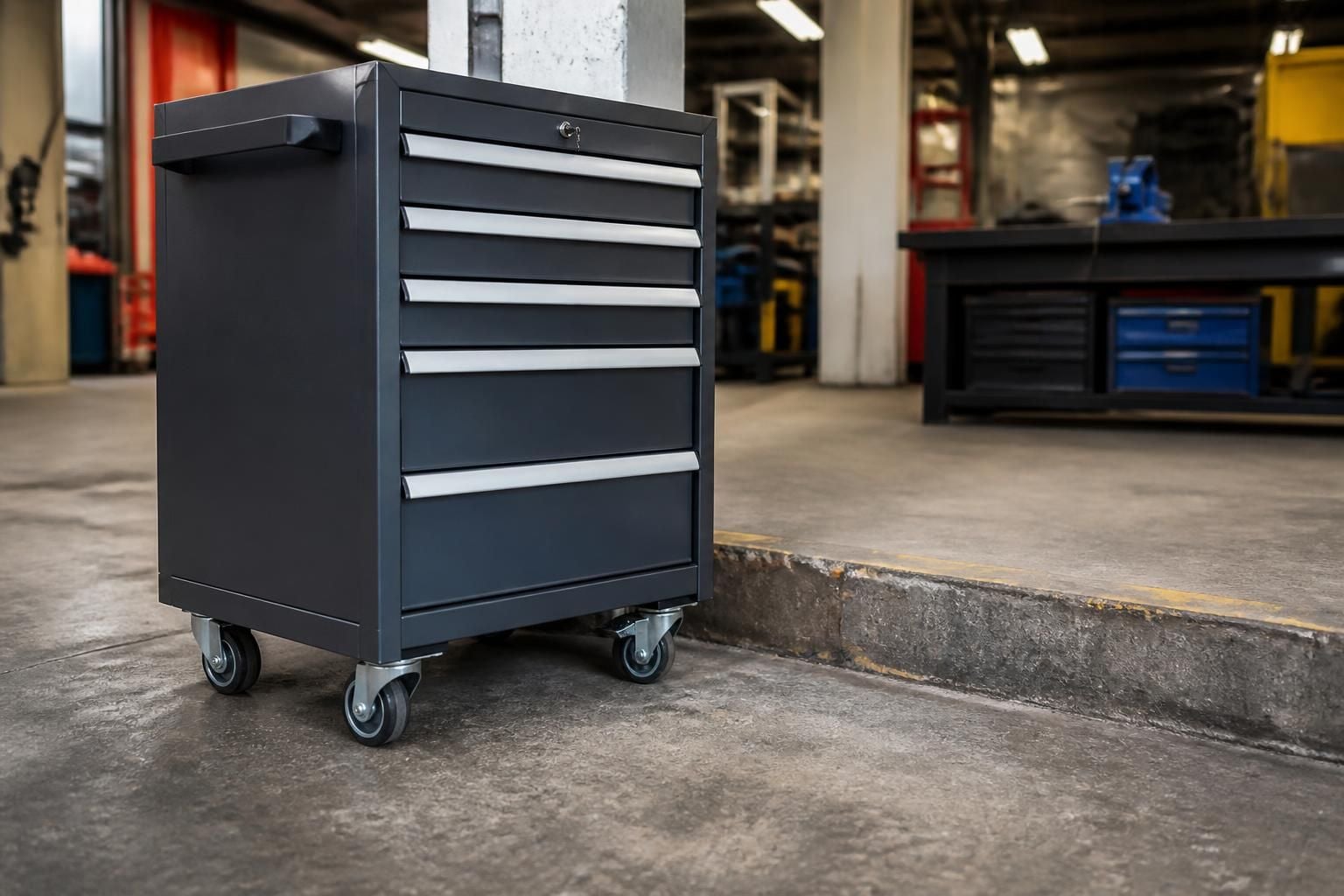
Mobile tool storage lockers can work on an uneven workshop floor when the surface remains stable and movement can be controlled safely. The decision depends on the floor profile, locker construction, castors, loads and intended route.
A visual inspection alone does not show whether a rolling locker will remain stable. Small changes in level can affect movement, door operation and drawer alignment. A sloping route can also cause the locker to roll when released.
Check the floor for:
- Gradients across the locker’s parking position and travel route.
- Cracks, broken concrete, loose finishes and worn surface areas.
- Joints, drainage channels, thresholds and changes between floor materials.
- Standing water or substances that could reduce castor grip.
- Clearance around walls, machinery, workstations and pedestrian routes.
- Floor capacity for the locker, castors, tools and any concentrated loads.
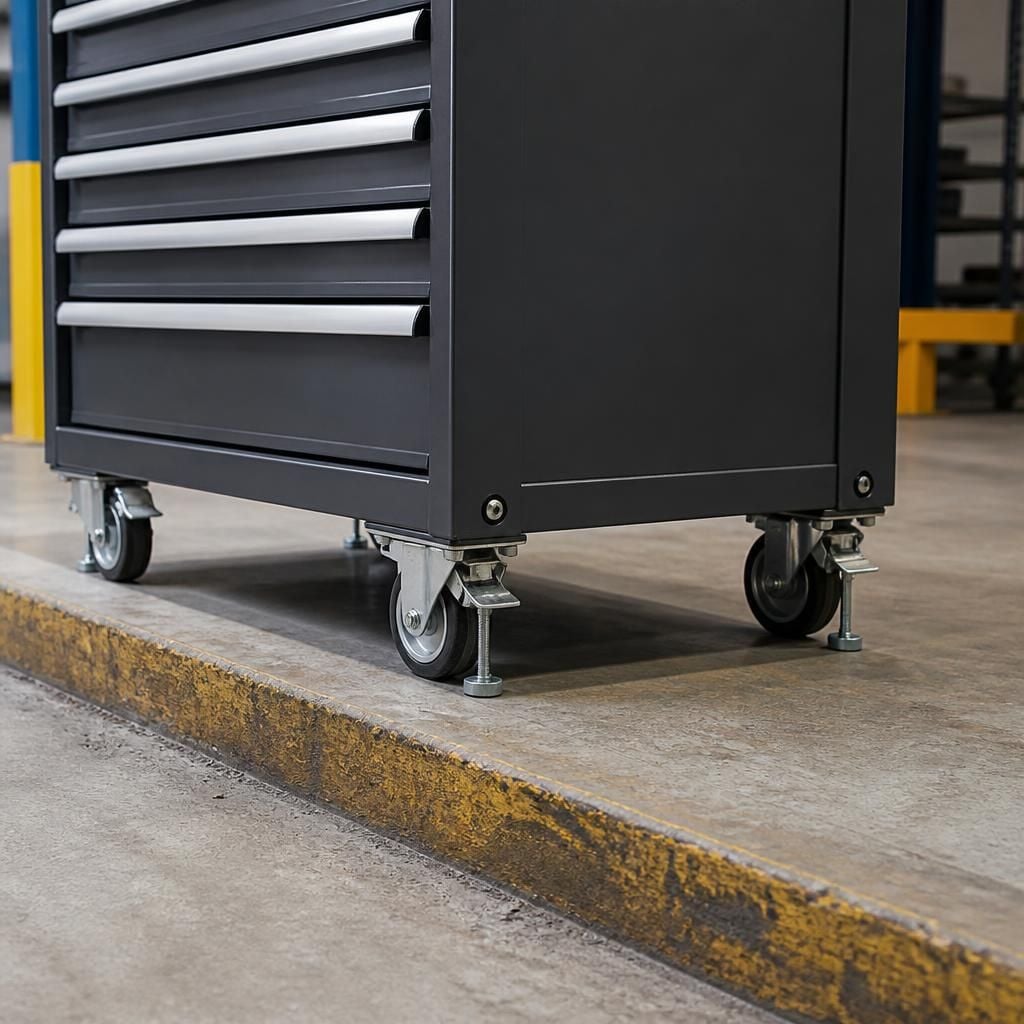
Castors can cross some minor surface changes, but they do not correct a gradient. Brakes hold the castors in place; they do not level the locker or remove pressure from one side.
Loading also affects stability. Heavy tools placed high in the locker can raise the centre of gravity. Uneven loading may increase tipping forces when the unit starts, stops or changes direction.
Keep heavier items low and distribute loads across the available storage areas. Follow the locker manufacturer’s stated load limits and castor instructions. Do not treat a locked castor as permission to exceed those limits.
Drawers and doors need particular attention. A sloping floor can allow drawers to open unexpectedly or make them difficult to close. Rigid frames may also experience uneven contact between castors.
Before ordering, record the route from delivery access to the operating position. Include turning points, ramps, floor transitions and areas where the locker must stop. Measure clearances with doors or drawers open.
Consider how staff will use the locker during normal work. If it only moves occasionally across a stable surface, the assessment differs from frequent movement through a busy workshop.
Levelling work may improve the operating area, but it must address the complete route. A level parking position does not resolve a steep threshold or damaged surface elsewhere.
A fixed locker or another fixed storage arrangement may suit better where the route has significant gradients, damaged flooring or frequent obstructions. Fixed storage removes rolling movement, but the access and capacity requirements still need checking.
Our consultation may include a site meeting and survey to review these conditions. We can then prepare a written proposal and working drawings around the recorded layout and requirements.
For projects involving wider workplace changes, project management may continue from proposal and tender stages through installation and final commissioning where required. This helps coordinate locker positioning with storage, access and safety arrangements.
Ask for the following points to be confirmed before approval:
- The acceptable floor conditions for the selected locker and castors.
- Permitted loads and the recommended load distribution.
- Requirements for gradients, thresholds and floor transitions.
- How the locker should be parked and secured during use.
- Any repairs, levelling or route changes needed before installation.
- Inspection arrangements after positioning and during later use.
The right decision is not simply mobile or fixed. It is whether the complete storage route supports controlled movement, stable parking and safe access for the work being carried out.
Check whether the selected locker has a levelling mechanism for parking. Levelling feet may stabilise the unit, but they can prevent movement until retracted.
Confirm how the locker transfers between rolling and parked positions. The arrangement must leave every castor and support point properly engaged before staff open drawers or doors.