


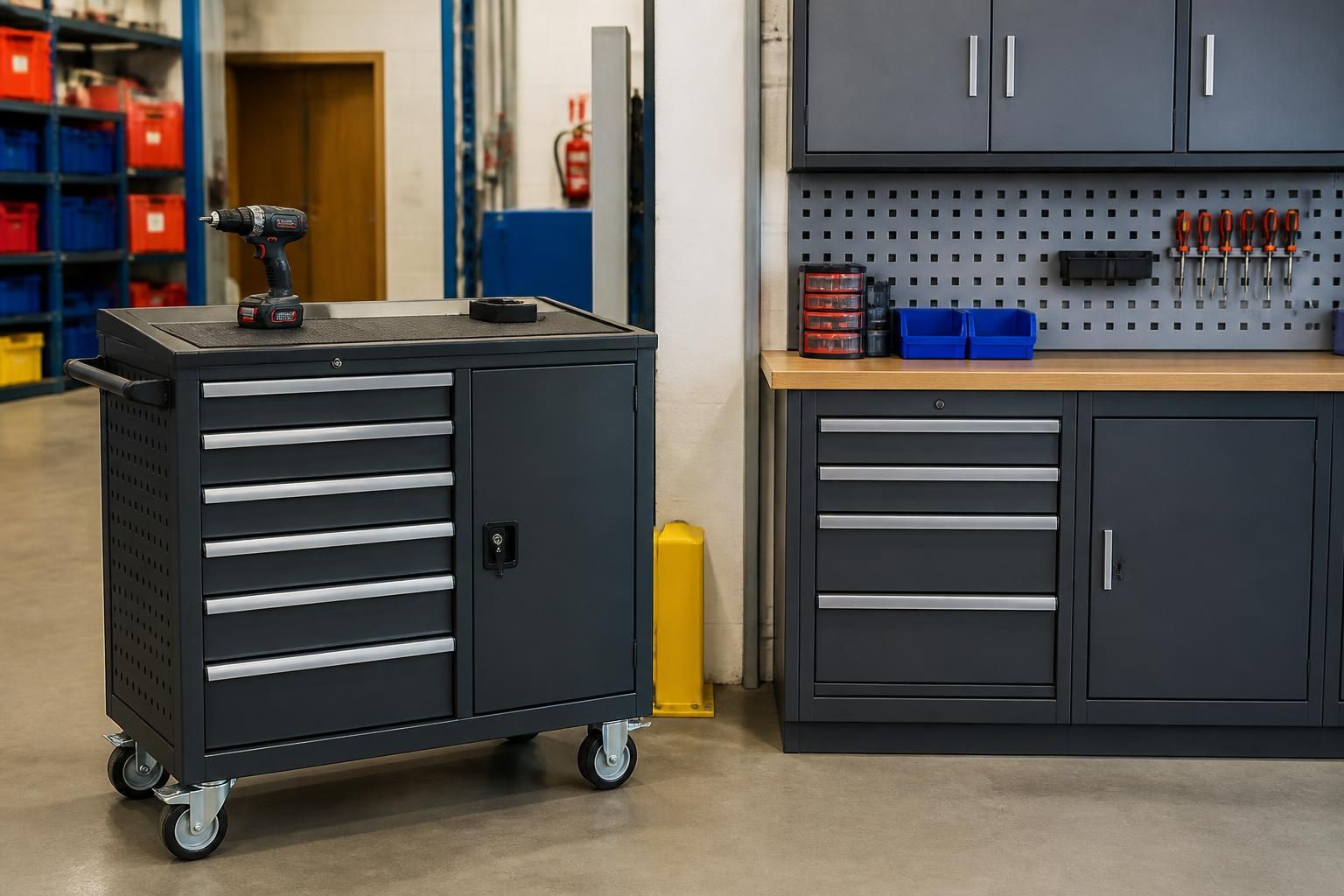
Are mobile tool storage lockers cheaper than fixed units?
A mobile tool storage locker is not automatically cheaper than a fixed unit; purchase price, capacity, access needs and installation affect the comparison. We can assess these requirements through a survey and written proposal, so you compare total costs rather than unit price alone.
Mobile tool storage lockers can cost less overall in some workplaces, but fixed units can offer a lower initial cost. The right comparison depends on capacity, movement, installation, security and future layout changes.
A fixed locker usually suits a stable position beside a workstation, production area or stores location. It can provide a straightforward storage point without adding moving hardware. This may make the initial purchase simpler when the layout and stock requirements are unlikely to change.
A mobile locker includes castors or wheels, along with equipment for controlled movement and positioning. Those components can increase the purchase price. However, mobility may reduce the need to buy additional lockers when teams, tools or work areas change.
Compare both options using the same storage capacity and access requirements. A lower unit price does not show the cost of storing the same tools. A small fixed unit may appear cheaper than a larger mobile locker, while offering less usable capacity.
Consider these cost factors before choosing:
- Storage capacity: Compare shelves, compartments and usable internal space rather than external dimensions alone.
- Installation: Include assembly, positioning, floor conditions and any required fixing or protection work.
- Movement: Allow for the equipment and space needed to move a locker safely through the workplace.
- Layout changes: Consider whether tools, teams or workstations may move during the locker’s working life.
- Access: Check how the selected position affects door opening, aisle clearance and access to nearby equipment.
- Security: Compare the locking arrangement and the practical steps needed to keep tools controlled.
- Maintenance: Include checks for wheels, brakes, locks, doors and other moving parts where applicable.
- Future capacity: Assess whether you may need further storage without changing the whole layout.
Fixed units can be financially sensible where the storage plan is permanent and tools remain near one work area. They may also suit locations where movement offers little practical benefit.
Mobile units can justify a higher purchase price when teams share tools or work areas change regularly. Moving storage may also support different working arrangements within the existing space.
That benefit depends on the site. A mobile locker needs a suitable route, adequate clearance and a stable position when in use. Floor condition, thresholds, slopes and nearby equipment can affect whether movement is practical.
Do not compare the locker price without considering installation and future alterations. A fixed arrangement may involve repositioning work if the layout changes. A mobile arrangement may involve higher hardware, inspection or maintenance requirements.
Ask for both options to be assessed against the same operational brief. The comparison should record tool types, quantities, user groups, access frequency and proposed locations.
A site meeting and survey can identify available space, routes, floor conditions and workplace interfaces. We can then prepare written proposals and working drawings for the selected arrangement.
For a project involving wider storage or workplace changes, we can coordinate the proposal, drawings, installation and project management where required. This provides a clearer basis for comparing the complete project cost.
Before ordering, request a quotation that separates the locker, installation and any associated work. Check the quotation date and commercial terms before relying on the stated price. Our terms state that quotations remain valid for 14 Business Days from issue.
The most economical choice is the unit that meets capacity and access needs without creating avoidable changes later. A fixed locker may win on initial price, while a mobile locker may offer better value for a changing workplace.
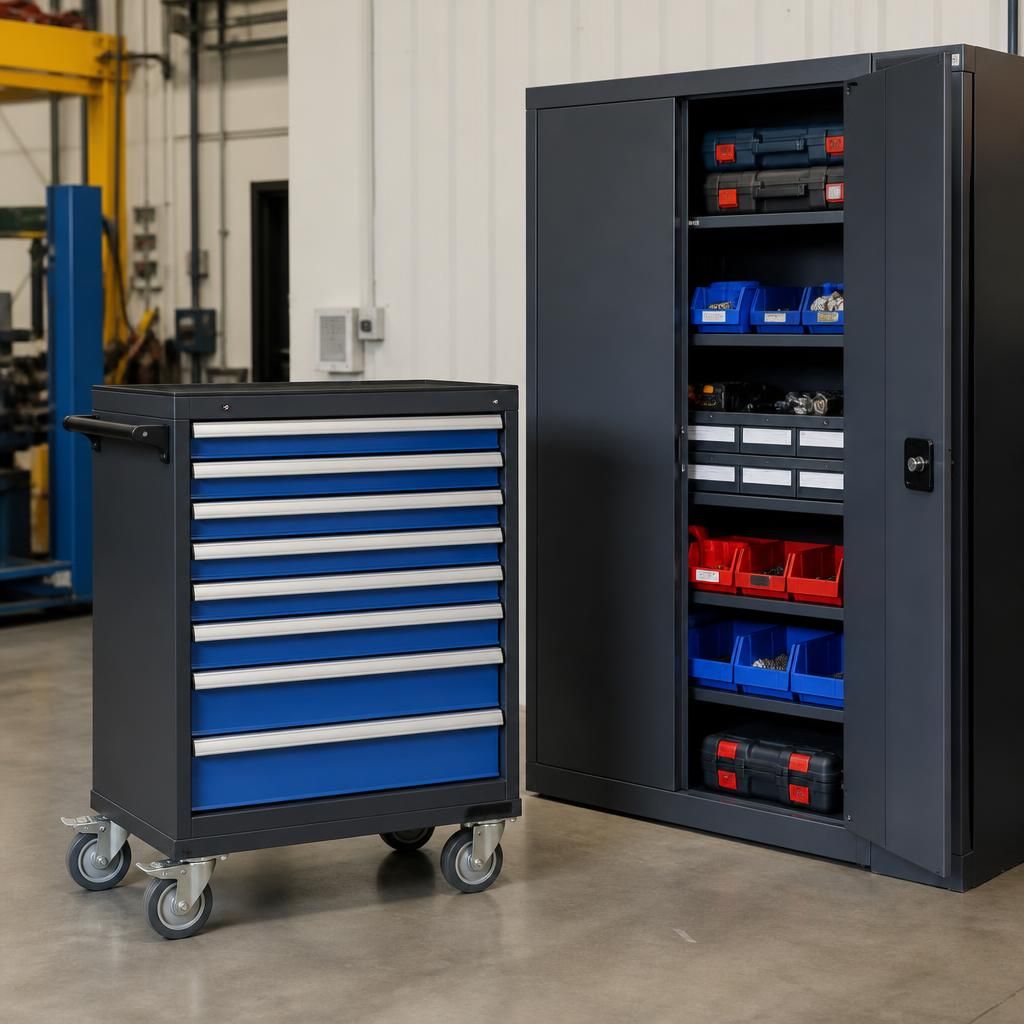
The price difference matters less than how the locker will operate each day. Record who needs the tools, where they work and whether the locker must change position between tasks.
If the locker will remain beside one workstation, a fixed unit may avoid paying for movement equipment that adds little value. If several work areas share the same tools, a mobile unit may support changing layouts without treating each position as permanent.



