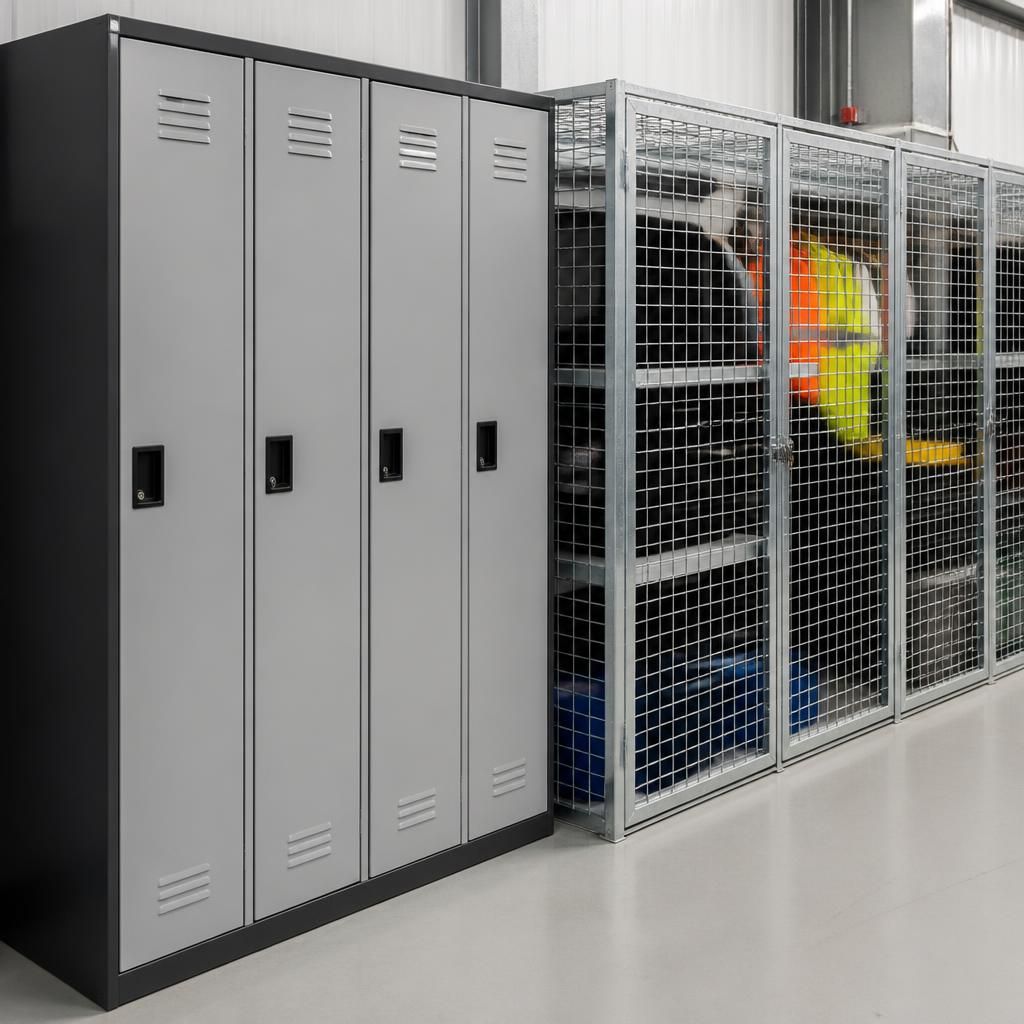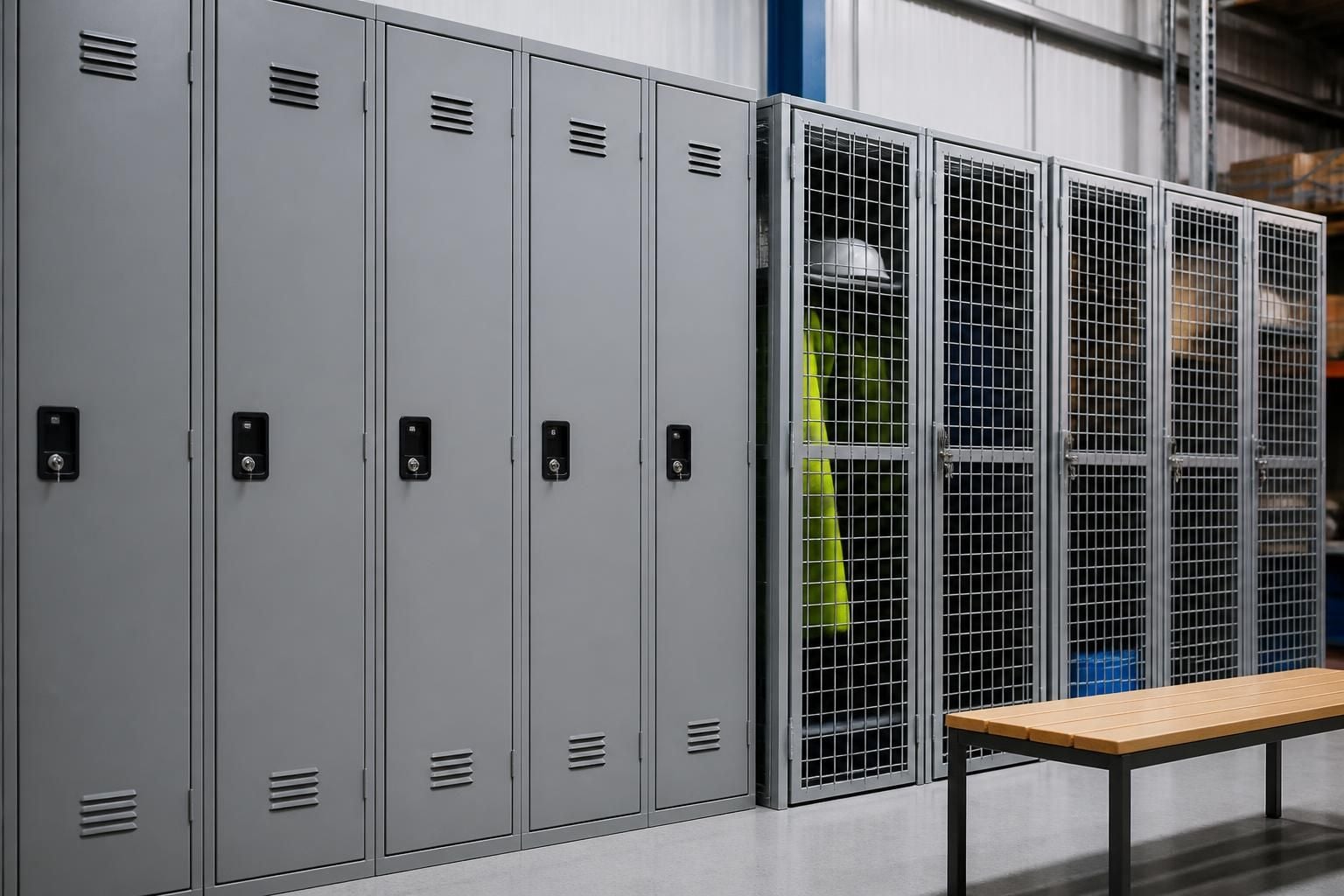
When are lockable steel lockers preferable to wire lockers?
Lockable steel lockers are preferable when you need enclosed storage that protects privacy and limits visibility of contents. Wire lockers suit workplaces where ventilation and visible contents matter more than concealment.
Lockable steel lockers are preferable when you need stronger physical protection, controlled access and a defined storage boundary. Wire lockers may suit lighter-duty areas where inspection and air movement guide the decision.
Start by identifying what the locker must protect. Steel lockers provide solid panels around stored items. This makes them suitable for personal belongings, documents, tools and equipment requiring restricted access.
Review the locking arrangement before ordering. Consider who needs access, how keys or codes will be managed, and what happens when users or responsibilities change. The locker specification should match those requirements.
- Choose lockable steel lockers when the stored items need a more substantial enclosure.
- Choose wire lockers when staff need to check contents without opening each compartment.
- Compare both options when the workplace has different storage zones or user groups.
Steel lockers can also provide a clearer visual boundary between personal storage and working areas. This can support orderly layouts in warehouses, factories and offices.
Wire lockers can support locations where staff need to identify stored items quickly. Their construction may also suit areas where air circulation forms part of the storage requirement.
Consider the working environment as well as the locker material. Dust, moisture, impact risks, cleaning routines and available floor space can affect the appropriate specification.
Check how the lockers will work with surrounding access routes. Doors, aisles, equipment and emergency movement routes must remain usable after installation. Floor-fixed or freestanding arrangements may also affect the layout.
Do not select steel or wire from appearance alone. Confirm compartment sizes, door operation, locking options, ventilation needs and the items each user will store.
Our consultation may include a site meeting and survey. We can then prepare a written proposal and working drawings for the storage arrangement.
Where lockers form part of a wider workplace change, project management may continue through installation and final commissioning. This helps you review the locker layout alongside the surrounding space.
For a workplace in the West Midlands, we can discuss the site, stock and workflow before you choose between steel and wire construction. The right option depends on the protection, access and environmental requirements identified during that review.
Use lockable steel lockers where storage rules require contents to remain out of sight between authorised access. This suits personal belongings, documents, tools and equipment kept in shared workplaces.
Wire lockers are more suitable where staff need visual checks without opening each compartment. Record the required level of privacy and inspection before selecting the locker type for each area.