


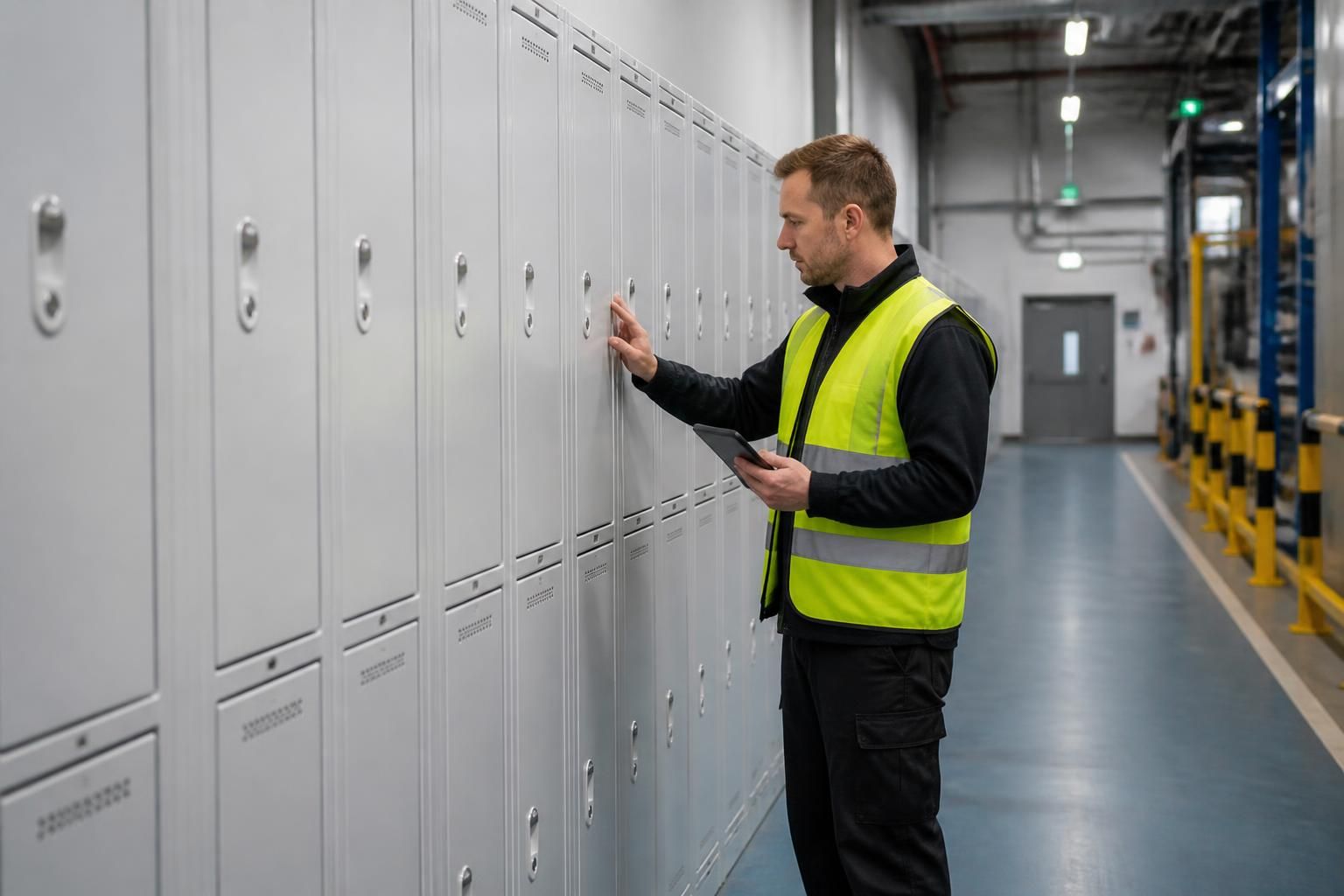
What maintenance arrangements should you confirm for industrial storage lockers?
Before ordering, confirm who will inspect, clean and repair the industrial storage lockers, and how often safety checks will take place. Agree how damage, faulty locks, missing parts and inspection records will be reported, handled and reviewed.
Confirm the maintenance arrangement in writing before ordering industrial storage lockers. It should define planned checks, cleaning responsibilities, repair decisions, replacement parts, records and the point of contact.
Start by separating routine care from faults requiring technical attention. Your written arrangement should identify:
- Routine condition checks: Look for damaged doors, loose hinges, faulty locks, sharp edges, corrosion, unstable bases and damaged labels.
- Cleaning: State who removes dust, dirt and spillages, which cleaning products are suitable, and how contaminated areas will be managed.
- Repair limits: Clarify which adjustments your team may make and which faults require the supplier or another appointed contractor.
- Replacement parts: Confirm how keys, cylinders, handles, hinges, shelves and other serviceable components will be identified and ordered.
- Records: Agree what information each inspection should capture, including the locker reference, defect, action, responsible person and completion date.
Do not rely on a general statement that lockers will receive regular maintenance. Ask for the inspection points, responsible roles and review method. The correct interval depends on use, location, exposure to dirt or moisture, and the consequences of a defective locker.
For shared industrial areas, include a process for removing unsafe lockers from use. A damaged door, failed lock or sharp panel may affect access and workplace safety. The procedure should explain how the locker is identified, isolated, reported and returned to service.
Check how maintenance will fit around your workflow. If lockers stand beside production areas, vehicle routes or busy walkways, agree how technicians will access them without obstructing work. Confirm who provides access, clears stored items and authorises work. Include any requirements for permits, segregation or protection around the work area.
Ask how faults will be assessed after installation. At final commissioning, request care instructions, component information and any agreed inspection documents. Keep these with the locker layout or asset register, so future checks can identify individual units accurately.
Clarify the commercial arrangements as well. Your quotation or order should show what installation includes, what aftercare covers, and which items remain outside the agreed scope. Confirm whether visits, labour, replacement components, call-outs and remedial work are charged separately. Do not assume that a supply-and-installation price includes an ongoing maintenance service.
Where a material defect is notified under the applicable terms, the supplier may repair or replace the material without charge, or refund the relevant price, at its discretion. Ask how the required notification should be made and retain photographs, order details and inspection records.
We can discuss the working environment during a no-obligation consultation. Site meetings and surveys may help establish locker positions, access constraints and the maintenance information required. We can then reflect agreed requirements in written proposals and drawings.
For projects involving several workplace areas, project management may also cover the stages from proposal and tender through installation and final commissioning. This gives you a defined point for checking that the agreed maintenance information has been handed over.
Before accepting the arrangement, make sure you can answer five practical points:
- Who checks the lockers and who authorises corrective work?
- What condition points must each inspection cover?
- How will faults, missing parts and unsafe units be controlled?
- Where will inspection, repair and replacement records be kept?
- Which maintenance costs and responsibilities are included in the quotation?
Clear answers reduce uncertainty after installation and help you keep industrial storage lockers suitable for the demands of your workplace.
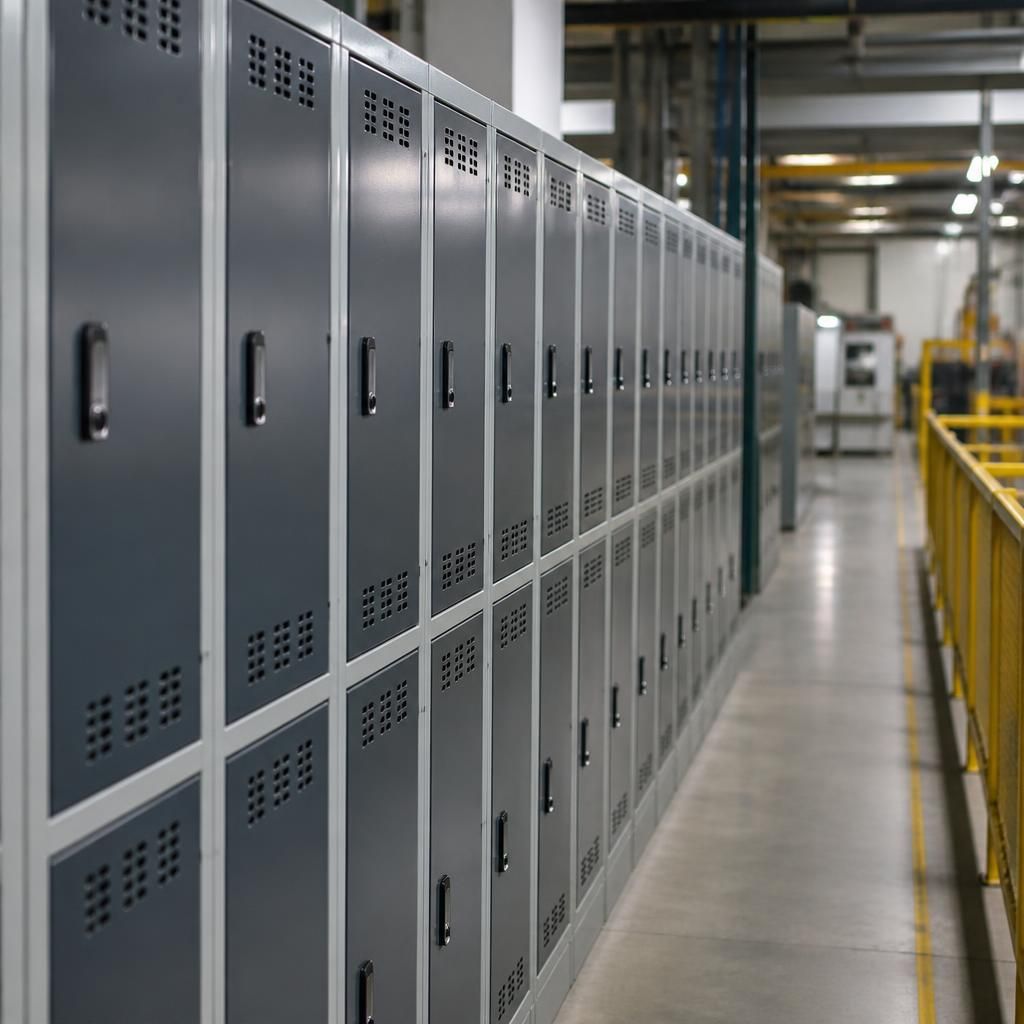
For shared locker banks, confirm who controls communal parts such as master keys, spare cylinders and replacement labels. Record responsibility separately from the person using each locker.
Review the arrangement after a layout change, process change or recurring fault. Updated responsibilities and inspection points keep maintenance aligned with how the workplace now operates.



