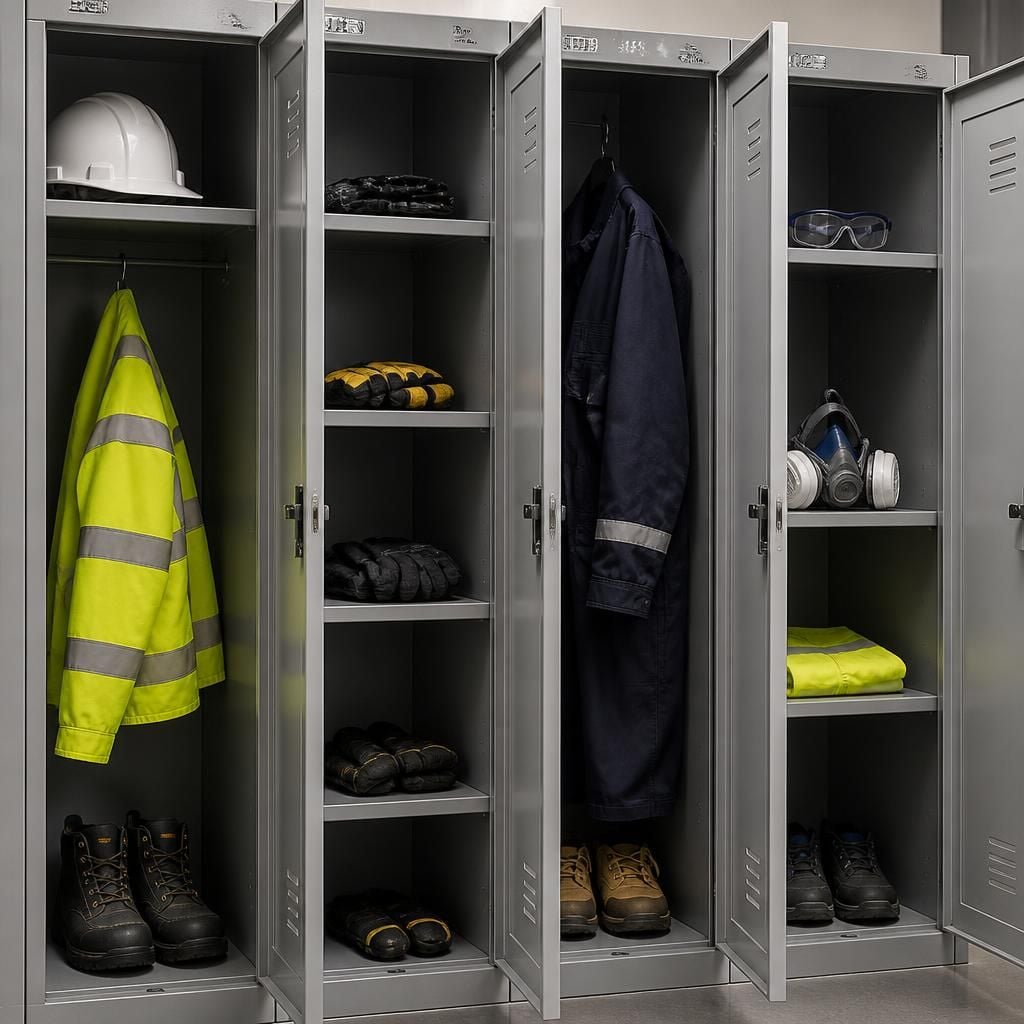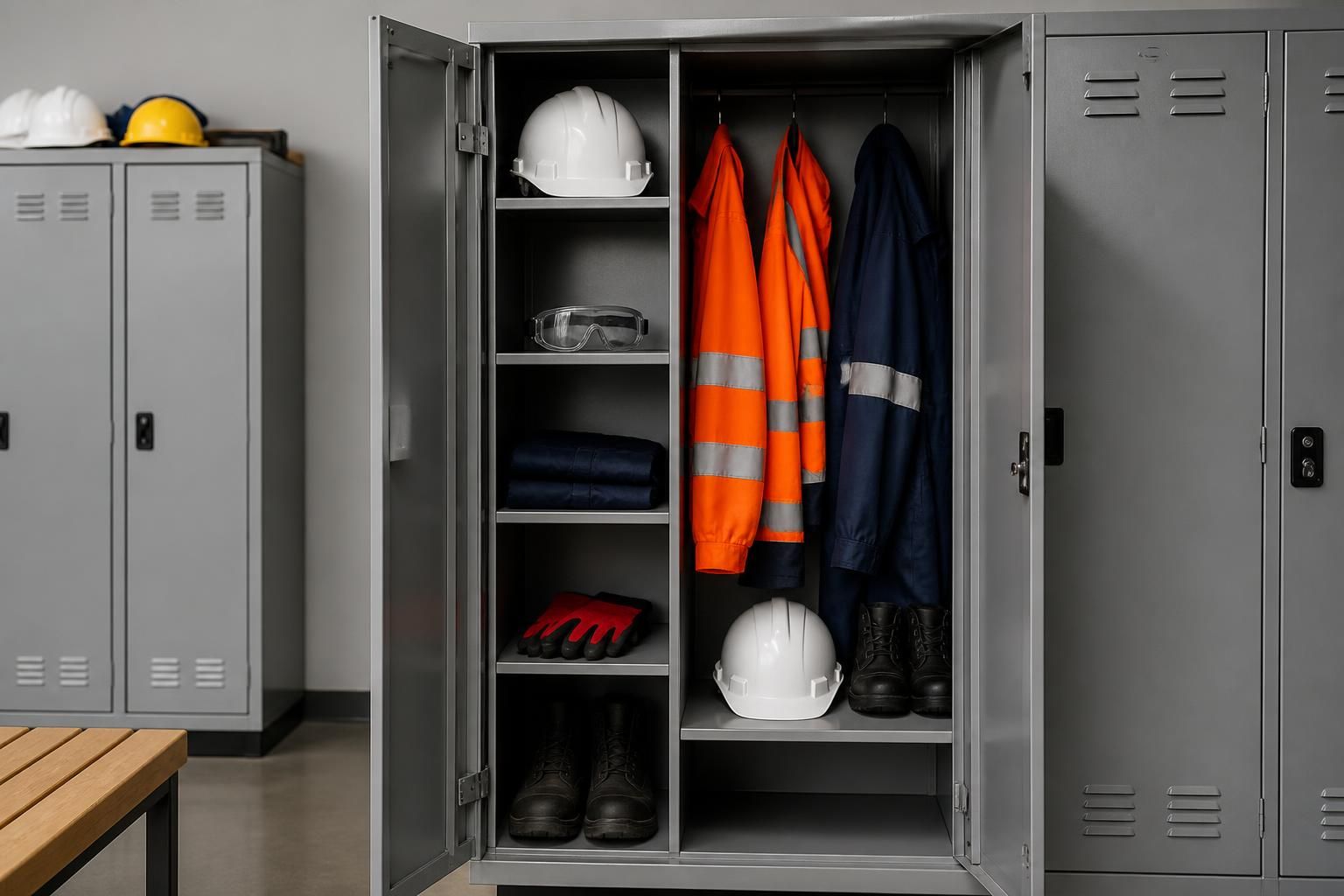
Should industrial lockers have separate compartments for PPE?
Often, yes. Separate PPE compartments keep protective equipment apart from personal clothing, supporting cleaner storage and more organised access.
Separate PPE compartments are usually worthwhile when workers change clothing, handle contaminated equipment, or share storage. They are not automatically necessary for every industrial workplace.
The right arrangement depends on the type of PPE, the number of users, changing procedures, available floor space, and the risks identified at the site. A single locker may suit low-risk personal equipment. Separate compartments provide stronger control where different items need distinct storage conditions.
- Personal clothing and workwear: Separate spaces can prevent coats, footwear, and personal belongings from occupying the same compartment as helmets, gloves, or protective clothing.
- Used or potentially contaminated PPE: A dedicated section can support controlled placement before cleaning, inspection, disposal, or collection.
- Clean replacement equipment: Unused items can remain apart from worn equipment, reducing confusion during shift changes.
- Shared equipment: Designated compartments can show where communal PPE belongs after use and make missing items easier to identify.
- Small protective items: Gloves, goggles, ear defenders, and masks benefit from compartments that prevent them being buried under larger equipment.
Separate compartments should support the workplace procedure, not replace it. PPE still needs inspection, cleaning, maintenance, and replacement in line with the relevant assessment and manufacturer instructions.
Consider the following points before specifying industrial lockers for PPE:
- Item dimensions: Measure the largest equipment, including safety footwear, hard hats, overalls, face protection, and respiratory equipment.
- Access sequence: Place items according to how workers put on, remove, and store them. Frequent-use equipment should not sit behind less-used items.
- Compartment proportions: Narrow shelves may suit gloves and eye protection, while larger sections may be needed for clothing or footwear.
- Identification: Numbered compartments, labels, or colour coding can support allocation and reduce uncertainty during busy handovers.
- Cleaning arrangements: Select surfaces and internal layouts that allow staff to remove dirt and inspect the storage area.
- Ventilation: If damp workwear or footwear enters the locker, consider whether the proposed design supports the site’s drying and hygiene arrangements.
- Security: Decide whether PPE requires individual locks, controlled access, or open access for shared equipment.
- Future use: Allow for changes in staffing, PPE types, and working methods without creating unusable compartments.
Do not assume that more compartments always produce a better result. Compartments that are too small can encourage overfilling, while excessive subdivision can reduce usable capacity and complicate cleaning.
Shared PPE may require a different layout from individually allocated equipment. For example, a site might use personal compartments for footwear and workwear, with separate shared storage for helmets or specialist items.
Location also matters. Lockers should support the movement between changing areas, work zones, cleaning points, and waste or collection areas. Poor positioning can encourage workers to leave equipment outside the locker or carry used PPE through unsuitable areas.
For manufacturing, warehouse, and industrial sites, the locker specification should sit alongside the wider layout. Pallet racking, mezzanine floors, partitioning, safety barriers, and office fit-outs may affect available space, access routes, and workplace segregation.
We can review the proposed locker arrangement during a site meeting or survey. Our consultation may lead to written proposals and working drawings, helping you compare compartment sizes, positions, access, and the surrounding workflow.
Separate PPE compartments are therefore most useful when they reflect a clear storage procedure and the actual equipment used. If the risk assessment shows little need for separation, a simpler locker layout may provide more practical capacity.
Separate compartments only work when each section has a clear purpose. Closed sections can keep PPE contained and distinguish issued equipment from items awaiting cleaning. Open shelves may suit shared, frequently collected items, but they provide less separation between users and equipment types.
Match the enclosure and access arrangement to the hazard assessment. The locker should support the way PPE is issued, worn, returned and checked, rather than creating compartments that staff cannot use correctly.