


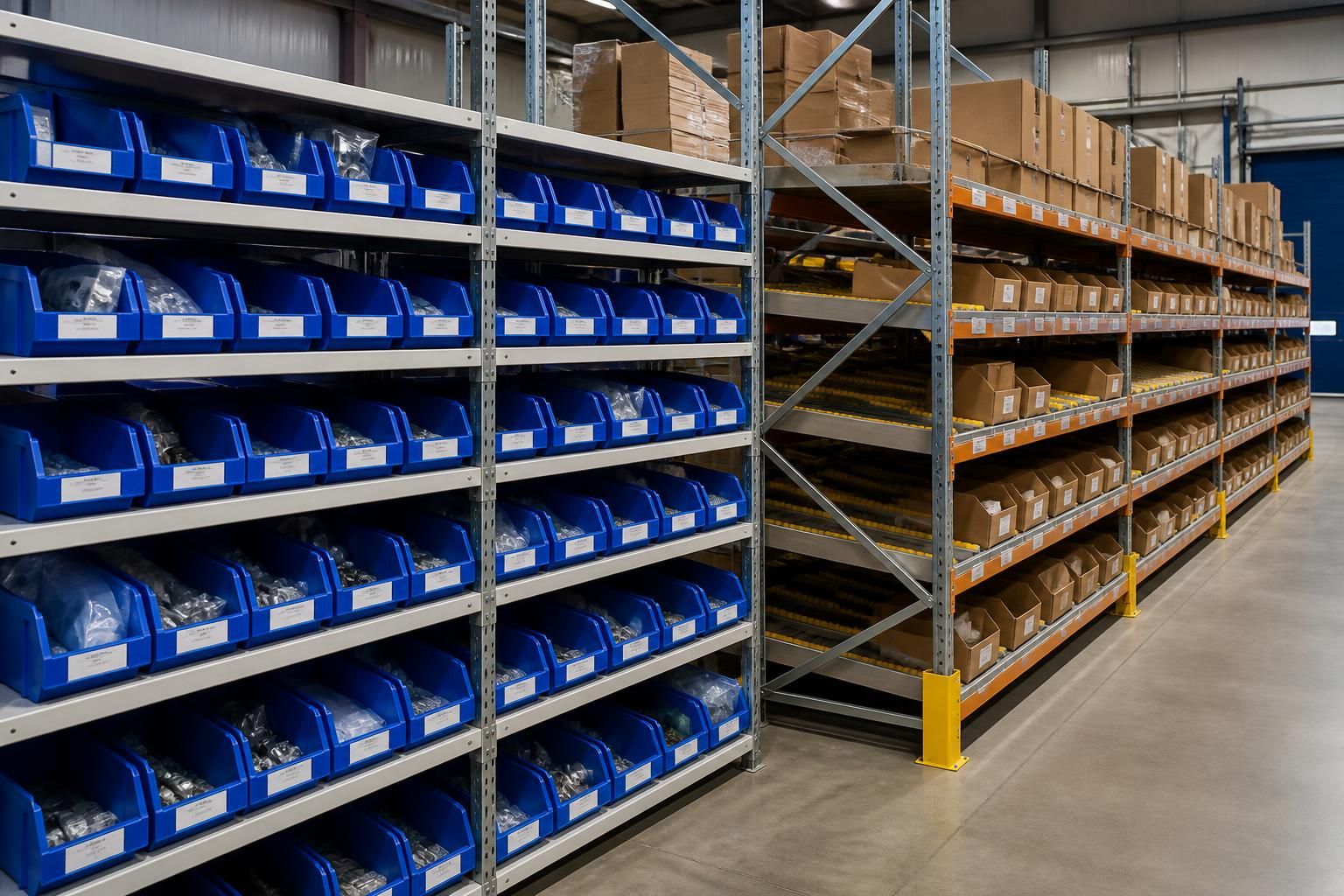
When should you choose bin racking over carton flow shelving?
Choose bin racking when you need direct access to individual bins, varied stock locations or flexible storage. Choose carton flow shelving when cartons move through a defined first-in, first-out picking sequence.
Choose bin racking when stock varies by size, demand or replenishment pattern. It suits warehouses where pickers need a clear, separately identified location for each item. Choose carton flow shelving when stock arrives in consistent cartons and the picking sequence needs to remain controlled.
The better choice depends on how you store, replenish and pick stock. Compare the following points before selecting a system.
- Stock variety: Bin racking suits mixed product dimensions and different quantities per item. Each bin can hold a separate SKU, component or small stock group.
- Carton consistency: Carton flow shelving suits cartons with compatible dimensions and weights. Its lanes need enough uniformity for cartons to move correctly.
- Picking method: Bin racking supports selective picking from several locations at one level. Carton flow presents stock through dedicated lanes, which can suit repeated picking routes.
- Replenishment: Bin racking can accommodate different replenishment timings across locations. Carton flow needs planned replenishment so incoming cartons do not interfere with picking.
- Stock rotation: Carton flow can support a controlled sequence where older stock should be picked first. Bin racking may suit stock where strict rotation is less important, provided locations remain managed.
Bin racking is often the stronger option for varied, small-item stock. It gives each product a defined position and helps you separate similar parts, tools or components. This can support stock checks and reduce uncertainty during picking.
It also suits warehouses where product lines change regularly. Locations can be reassigned as stock requirements develop, subject to the system’s load limits and layout. That adaptability matters when you cannot predict which items will need the most space later.
Carton flow shelving can be preferable for repeatable, high-frequency carton picking. Rollers or wheels allow cartons to move towards the picking face as stock is removed. This keeps the active carton position consistent and can reduce the need to reach into deeper storage.
However, carton flow needs a suitable lane arrangement. Very small cartons, unstable packaging or products with substantially different dimensions may not travel properly. In those cases, bin racking may provide more dependable location control.
Consider the available space as well as the picking process. Bin racking can provide compact storage for individual items, but the layout still needs safe access to each location. Carton flow uses dedicated lanes, so the space calculation must include lane depth, replenishment access and picking faces.
Do not compare systems by shelf count alone. Assess the complete working layout, including:
- the number and variety of stock lines;
- carton or container dimensions;
- item weights and handling requirements;
- how often each line is picked;
- how replenishment reaches the storage face;
- the access required for stock checks and counting;
- future changes to the product range; and
- the available floor area and working routes.
A mixed arrangement may suit warehouses with two distinct picking patterns. Bin racking can hold varied components or slower-moving items, while carton flow shelving handles repeatable carton lines. Separating these activities can make each storage area easier to manage.
That approach should follow the workflow rather than force every product into one storage type. The layout must also consider pedestrian movement, replenishment routes and safe working access.
Purchase price alone should not decide between bin racking and carton flow shelving. A lower initial figure may not suit stock that changes frequently, while a more involved arrangement may add unnecessary complexity for simple item storage. Compare the storage capacity, access requirements and future adaptability against the way you operate.
We can review the stock profile, available layout and picking process through a consultation and site survey. We then prepare a written proposal and working drawings for the storage arrangement under consideration. Where required, we can also coordinate project management through installation and final commissioning.
The key test is practical: can the system keep each product identifiable, accessible and replenished without creating conflicting movements? If stock varies considerably, bin racking is usually the sensible starting point. If cartons follow a repeatable picking pattern, carton flow shelving may offer the more suitable arrangement.
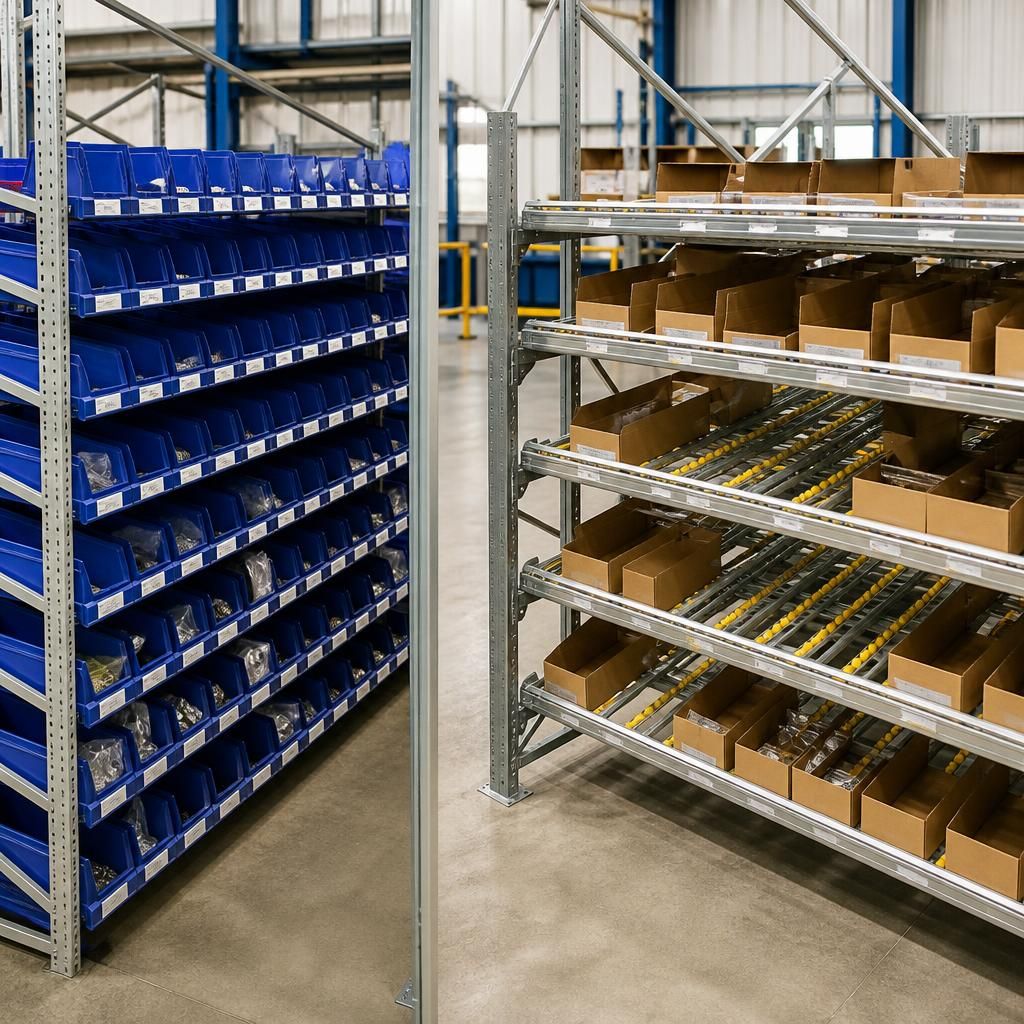
Test both arrangements against representative stock before choosing a system. Check container stability, label visibility and the space needed for safe picking.
Observe the complete movement from replenishment to collection. A site survey can identify conflicts between picking faces, storage locations and working routes before drawings are finalised.



