


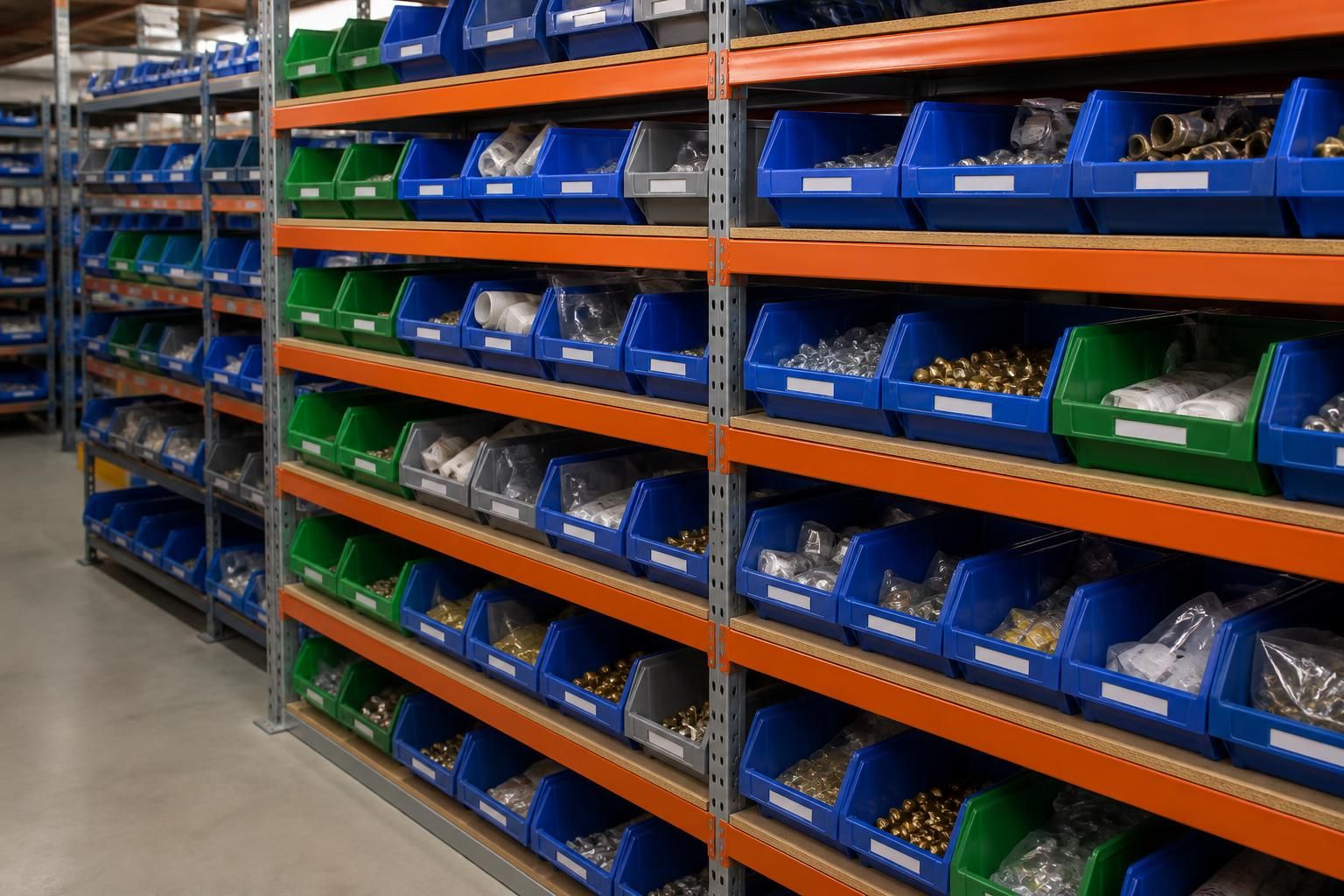
What load rating should warehouse bin racking have?
Warehouse bin racking should be rated for the heaviest planned bin loads, stored levels and the system’s beam and upright configuration. We confirm the required capacity through a site survey, stock review and working drawings before installation.
There is no universal load rating for warehouse bin racking. The correct rating depends on the bin contents, storage levels, bay arrangement, components and floor conditions.
Rate each level, not only the complete bay. A system may have a maximum load for an individual shelf and a separate maximum load for the whole bay. Both limits matter. The combined weight of all stored bins must remain within the bay rating, while each shelf must support its own load safely.
Load information should reflect the heaviest planned contents, not the average stock weight. Include the bin itself, packaging and any temporary containers. If stock changes frequently, use the highest credible load for that storage position.
Load distribution affects the rating. A uniformly spread load places different demands on shelving from a concentrated load. Heavy items positioned at one point can create local stress or deflection. Small, dense components need particular care because their weight may sit over a limited area.
Tell the designer how stock will sit inside each bin. This includes its dimensions, shape, centre of gravity and loading pattern. A bin that overhangs the shelf, contacts an upright or blocks a beam may not behave as expected.
The number and position of levels also matter. Adding storage levels changes the structure and the way loads transfer through the uprights. The clear height between levels must allow safe placement and removal without striking adjacent bins or components.
Changing the spacing between shelves can therefore affect the approved configuration. Do not add levels, move beams or alter shelf positions without checking the revised arrangement and its capacity.
Consider the complete structure. A bin racking load rating relies on more than shelf thickness. Uprights, beams, clips, braces, connections and fixings all contribute. The weakest relevant component can limit the capacity of the complete installation.
Floor conditions are also important. The slab must support the transferred loads, while the installation must suit the floor and fixing arrangement. Uneven or damaged flooring can affect stability and should be considered before loading the system.
Handling activity can introduce forces beyond the stored weight. Hand-loaded bin racking usually faces different risks from equipment-assisted loading. Impacts, dragged containers and poorly controlled placement can damage components or change how loads are carried.
For that reason, the stated rating assumes the system is used in the configuration for which it was designed. It does not permit impact, climbing, overhanging loads or damaged components.
Capacity signs should be clear and specific. Display the permitted load for each relevant level or bay, along with any restrictions needed for correct use. A general statement such as “heavy duty” does not provide enough information for a safe loading decision.
Keep the load information with the installation records. Supervisors and warehouse staff then have a practical reference when stock, bin sizes or shelf positions change.
Before ordering, prepare a stock schedule showing the maximum weight and dimensions for each category. Mark items that are unusually dense, unstable, long or difficult to handle. Also identify future stock that may occupy the same locations.
We use this information to assess the required configuration rather than applying a standard figure. Our written proposals and working drawings can show the intended levels, bay layout and loading assumptions.
Those assumptions should be checked before commissioning. If the planned use changes later, review the capacity before adding stock or modifying the system. A new bin type, heavier component or altered shelf position may require a fresh assessment.
Inspection and maintenance also protect the original rating. Replace or isolate damaged parts, keep loads within the displayed limits and report impacts for assessment. Do not straighten, drill or repair structural components without suitable instruction.
For a West Midlands warehouse, the practical starting point is a complete stock and layout review. We can discuss the intended use, examine the proposed arrangement and identify the information needed for a safe capacity decision.
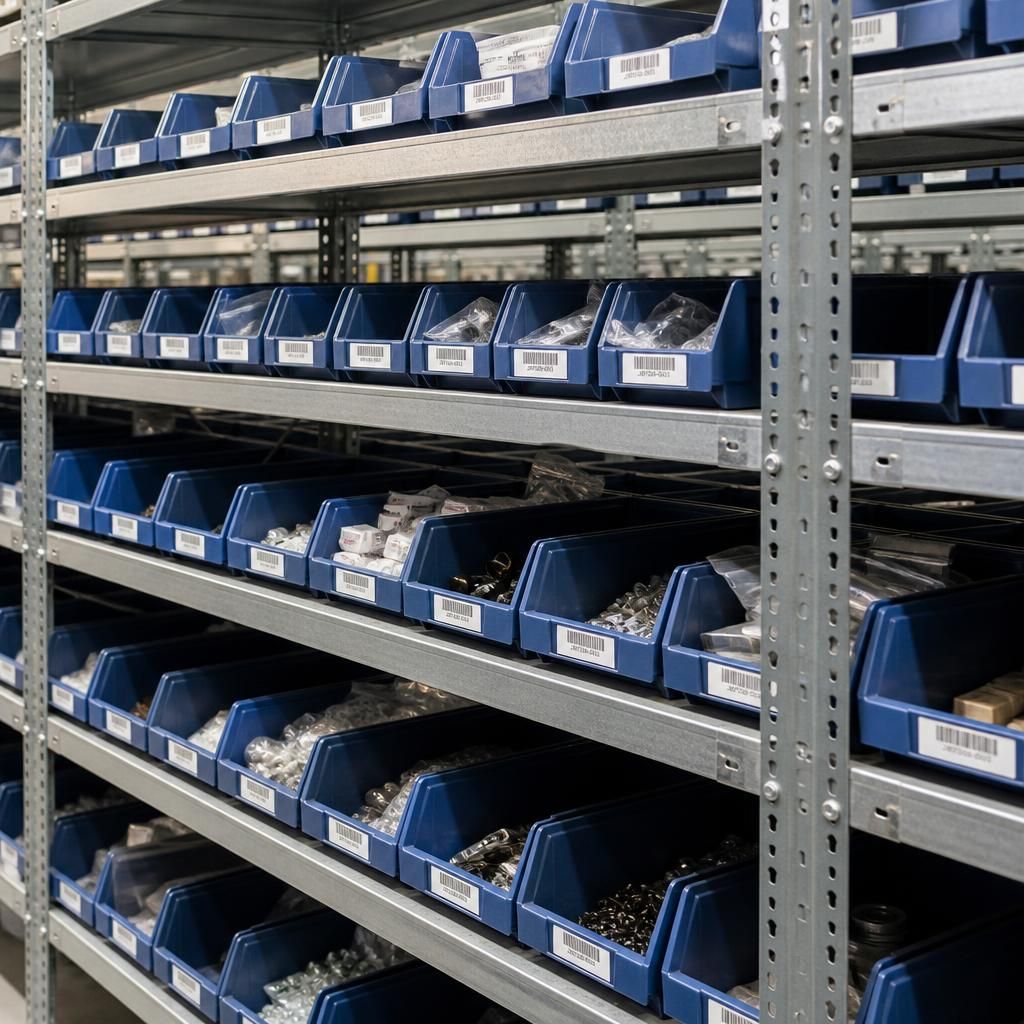
A permitted load does not show how much stock a bin can practically hold. Check internal dimensions, clearances and access alongside its weight limit.
During a site survey, we review these constraints with the proposed levels and handling method. Our working drawings can record an arrangement that reflects usable storage, not weight alone.



