


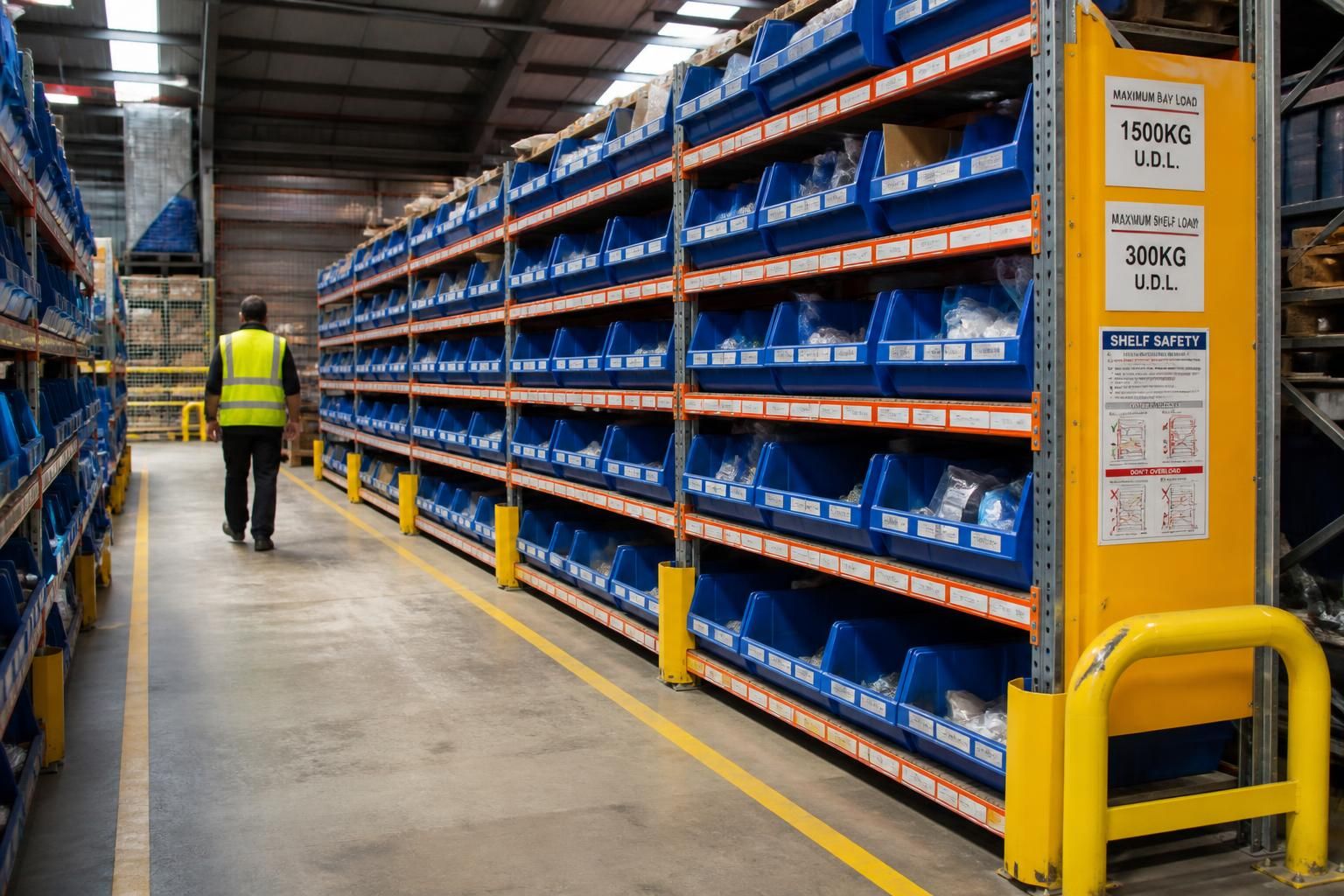
What compliance requirements should warehouse bin racking meet?
Warehouse bin racking should have documented load limits, suitable floor and layout conditions, safe access, and planned inspections.
We can assess the site, prepare working drawings and proposals, and explain the inspection and handover information needed for safe use.
Warehouse bin racking compliance depends on controlled design, documented use, suitable protection and recorded checks. You also need clear responsibilities for inspection, damage reporting, alterations and staff instruction.
Start with a written risk assessment for the complete storage activity. Consider the stock, picking methods, handling equipment, people, vehicle movements and surrounding work areas. The assessment should identify falling-object risks, collisions, overloading, unstable stock and blocked routes.
The assessment must reflect actual warehouse operations. A system used for hand picking has different controls from one served by mechanical handling equipment. Stock dimensions, access methods and working clearances should match the intended workflow.
Keep the design and operating information together. Working drawings should show the planned arrangement, including rack positions, levels and relevant dimensions. Written proposals should explain the intended use and any conditions affecting installation or operation.
Load information must remain clear at the point of use. Staff should know the permitted loads for each relevant level or bay. They also need instructions covering stock placement, prohibited alterations and action after damage.
- Do not exceed the stated load limits.
- Do not move beams, add levels or change components without a design review.
- Do not use damaged frames, beams, ties or other structural parts.
- Keep load notices visible and replace them when information changes.
- Keep aisles, access points and emergency routes free from stored goods.
Installation should follow the approved working drawings and the agreed method. The installer should check the arrangement during the work, rather than treating the first inspection as a substitute for correct installation.
Protection forms another part of compliance. Where handling equipment operates near the racking, assess collision points and protect vulnerable areas. Segregation, line marking and barrier protection can help define routes and reduce contact with the structure.
Protection must not conceal damage or prevent access for inspection. It should also suit the traffic pattern, picking activity and available floor space. Reassess the arrangement if operations, vehicles or stock change.
Control changes after installation. A compliant arrangement can become unsuitable after an alteration, relocation or change of stock. Treat every proposed change as a review point.
- Record the proposed change before work begins.
- Check the revised loads, dimensions and clearances.
- Update drawings and load information where necessary.
- Brief affected staff before the changed arrangement is used.
- Record approval, completion and any follow-up actions.
Staff should understand the loading rules, reporting process and restrictions on alterations. Training records should show who received the instructions and when the information was provided.
Inspection arrangements should cover routine user checks and planned formal inspections. Users should report impact, distortion, loose components, missing protection and other defects immediately.
A responsible person should record reported damage and decide whether the affected area can remain in use. Serious damage may require isolation until an appropriate assessment and repair take place.
Keep inspection records with details of findings, actions, dates and completion. Records help you identify repeated impacts or changes in condition. They also provide evidence that the storage system receives ongoing attention.
At handover, request information that allows the warehouse team to operate the system correctly. This should include the final arrangement, load information, operating guidance, inspection arrangements and outstanding actions.
Where a project includes several workplace elements, coordinated documentation reduces uncertainty between storage, access and protection measures. Project management may cover proposal and tender stages through installation and final commissioning where required.
Our consultation may include a site meeting and survey before we prepare written proposals and working drawings. This helps relate compliance requirements to the building, stock and workflow.
Spartan Direct provides warehouse bin racking and related workplace solutions across the West Midlands. We can also discuss inspection and aftercare requirements as part of the planned arrangement.
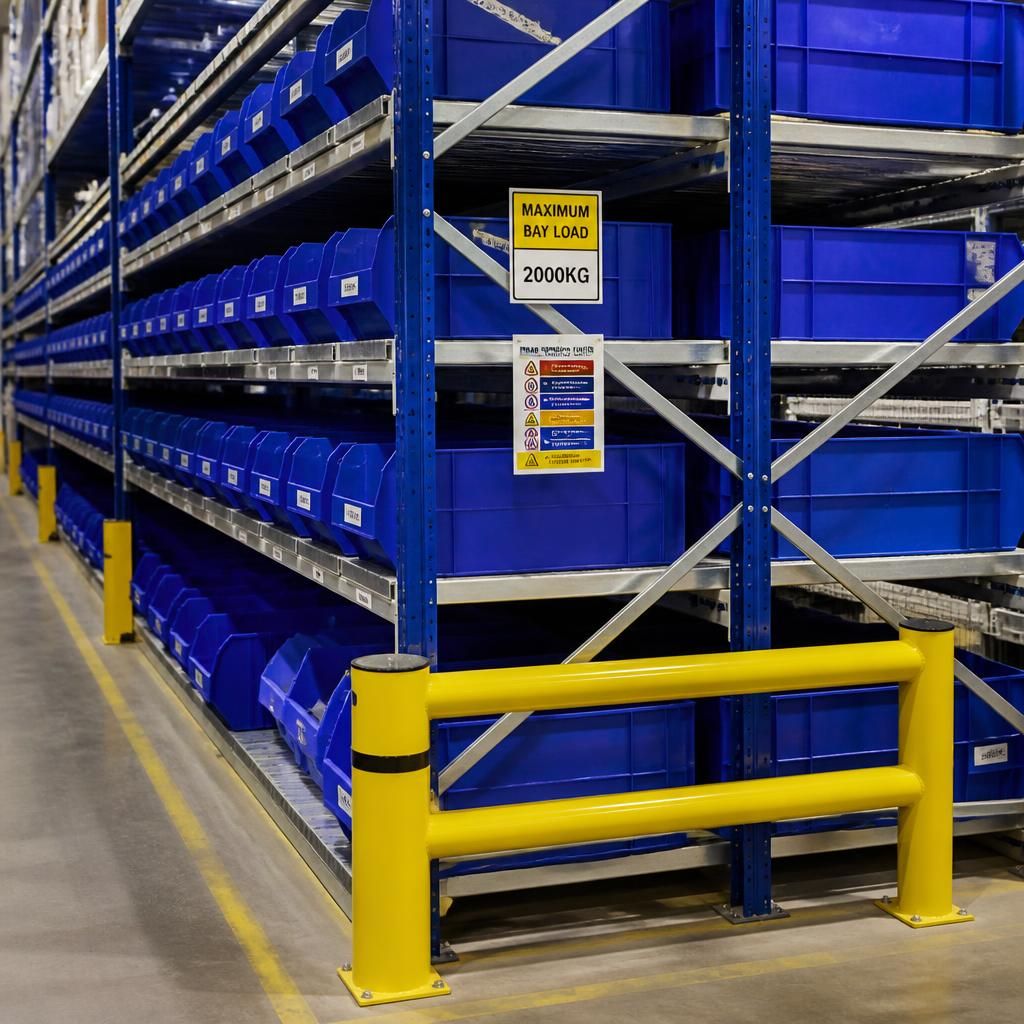
At commissioning, record every outstanding compliance action clearly. Identify its location, required remedy, responsible person and evidence of completion.
Do not treat an open action as closed because the rack is already in use. This clear audit trail helps warehouse managers control risks after installation.



