


When is longspan shelving more suitable than pallet racking in a warehouse?
Longspan shelving is usually more suitable when warehouse stock is picked by hand, comes in varied sizes, or does not need to remain on pallets. Pallet racking is generally better for palletised goods, heavier loads and forklift access between storage levels.
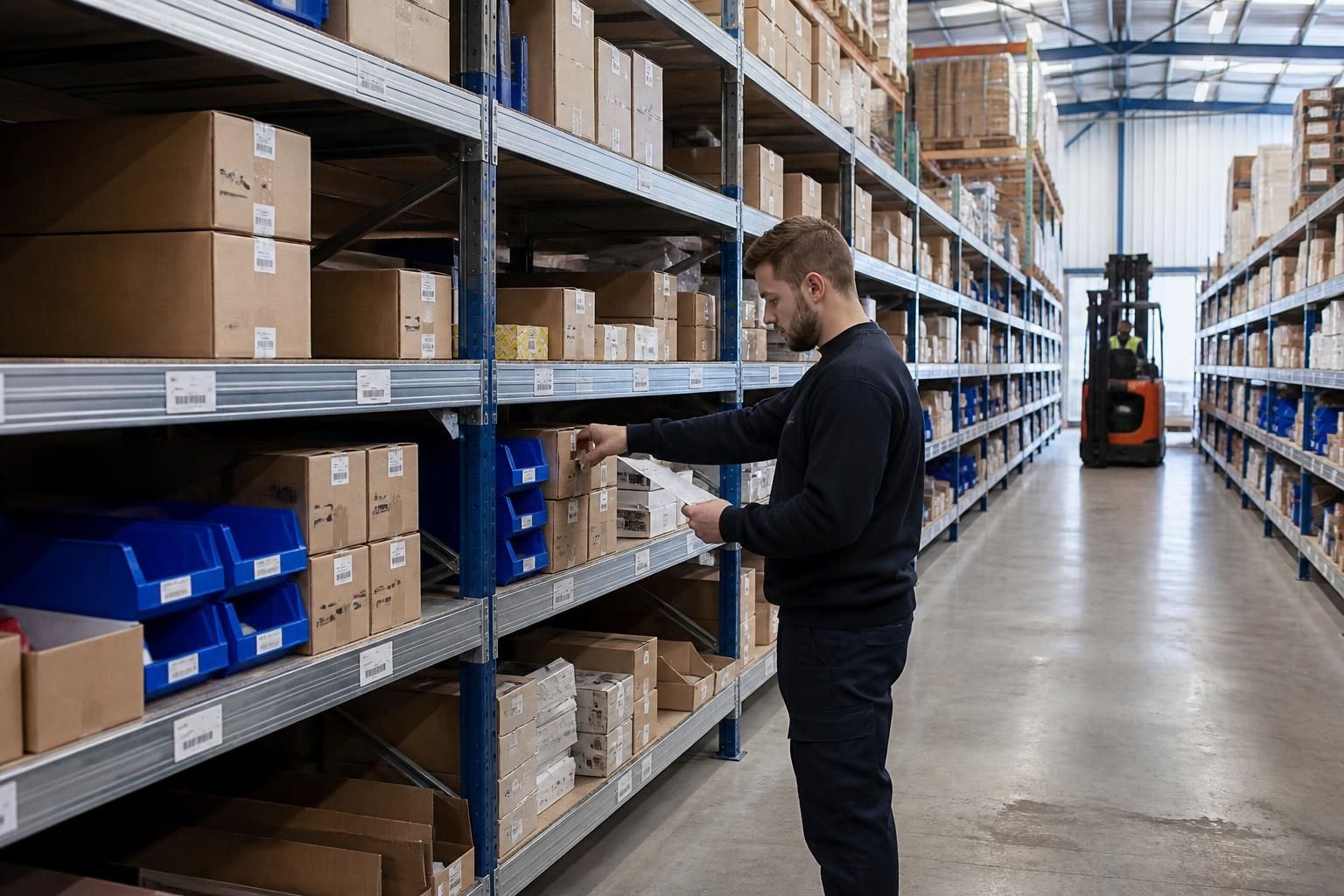
Longspan shelving is more suitable when the warehouse handles individual items, cartons, totes or components that are picked manually rather than moved as complete pallets. It is particularly useful where stock varies in size, different products need their own accessible locations, and staff need to select items directly from several shelving levels. Pallet racking remains the more appropriate option where goods are stored and moved on pallets using mechanical handling equipment.
The main difference is how stock is accessed. With longspan shelving, an operative normally walks to the required bay and takes the item from a shelf by hand. This makes it practical for order picking, parts storage, maintenance stock and mixed inventory. Pallet racking is arranged around pallet loads, with the stored unit typically placed into or removed from a racking position using a forklift or other lifting equipment.
Choose longspan shelving where direct access to many stock-keeping units is more important than storing complete pallet loads. It can suit warehouses that hold:
- Cartons and packaged goods picked as individual units
- Small or medium-sized components used in manufacturing or maintenance
- Stock with frequent picking activity
- Products with different dimensions that need separately labelled locations
- Items that are replenished or counted by hand
- Inventory that cannot be efficiently grouped into standard pallet loads
The number and type of product lines also affect the decision. A warehouse with a broad range of individual products may need accessible locations for each line, even when the quantity held for each one is modest. Longspan shelving can make these locations easier to identify and reach. Where the warehouse holds fewer product lines in larger quantities, pallet positions may provide a more suitable arrangement.
Warehouse height should be considered alongside the floor area. Longspan shelving can use vertical space through multiple shelf levels, but every level must remain practical and safe for the way stock is handled. If upper levels require a step, ladder or other access equipment, the design should account for that equipment, the working method and the frequency of picking. A storage system should not simply add levels that staff cannot use efficiently.
Stock weight and loading method are also important. Longspan shelving is available in configurations for different applications, but the selected system must be designed around the actual load placed on each shelf, the distribution of that load and how it will be loaded or unloaded. Pallet racking is normally considered when the stock arrives, remains and leaves as palletised loads, particularly where mechanical handling is part of the warehouse process. The comparison should therefore be based on the complete handling method rather than on the appearance of the equipment alone.
Access requirements can change the best layout. If staff need to pick from both sides of a run, the position of aisles and walkways will matter. If stock is replenished from one side and picked from the other, a different arrangement may be needed. Longspan shelving may be combined with other storage systems where a warehouse contains both small-parts inventory and palletised reserve stock. For example, pallet racking may hold bulk or reserve goods while shelving provides accessible locations for picking quantities.
Product characteristics can rule out a straightforward shelving arrangement. Fragile, unusually long, cylindrical or awkwardly shaped items may need specialist storage rather than standard shelf levels. The design should consider whether goods can be safely placed on the shelves, whether they could project into an aisle, and whether separators, decking or other storage features are needed. Loads should remain stable during normal access and should not obstruct routes or create avoidable handling risks.
Cost should be assessed as part of the warehouse operation, not only by comparing the purchase price of shelving with the price of racking. The relevant factors include the number of storage locations required, the available floor area, the need for handling equipment, replenishment arrangements, picking time and any changes needed to the layout. A lower equipment cost may not represent good value if it creates inefficient picking or insufficient capacity. Conversely, pallet racking may be unnecessary where the warehouse does not handle pallet loads.
A practical comparison normally starts with a review of the stock profile and working process. This should cover the size and weight of items, the number of product lines, picking frequency, replenishment method, pallet use, available height, aisle requirements and any future changes expected in the operation. A site survey can then test the proposed arrangement against the building, access routes and working environment. Spartan Direct can use that information to prepare written proposals and working drawings, allowing the storage options to be reviewed before installation.
For many warehouses, the most effective answer is not an all-or-nothing choice. Longspan shelving can serve manually picked stock, while pallet racking can provide bulk storage for palletised goods. The suitable balance depends on the warehouse’s stock, handling equipment, building constraints and workflow. A design based on those factors will provide a more reliable basis for choosing between longspan shelving, pallet racking or a combination of both.
Longspan shelving is particularly suitable when each product line needs its own hand-accessible pick face, but the quantity held for picking is smaller than a complete pallet. This arrangement can separate the stock used for day-to-day orders from reserve stock stored elsewhere, such as in pallet racking. Replenishment can then be planned around the required pick quantities rather than placing every product line into a pallet position.
This approach is useful where staff need to identify stock by labels, product codes or location references while working along a shelving run. The design should allow enough space for the item to be removed and returned safely, without placing cartons or components where they can fall into an aisle. Shelf levels, dividers and location numbering can be selected according to the stock profile and the way orders are picked.
Where a warehouse has both small-quantity picking and palletised reserve stock, a combined layout may provide a clearer division between these activities. The appropriate arrangement should be checked against replenishment routes, stock rotation, available space and the equipment used to move reserve goods.
Discuss whether longspan shelving suits your warehouse
If you are unsure whether longspan shelving, pallet racking or a combination suits your warehouse, discuss your stock profile and handling requirements with Spartan Direct. A no-obligation consultation and site survey can inform a written proposal for your storage arrangement.



