How should warehouse shelving be adapted for awkwardly shaped stock?
Adapt warehouse shelving by measuring stock dimensions, weight and handling needs, then setting shelf levels and bay arrangements accordingly. A site survey and working drawings can assess access and layout before installation, helping accommodate irregular items without wasting usable space.
Adapt warehouse shelving by assigning awkward stock the support, separation and access it needs, rather than forcing every item into identical bays.
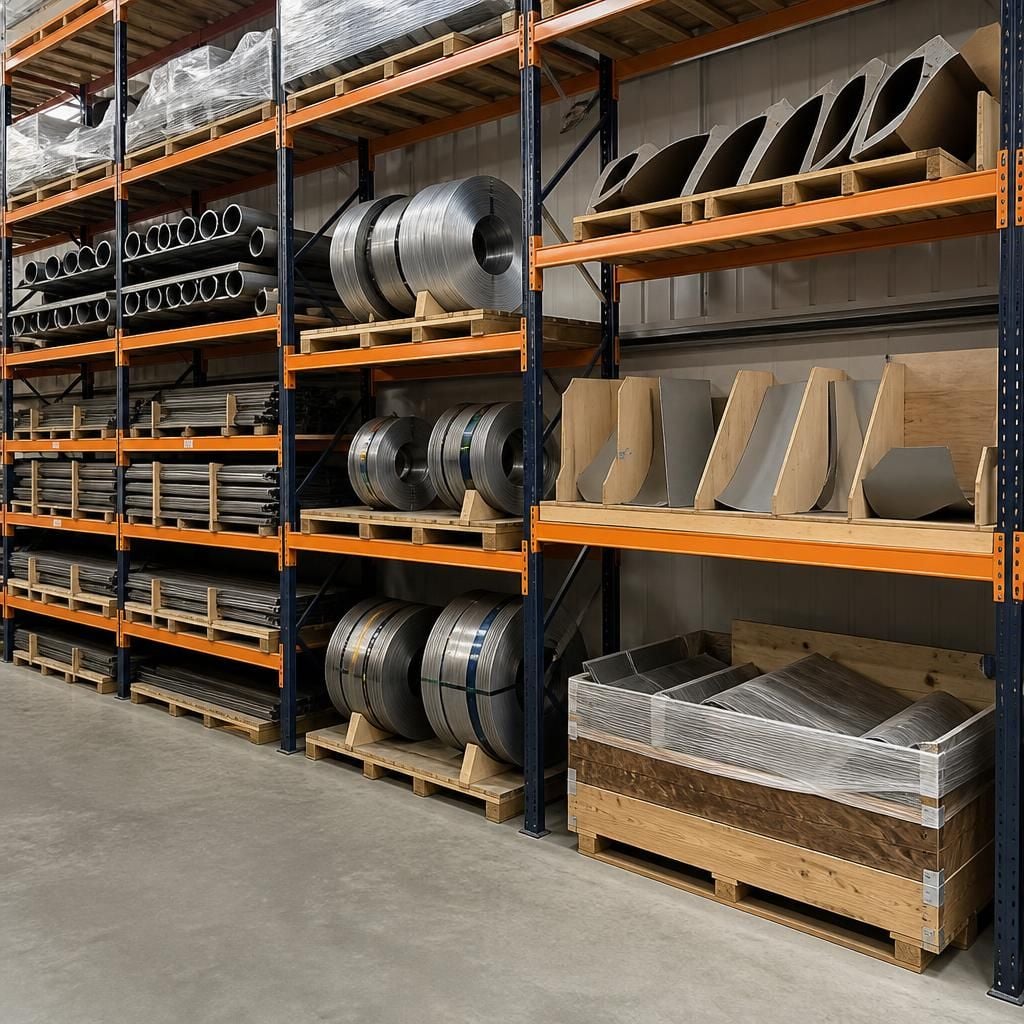
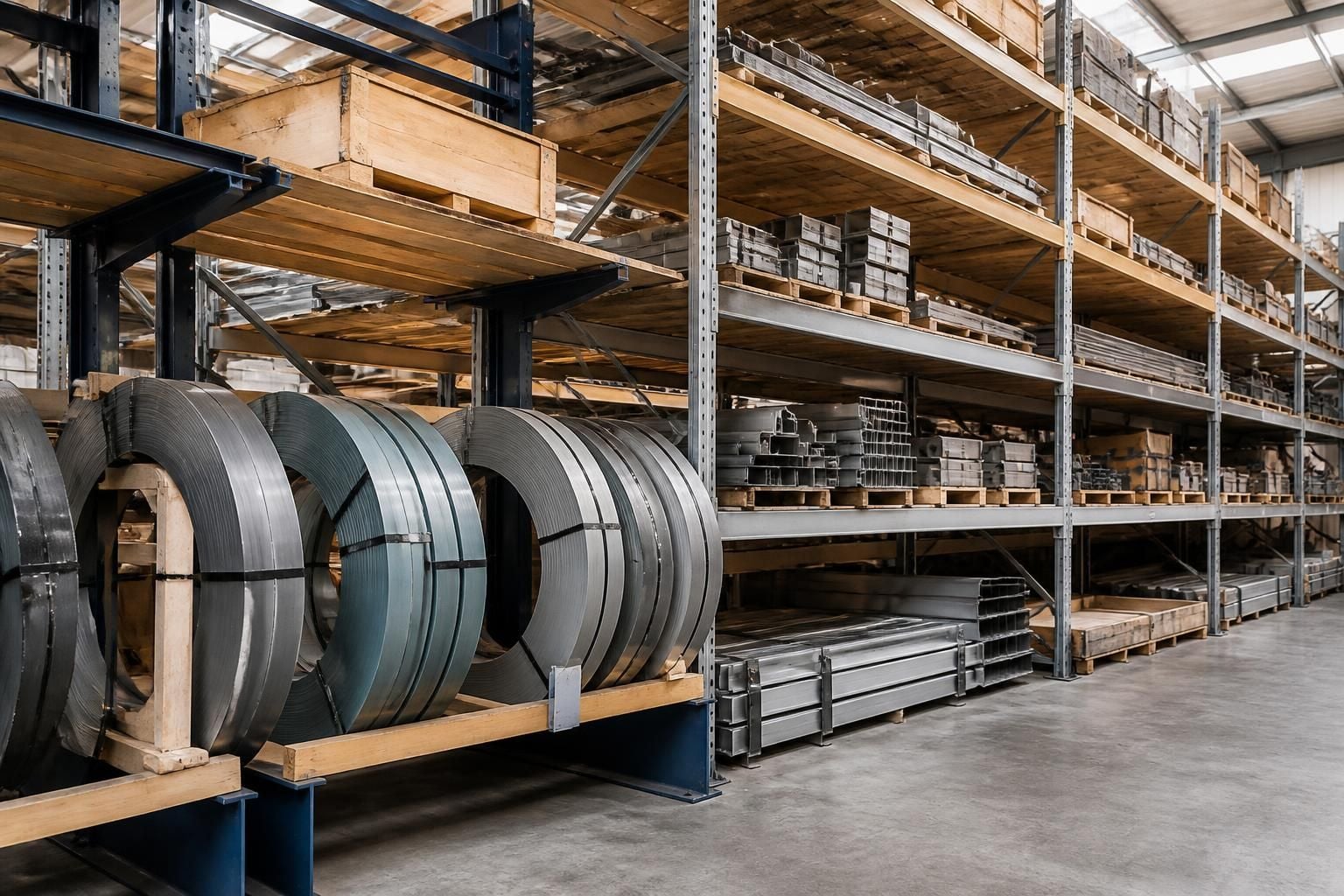
Long or projecting items: Use shelving with suitable clearances, or consider cantilever racking for stock that extends beyond conventional shelf widths. This keeps long materials supported and reduces the risk of items obstructing adjacent access routes.
Where long stock remains on shelving, check that shelf edges, uprights and neighbouring bays do not create snagging points. Store projecting items consistently, with their handling direction clear to warehouse staff.
Coils and curved materials: Specialist or coil storage can provide a more appropriate arrangement than flat shelves. Supports should prevent rolling, uncontrolled movement and contact with items stored below.
The storage method should also reflect how coils are lifted, carried and placed. A layout that prevents safe handling can create more difficulty than the original lack of space.
Irregular footprints: Adjustable components can divide a bay into practical storage zones without leaving large unusable gaps. Dividers, supports or separate shelf sections can help keep different shapes apart.
Keep unstable, narrow or uneven items from leaning against unrelated stock. Dedicated locations make retrieval more predictable and reduce the chance of items shifting during picking.
Small items with awkward packaging: Bins, trays or shelf divisions can stop loose parts spreading across a shelf. They also create clearer separation when several product lines share one bay.
Use labels that identify the stock location and handling requirements. Clear identification supports picking accuracy without requiring staff to move surrounding items first.
Fragile, delicate or easily damaged stock: Separate it from heavy materials and avoid arrangements that allow items to overhang shelf edges. Protective shelf surfaces or dedicated compartments may be appropriate, depending on the stock.
Consider how packaging changes the stored shape. Handles, rims, wrapping and uneven bases can affect stability, access and the usable space around each item.
Stock with different handling patterns: Place frequently picked items where staff can reach them without unnecessary movement. Less frequently accessed stock can occupy less convenient positions, subject to safe loading arrangements.
Keep stock that is picked together within a logical area when the shelving layout allows. This can reduce travel between unrelated bays and support a clearer workflow.
Keeping access routes clear: Awkward stock should remain within its allocated storage area. Items should not extend into aisles, doorways, work areas or equipment routes.
Where stock cannot fit safely within standard shelving, changing the storage category may be more suitable than reducing access space. Cantilever racking, specialist storage or a different bay arrangement may provide a better fit.
We can review these choices through a no-obligation consultation, including a site meeting and survey where appropriate. Written proposals and working drawings can show the intended arrangement before installation.
For projects involving several workplace areas, project management may also cover proposal and tender stages, installation and final commissioning where required. This helps keep storage changes aligned with the wider working environment.
The right adaptation depends on stock behaviour, handling equipment, access requirements and the surrounding workflow. A shelving plan should therefore show how items enter, remain in and leave each location.
For stock with handles, flanges or uneven edges, assess the complete storage position rather than the item alone. Shelf depth, side clearance and the space needed to grip each item should work together.
Working drawings can show these relationships before installation, including the position of dividers, guides or protective panels where needed. This gives you a clearer basis for checking that awkward stock remains separated, accessible and contained within each bay.