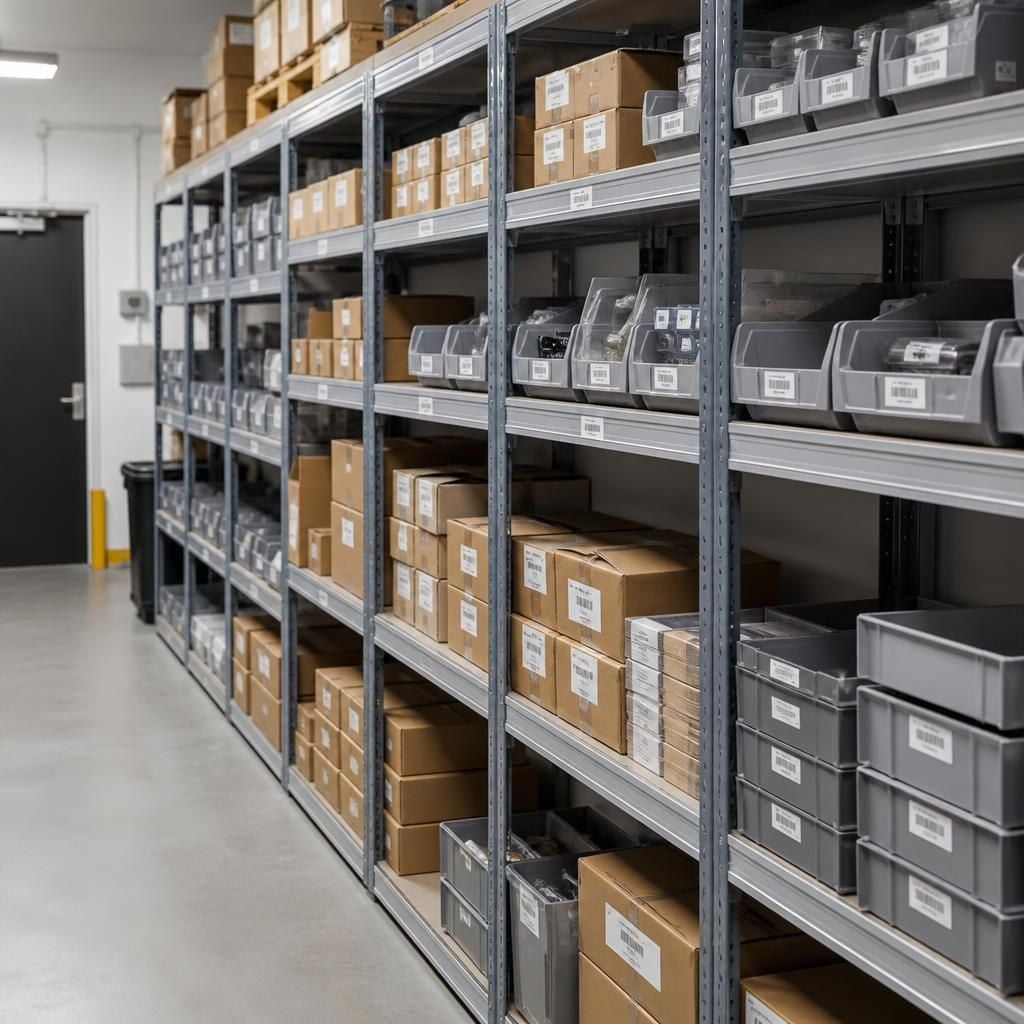
When should you choose modular shelving for commercial storage?
Choose modular shelving when stock changes, shelf levels need adjustment, and staff need direct access within a commercial storage area. We assess the space, loads and workflow before specifying shelving that supports flexible layouts for warehouses, stockrooms or offices.
Choose modular shelving for hand-loaded commercial storage when the room or stock plan may develop over time. It offers an organised alternative to pallet racking where staff handle individual items rather than complete pallets.
Modular shelving can suit stockrooms, maintenance areas, archive spaces, parts stores and office storage. It works best when items need clear identification and regular access from floor level. Staff can then locate stock without depending on forklifts or specialist handling equipment.
- Changing premises or room layouts: Components can be rearranged when departments move, work areas change or storage must be introduced in stages.
- Mixed item sizes: Different shelf positions can accommodate cartons, containers, files, tools and components within the same storage area.
- Growth within an existing building: Additional shelving may support increased storage demand without immediately requiring relocation or a separate building.
- Shared storage areas: A planned arrangement can separate stock categories, work-in-progress items, spares and records.
- Office and light industrial use: Modular shelving can fit areas where employees need frequent access and straightforward visual organisation.
Modular shelving is less suitable when loads are palletised, unusually heavy or too large for hand-loaded storage. Pallet racking may be more appropriate for complete pallets, while cantilever racking can suit long or awkward materials. The correct choice depends on the stock, handling method and available room.
Do not select shelving by floor area alone. The assessment should consider the weight of each stored item, the number of items, access frequency and the space required for safe movement. Doors, columns, plant, lighting, fire equipment and escape routes can also affect the layout.
Every shelf requires a suitable load specification. You should provide accurate information about stored weights and how those loads will be distributed. Shelving should not be treated as suitable for heavier goods simply because a bay fits the available space.
Modular shelving can also suit phased projects. You may begin with one storage zone, then extend the arrangement when the wider layout becomes clearer. This approach needs planning from the start, so future sections do not block access or interfere with work areas.
A comparison with fixed storage can clarify the decision. Fixed arrangements may suit a stable stock plan with little expected change. Modular shelving is more appropriate when the storage pattern, room use or item mix may need revision. Wall-mounted shelving may suit limited items, but it does not provide the same floor-standing storage arrangement.
We can assess the proposed area through a no-obligation consultation, which may include a site meeting and survey. We then prepare a written proposal and working drawings for consideration. These documents can show the intended layout, storage arrangement and any points requiring confirmation.
Where a project includes other workplace changes, project management may be offered from proposal and tender stage through installation and final commissioning. That can help coordinate shelving with related storage or workplace works, without treating every area as the same requirement.
For businesses in the West Midlands, modular shelving can support orderly storage within existing commercial, warehouse and office premises. The decision should follow the survey, stock information and working layout rather than a standard shelf arrangement.
Modular shelving suits storage areas that must remain easy to understand as stock categories change. A consistent bay layout can support clearer labelling, replenishment and stock checks without tying every item to a permanent position.
Choose it when staff need an orderly arrangement that can develop with the room. The proposed layout should still leave suitable access around doors, equipment and working areas.