When is wall-mounted shelving suitable for a commercial storage area?
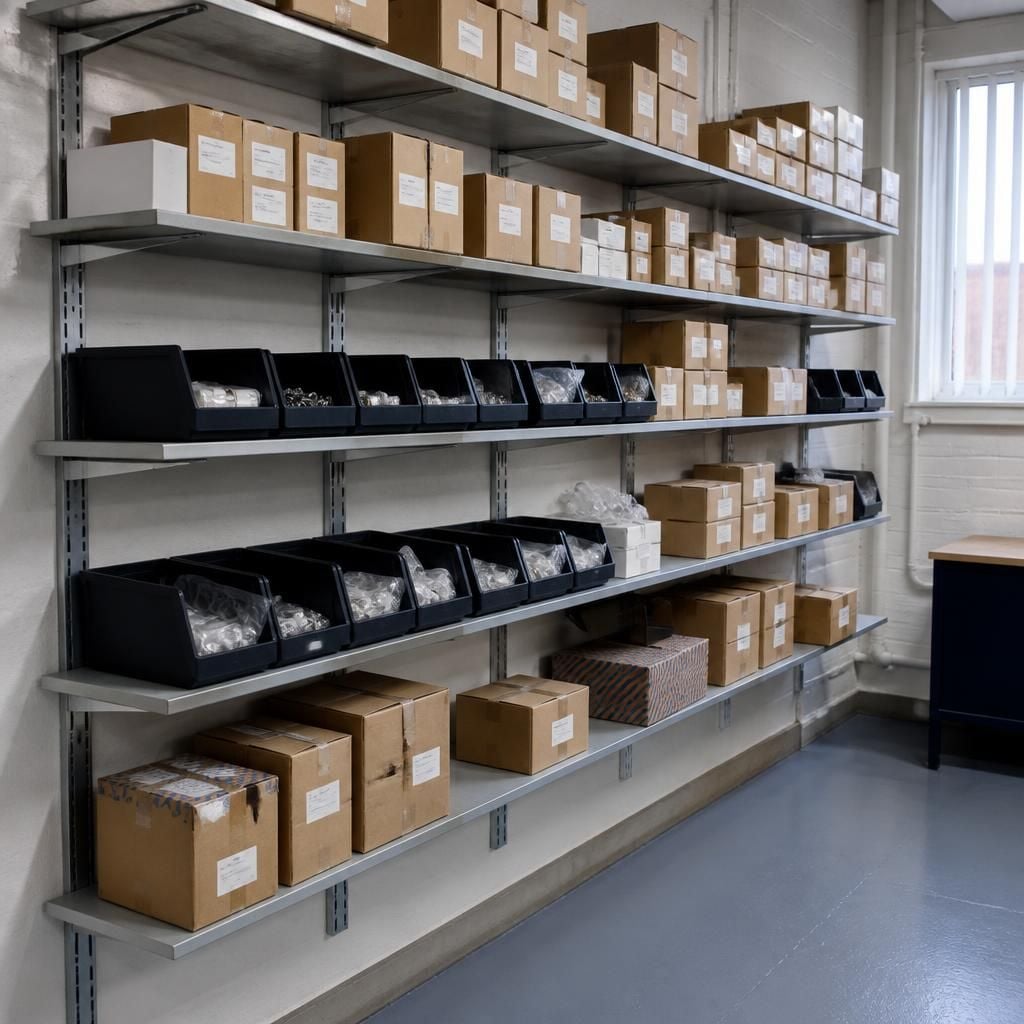
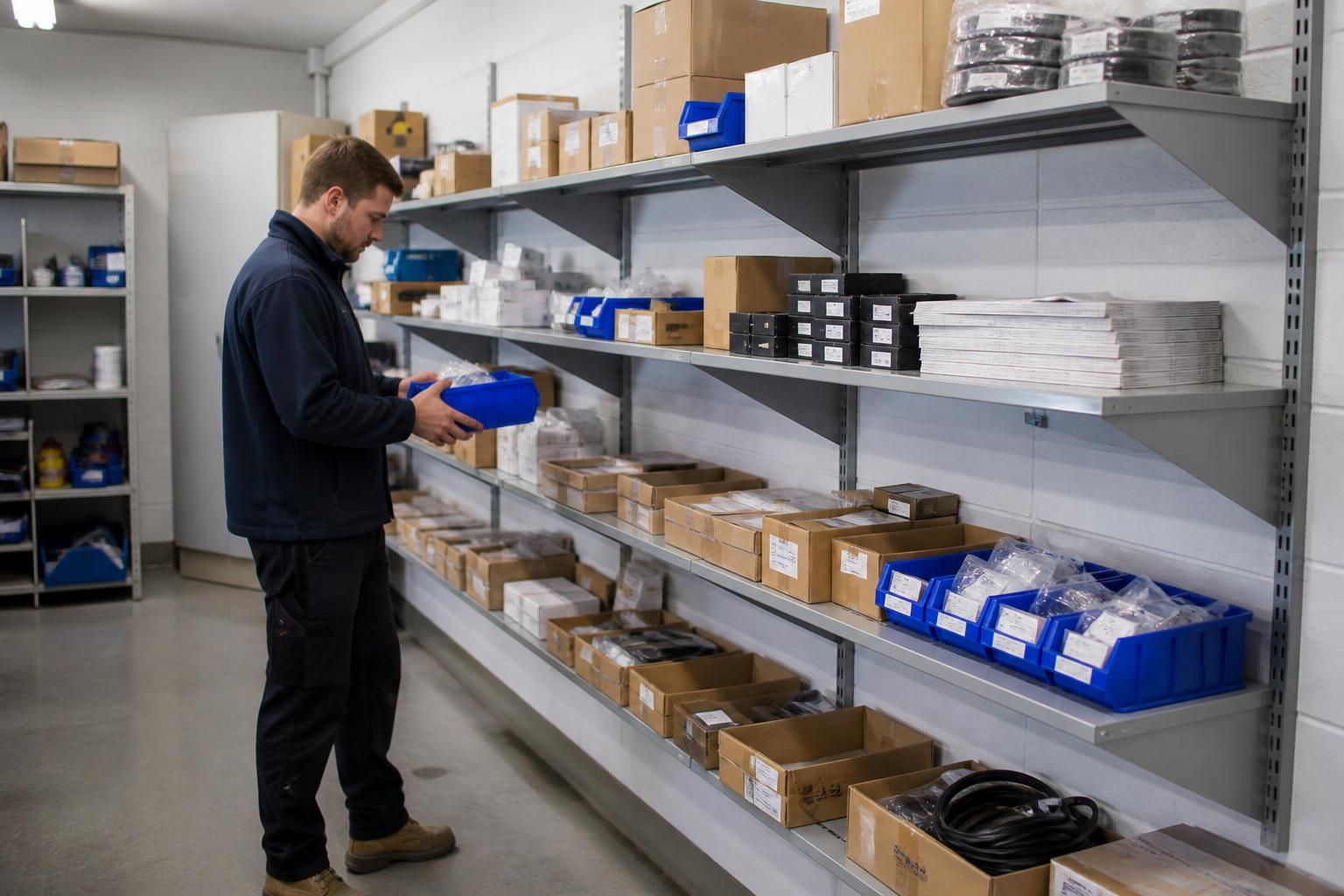
Wall-mounted shelving suits commercial storage areas where stock needs accessible storage along available wall space, without obstructing the working layout.
We assess the site, stock and requirements before preparing proposals and working drawings for suitable shelving.
Wall-mounted shelving is suitable when the wall and fixing arrangement can support the intended loads, while the stock remains accessible from the front. It works best where you need organised storage around the room’s perimeter, rather than freestanding units across the floor.
Check the wall before choosing the shelving. Wall construction, condition and hidden services affect the fixing method. Plasterboard, masonry, concrete and other substrates may require different arrangements. A survey should identify whether the wall can accept the proposed system safely.
The fixing arrangement must also suit the stock loads. Light cartons, components, stationery, tools and packaged parts may suit wall-mounted shelving. Dense or exceptionally heavy goods may need another storage format. Shelf dimensions, load information and the way people handle stock should all inform the specification.
Consider how people use the area. Wall-mounted shelving suits stock picked manually from one working face. It can support straightforward retrieval where staff know the stock location and need clear access along the front. It is less suitable where goods require access from both sides or move frequently between storage positions.
It can also suit rooms where central floor space supports work, movement or equipment. Keeping storage against the walls may protect the main working area from unnecessary obstruction. The layout must still preserve safe routes, door swings and access to workplace equipment.
Fixed storage suits a settled layout. Wall-mounted shelving is worth considering when storage positions are likely to remain in place. If the room changes regularly, freestanding shelving may offer easier relocation. The right choice depends on the building, stock, handling method and planned workflow.
Do not position shelving across exits, access routes or equipment controls. Keep doors, electrical installations and other essential areas usable. Stock should not project into circulation spaces or create an unsafe reach. Frequently handled items usually belong at practical working heights, with less-used stock positioned accordingly.
Wall-mounted shelving may not be the right option when:
- the wall substrate or condition is unsuitable for the required fixings;
- the stock needs pallet handling or mechanical access;
- loads are too heavy for the intended shelving arrangement;
- the layout needs frequent movement or reconfiguration;
- staff need access from both sides of the storage;
- the wall contains services that restrict safe installation; or
- the available wall length cannot provide the required storage capacity.
In these situations, freestanding shelving, pallet racking or another storage arrangement may provide a better fit. The decision should follow the stock and workflow, rather than the available product name.
Installation planning matters. A suitable proposal should show the shelving position, shelf arrangement and relevant access considerations. It should also account for the wall construction, site access and any work taking place nearby. Clear drawings help you review the layout before installation begins.
Our consultation can include a site meeting and survey, followed by written proposals and working drawings. We use these details to establish whether wall-mounted shelving fits the space, loads and daily handling requirements. Where a project needs broader coordination, project management may continue through installation and final commissioning.
For commercial sites in the West Midlands, Spartan Direct supplies and installs shelving as part of its work on office, commercial and industrial space. The practical test remains simple: the wall must support the system, the stock must suit manual access, and the layout must protect the working area.
Wall-mounted shelving can work well as part of a mixed storage plan. Use it for smaller items, records or components that need clear identification, while reserving floor-based systems for bulkier stock.
This approach prevents one shelving type from carrying unsuitable goods. It also lets you judge the wall-mounted section by its specific purpose, available wall area and handling routine rather than treating it as the sole storage system.