


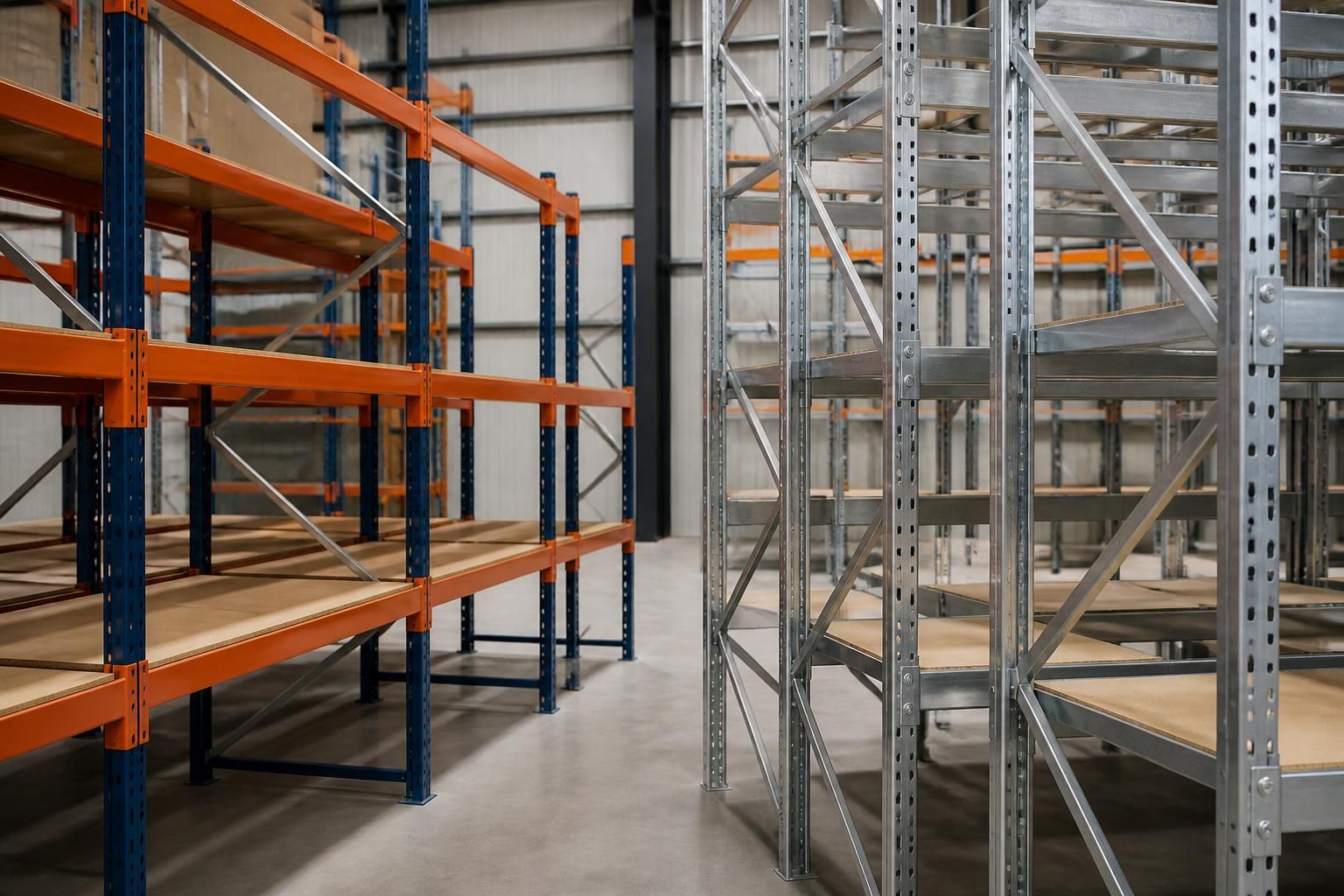
Should you choose boltless or bolted heavy duty shelving?
Choose boltless heavy duty shelving when you need adjustable layouts; choose bolted shelving when a fixed arrangement suits your stock and workflow.
We can assess your site, stock and requirements, then provide a written proposal and working drawings for the appropriate arrangement.
Choose boltless shelving for frequent layout changes, and choose bolted shelving where a fixed arrangement supports consistent storage. The better option depends on stock weight, shelf dimensions, access requirements, floor conditions and future changes.
Boltless heavy duty shelving uses connected components rather than a conventional bolted frame. Shelf levels can usually be altered without dismantling the complete bay. This suits stock that changes in size, quantity or handling requirements.
That flexibility can support changing picking routes and storage layouts. It also helps when one shelving area must accommodate several stock types. Levels still need setting carefully, so frequently handled items remain accessible.
Boltless shelving may also simplify assembly where the layout contains many bays. The installation method, component arrangement and loading requirements still need checking before selection.
Bolted heavy duty shelving suits a more settled arrangement. Bolted connections create a fixed frame, which can support consistent shelf positions and a clearly defined storage plan.
This approach can suit stock that remains in the same locations. It may also be appropriate where the design requires particular frame connections or a fixed relationship between bays.
A bolted system can take longer to alter because connections must be released, repositioned and secured again. That may matter when stock changes regularly or access to the shelving is restricted.
Strength is not decided by the connection method alone. The required capacity depends on the shelf span, frame arrangement, component specification and how loads are placed.
Heavy items should sit within the designed loading limits. Concentrated loads, uneven loading and unsuitable shelf levels can affect safe use. The proposed arrangement should reflect the actual stock rather than an assumed load.
Floor conditions also matter. An uneven or unsuitable floor can affect installation and stability for either shelving type. Site information should therefore form part of the selection process.
Consider workflow before choosing the frame. Boltless shelving may suit a warehouse where teams adjust locations as stock changes. Bolted shelving may suit a store with established locations and limited layout variation.
Review how people reach each shelf, place loads and remove stock. A fixed arrangement is not suitable if it creates awkward access as requirements change. A flexible arrangement still needs disciplined planning to prevent obstructed aisles or poorly positioned loads.
Installation and future changes affect the overall value. Boltless shelving can reduce the work involved when levels need moving. Bolted shelving may require more work for later alterations, depending on the frame and proposed change.
Do not compare only the initial equipment price. Consider the proposed installation, future adjustments, access requirements and the time involved in changing the layout. A quotation should make the recommended arrangement and its scope clear.
There is no universal price advantage between the two options. The quantity, dimensions, loading requirements, site conditions and installation work all affect the quotation.
Use this decision guide:
- Select boltless shelving when stock dimensions or quantities are likely to change.
- Select bolted shelving when shelf positions and storage locations should remain consistent.
- Review boltless shelving where future reconfiguration is important.
- Review bolted shelving where a fixed layout supports an established workflow.
- Check both options against the actual loads, available floor area and access routes.
We can review the site, stock and working requirements before recommending either arrangement. A no-obligation consultation may include a site meeting and survey.
We then provide a written proposal and working drawings showing the intended shelving arrangement. Where required, project management can continue through installation and final commissioning.
This process lets you compare boltless and bolted shelving against the space and operation, rather than selecting from a generic specification.
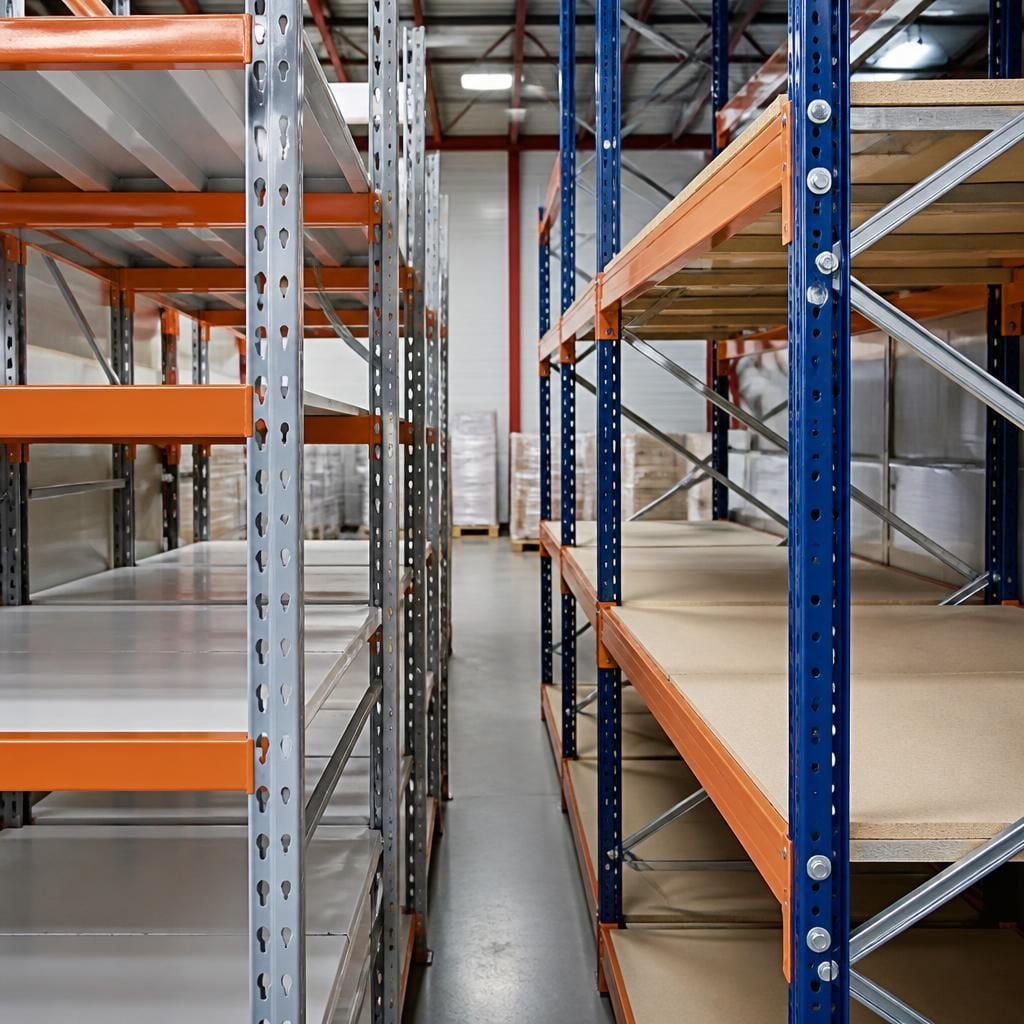
The connection choice should also reflect how shelving changes will be controlled. Moving levels or altering bays requires clear responsibility, safe access and accurate load information.
Decide who will approve changes, check the revised arrangement and return stock to suitable positions. This keeps boltless flexibility under control and prevents a fixed bolted layout being altered without proper planning.



