Which mezzanine safety gate suits pallet handling best?
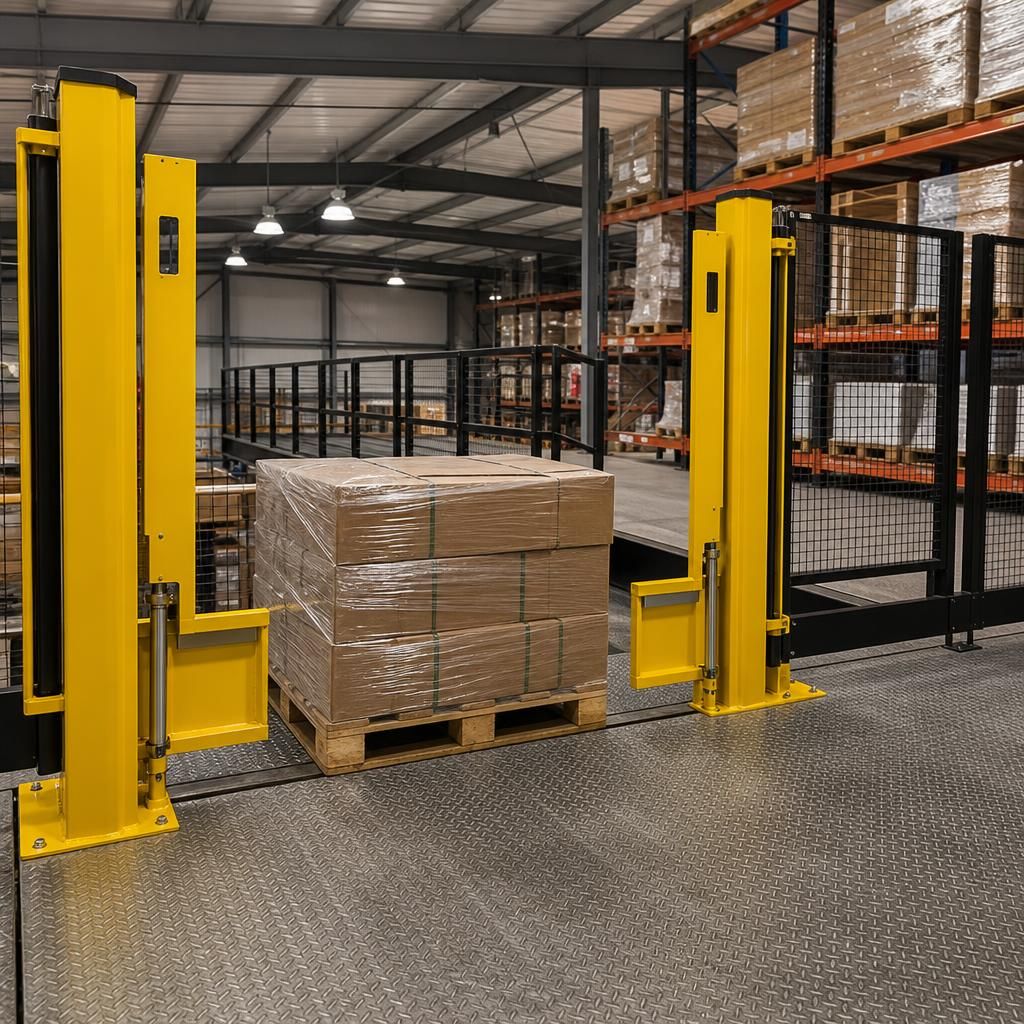
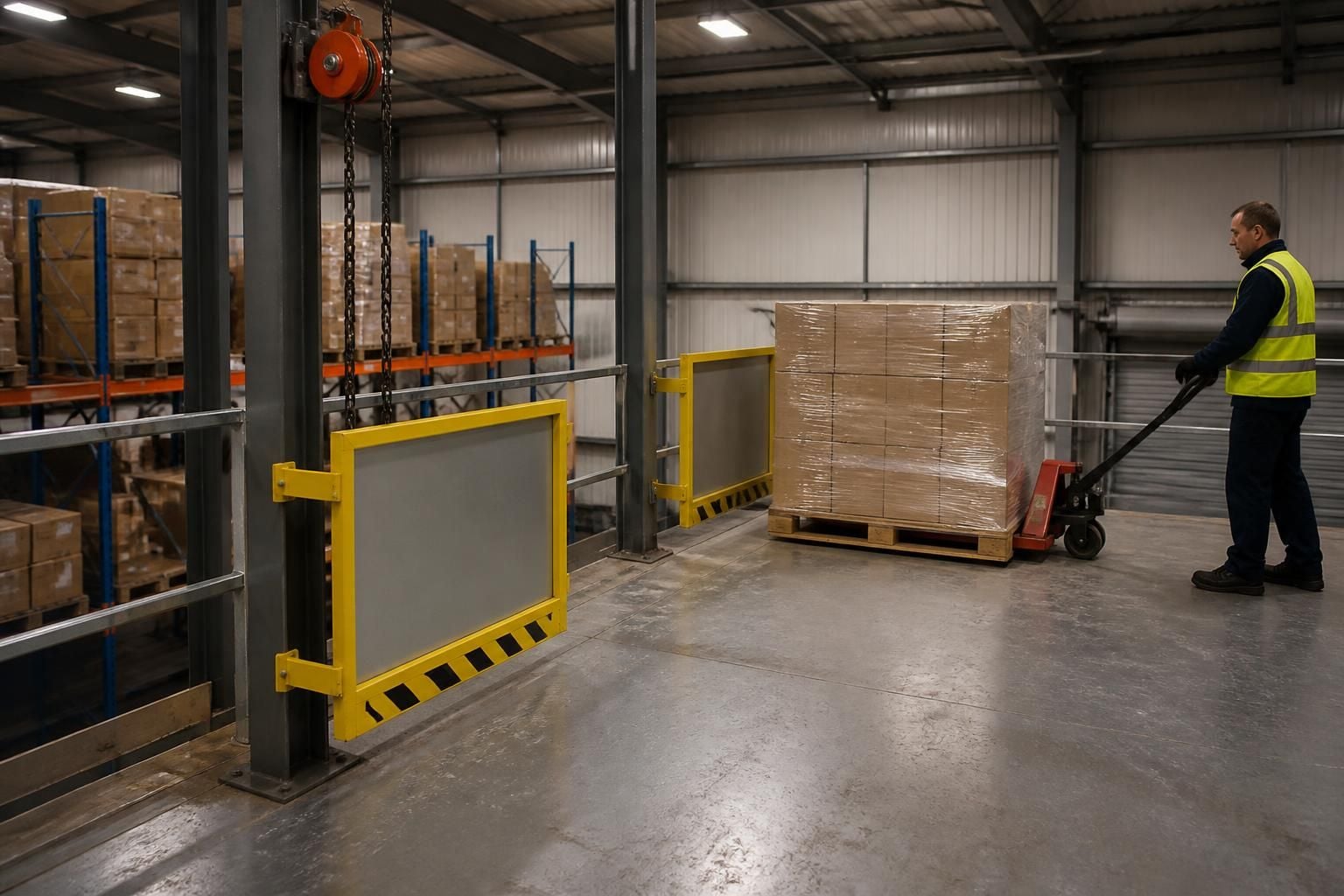
A counterbalanced pallet safety gate usually suits mezzanine pallet handling best, because it allows loading while keeping the open edge protected. The correct choice depends on pallet dimensions, load weight, headroom, access method and workflow, so assess these before specifying the gate.
Pallet racking, mezzanine floors and safety barriers must work together around the loading point. The gate should protect the open edge without obstructing pallet movement or creating extra handling steps.
Why the counterbalanced arrangement often works well
A counterbalanced gate uses opposing barriers to control access to the platform edge. When one side opens for loading, the other side remains positioned as a barrier.
This arrangement lets operators load from the working side without leaving an unprotected opening. It also keeps the pallet transfer area defined, which helps separate loading activity from nearby pedestrian movement.
The balance mechanism should suit the gate size, pallet weight and operating method. Operators should not need to lift excessive weight or stand within the exposed edge while moving the barrier.
When other gate types may suit better
- Sliding gates: These can suit locations with limited headroom or where a swinging movement would interfere with racking, conveyors or other equipment.
- Hinged gates: These may suit occasional access where the opening direction, clearance and stopping position can be controlled safely.
- Lift-out arrangements: These require strict control because removing a barrier can leave the edge exposed. They are less suitable where pallets move frequently.
These alternatives should not be selected by appearance alone. The opening width, landing position, pallet approach and available clearance determine whether the gate supports safe handling.
Points to check before choosing a gate
- Measure the pallet footprint, including any overhang beyond the pallet.
- Confirm the maximum combined weight of the pallet and its load.
- Check the required opening width for the handling equipment and pallet type.
- Review headroom above the gate and the space needed for its movement.
- Identify where operators stand during loading and unloading.
- Consider how empty pallets, damaged loads and irregular loads will be handled.
- Check the gate position against edge protection, columns, doors, lighting and fire equipment.
- Consider the frequency of pallet transfers and the direction of normal traffic.
The gate must also suit the equipment used at the mezzanine. A pallet truck, lift truck or other handling method can require different clearances and approach positions.
Where pedestrians share the area, the loading sequence needs particular attention. The arrangement should prevent people from entering the open edge during transfer and should keep the loading route clear.
Operators also need clear instructions for opening, closing and checking the gate. Training should cover the normal loading sequence, prohibited positions and what to do if the mechanism becomes damaged.
How we assess the right arrangement
We can review the gate as part of a wider mezzanine floor, pallet racking and safety barrier layout. A no-obligation consultation may include a site meeting and survey.
We then use the measured layout, handling method and stated requirements to prepare a written proposal and working drawings. These show the relationship between the gate, floor edge and surrounding equipment.
Where required, project management can cover proposal and tender stages, installation and final commissioning. This helps coordinate the gate with related workplace changes.
Spartan Direct Limited has worked on storage and workplace layouts since 1982. That background supports a practical review of access, separation and loading requirements together.
Before approving a gate, ask for its operating method, clearances, load assumptions and inspection requirements. Confirm that these details match the pallets, equipment and workflow at the site.
A pallet safety gate protects the designated transfer opening; it does not replace edge protection along the remaining mezzanine perimeter.
When reviewing an image or drawing, check that adjacent safety barriers remain continuous and that pallet racking does not obstruct the gate’s movement. The layout should distinguish pallet transfer from ordinary pedestrian access.