Which mezzanine edge protection suits mixed pedestrian and pallet access?
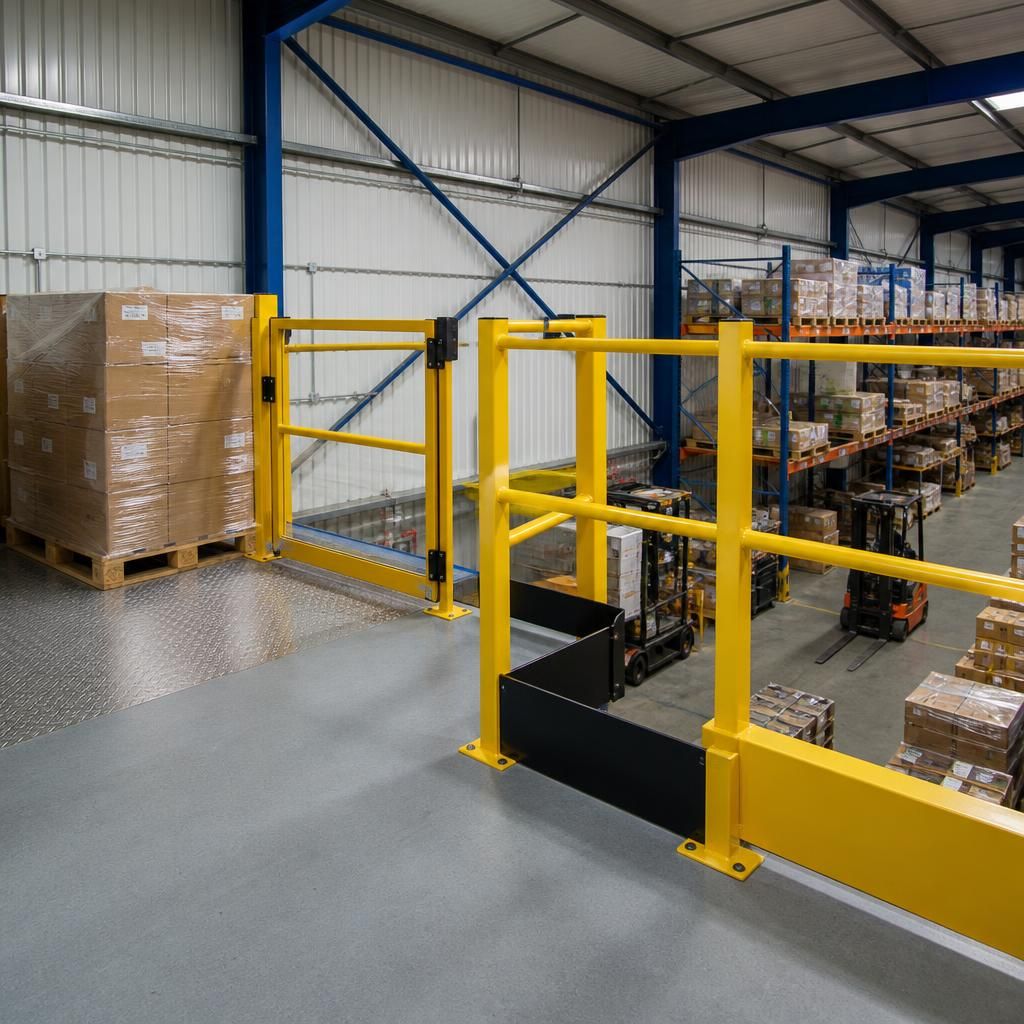
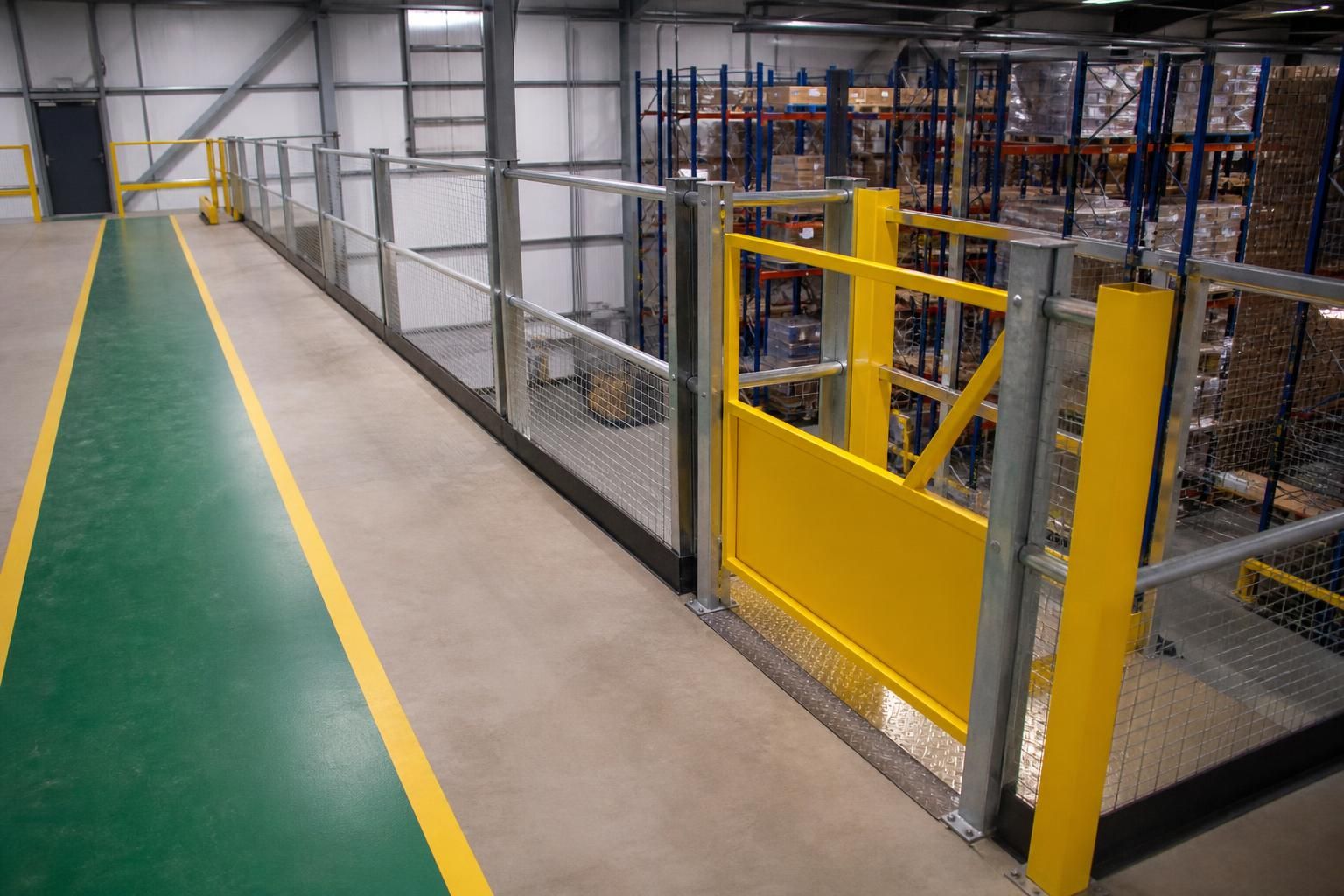
Safety barriers with rigid edge protection suit pedestrian routes, while protected pallet access points need a suitable loading gate. We assess the mezzanine layout, handling method and your requirements before recommending the arrangement.
Mezzanine floors with mixed traffic need edge protection planned around people, pallets, transfer points and working clearances. The most suitable arrangement combines continuous guarding at exposed edges with controlled access for pallet movement.
Start with the movement pattern. Map every pedestrian route, stair access, pallet handover point and area where handling equipment approaches the mezzanine edge. This shows where protection must remain continuous and where controlled access is necessary.
- Pedestrian areas: Fixed safety barriers should protect exposed edges beside walkways, work areas and stair approaches. The arrangement should prevent people from reaching the edge during normal movement.
- Pallet transfer points: A loading gate should suit the way pallets reach the floor. Its position, opening method and operating space must work with the handling equipment and the pallet dimensions.
- Shared approaches: Keep pedestrian movement away from pallet transfer activity wherever the layout allows. If routes must meet, the design should make the change in use clear and controlled.
- Open sides and obstructions: Protect edges around columns, corners, machinery and changes in level. These locations often create gaps or turning movements that a simple straight barrier does not address.
Consider how the barrier will be used. A barrier is not selected only by its appearance. Its height, position, construction and access arrangement should reflect the people, stock and equipment operating beside it.
Forklift traffic creates different demands from hand-loaded pallets or pallet trucks. The survey should establish the handling method, expected approach, pallet size, load characteristics and available manoeuvring space. This information informs the position and specification of the pallet access point.
Pedestrian protection also needs practical details. Handrails, intermediate protection and edge infill can help prevent falls or objects passing through the protected area. Toe protection may be relevant where stock, tools or packaging could move towards the edge.
Do not treat a loading gate as a replacement for protection along the rest of the mezzanine. The gate should serve the transfer point, while fixed guarding continues around other exposed sides. Its operating position should also avoid creating a new hazard for people using adjacent routes.
Check separation and visibility. People need to understand where they can walk and where pallet handling takes place. Clear route definition, suitable barrier placement and visible access points support orderly movement without relying on informal workarounds.
Allow space for the barrier itself, gate operation, pallet positioning and safe movement around the opening. Tight clearances can encourage operators to bypass protection or leave pallets in pedestrian routes. The layout should support the intended working method.
Use the survey to resolve site conditions. A mezzanine edge protection survey should examine:
- the exposed edges and their relationship with stairs, doors and workstations;
- pedestrian routes, pallet routes and points where those routes could conflict;
- the handling equipment used at each access point;
- pallet dimensions, stock characteristics and the space needed to position loads;
- floor levels, columns, existing barriers, machinery and other obstructions;
- the clearances needed for safe operation and routine access;
- how protection will connect with the mezzanine structure and surrounding workplace controls.
We can discuss these conditions during a no-obligation consultation, including a site meeting and survey where appropriate. We then prepare written proposals and working drawings showing the proposed arrangement.
Working drawings are particularly useful when a mezzanine includes several access points or sits within an active warehouse. They allow you to review pedestrian routes, pallet transfer positions and barrier interfaces before installation begins.
Review the complete working arrangement. Edge protection should work alongside floor access, workplace segregation, line marking and barrier protection. These elements should not create conflicting routes or leave an unprotected gap between separate systems.
The final choice depends on the space, loads and workflow at the individual site. A standard barrier arrangement may suit one edge, while another requires additional protection around a pallet transfer point or unusual obstruction.
Spartan Direct brings together consultation, drawings, installation and project management where required. This gives you one coordinated proposal for the mezzanine edge protection and its relationship with the wider workplace layout.
Before use, confirm who controls the gates, how pedestrian access is managed and what checks the site will carry out. The handover information should reflect the installed arrangement, its intended use and any operating limitations.
Plan routine checks for mezzanine edge protection after installation. Inspect barriers, fixings, infill and toe protection for damage, looseness or changes caused by site activity.
Check that the pallet access gate operates as intended and remains clear of stored goods. Reassess the arrangement if handling equipment, pallet sizes or pedestrian routes change.