What is the difference between paint and tape for industrial line marking?
Paint creates durable, bonded lines for busy warehouse floors, while tape provides a faster, cleaner option where layouts may change. The best choice depends on the floor surface, traffic levels, loads and how often the marking needs updating.
Neither option is universally better. Paint usually suits markings intended to remain in place, while tape suits clearly defined areas where clean removal or alteration matters.
The correct choice depends on the floor’s condition, the marking’s purpose and the way vehicles, people and equipment use the area. A line beside a pedestrian route has different demands from a line around pallet storage or a loading position.
Industrial line marking paint creates a liquid-applied line that bonds to the prepared floor. It can suit fixed walkways, storage bays, exclusion zones and traffic routes that form part of an established layout.
- Paint can follow measured layouts across larger areas.
- It suits markings that need to remain visible as part of a settled floor plan.
- Different line widths and shapes can identify routes, bays and restricted areas.
- Touch-ups can match the existing marking when isolated sections become worn.
Paint application requires suitable preparation and enough time for the coating to dry or cure before normal use. Dust, grease, moisture, loose material and damaged coatings can affect the result.
The floor may need cleaning, repairs or preparation before marking begins. Applying paint over a weak or contaminated surface can leave the new line dependent on that underlying condition.
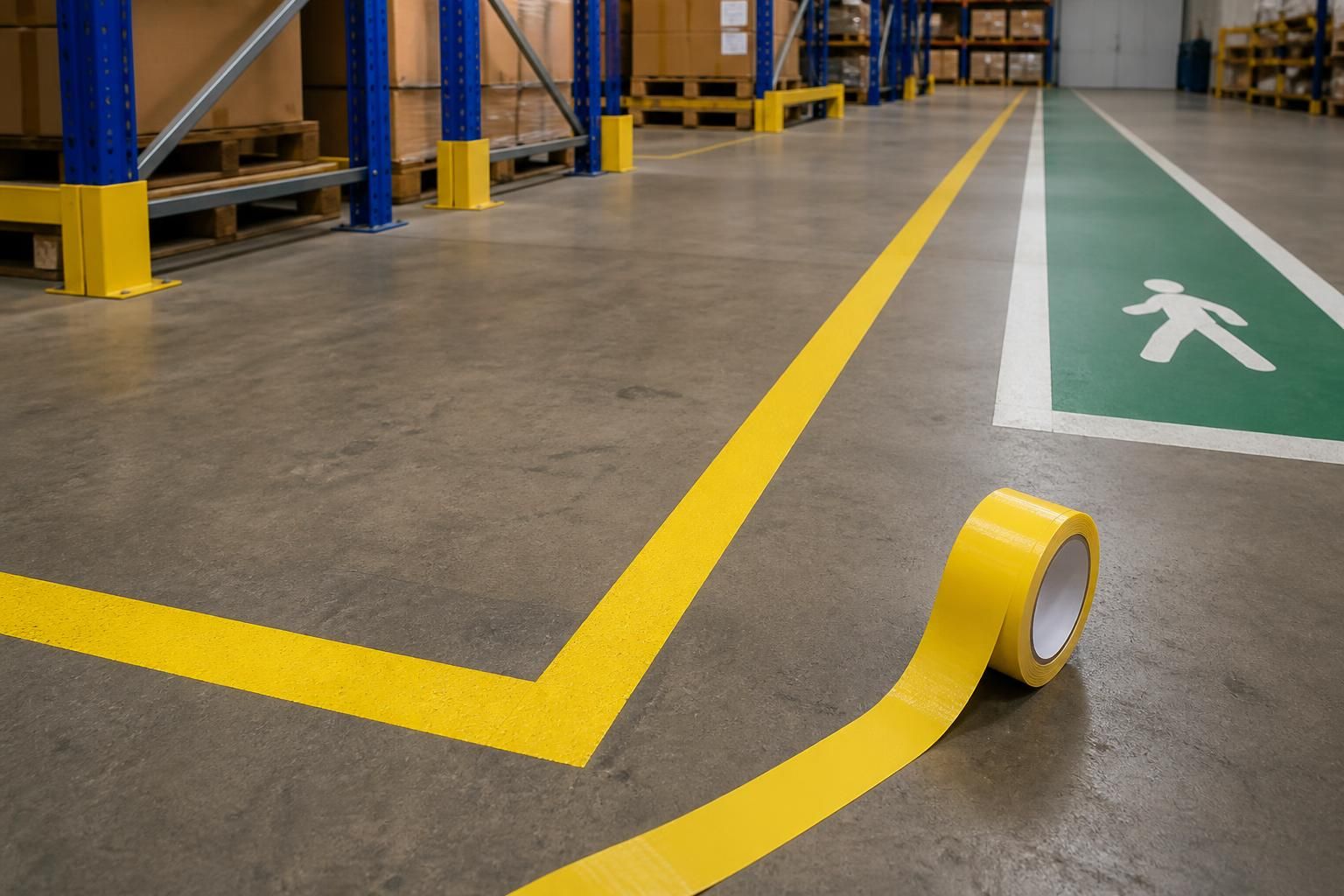
Industrial floor marking tape uses a pre-formed strip applied to the floor. It avoids wet paint during application and can provide a sharp, consistent edge when the surface is clean, smooth and suitable.
- Tape can suit temporary layouts, trial arrangements and areas likely to change.
- It allows sections to be removed and replaced without repainting the whole layout.
- It can reduce disruption associated with applying liquid materials.
- It works best where the floor gives the adhesive a sound, dry and even surface.
Tape is not a substitute for floor preparation. Dust, oil, moisture, uneven concrete, damaged coatings and frequent edge contact can affect adhesion. Forklift wheels, pallet movement and cleaning equipment may also place repeated stress on exposed edges.
Paint and tape can both perform poorly when the layout is placed where traffic regularly crosses, scrapes or obscures the marking. The line position matters as much as the material.
Choose paint when the layout is established and the floor can be prepared for a bonded coating. This commonly includes permanent aisle boundaries, fixed storage locations, pedestrian walkways and marked exclusion areas.
Choose tape when the layout needs assessment or alteration and the floor provides a suitable adhesive surface. It can help you test a revised arrangement before committing to a painted finish.
That does not make tape suitable for every temporary arrangement. A temporary line still needs to remain visible, stay attached and avoid creating a trip or snagging point.
Paint does not automatically suit every permanent marking. Heavy vehicle movements, repeated turning, harsh cleaning and floor movement can affect its service condition. The specification must reflect the actual use.
For either option, consider:
- the floor material, finish, age and condition;
- vehicle routes, turning movements and pedestrian crossings;
- loads, pallet handling and equipment contact;
- cleaning methods and likely contamination;
- the importance of removing, moving or repairing the marking;
- how the proposed lines relate to doors, racking, workstations and escape routes.
Colour can support recognition, but a colour alone does not explain every hazard. Use a clear layout, consistent markings and suitable signs where the risk requires more information.
Line marking also works alongside physical protection. Where vehicles could strike people, stock or structures, painted or taped boundaries may need consideration with warehouse safety barriers and segregation.
We can review the intended layout through a no-obligation consultation, including a site meeting and survey where appropriate. We then provide written proposals and working drawings for the agreed arrangement.
This process helps compare paint and tape against the floor, traffic pattern and storage plan rather than selecting material in isolation. It also helps identify where line marking connects with pallet racking, shelving or access routes.
For projects requiring coordination, project management may continue from proposal and tender stages through installation and final commissioning. The appropriate marking method remains dependent on the site findings and stated requirements.
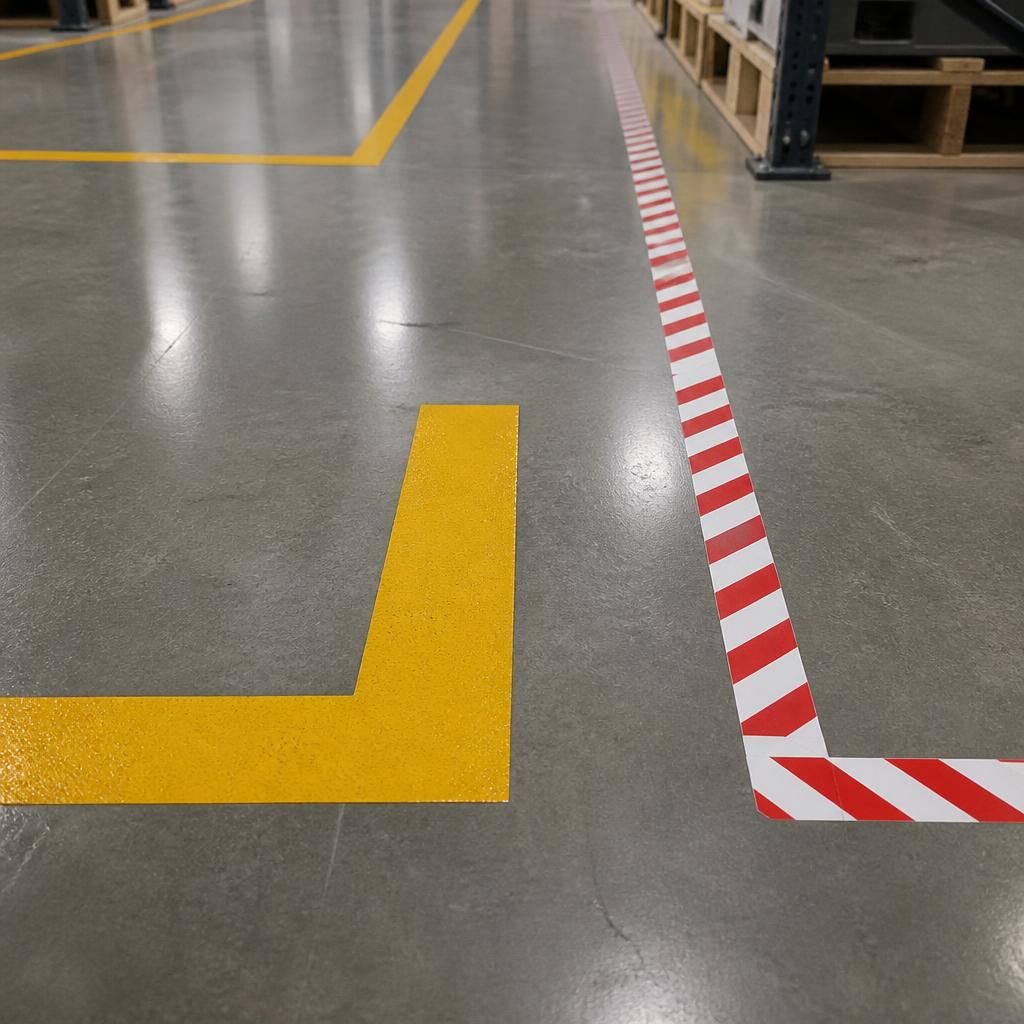
Look closely at corners, junctions and short sections when comparing paint with tape. Paint can follow planned geometry continuously around these details.
Tape needs careful alignment wherever strips meet or change direction. Reviewing these points helps you judge the finish against the actual layout, not just an open section of floor.