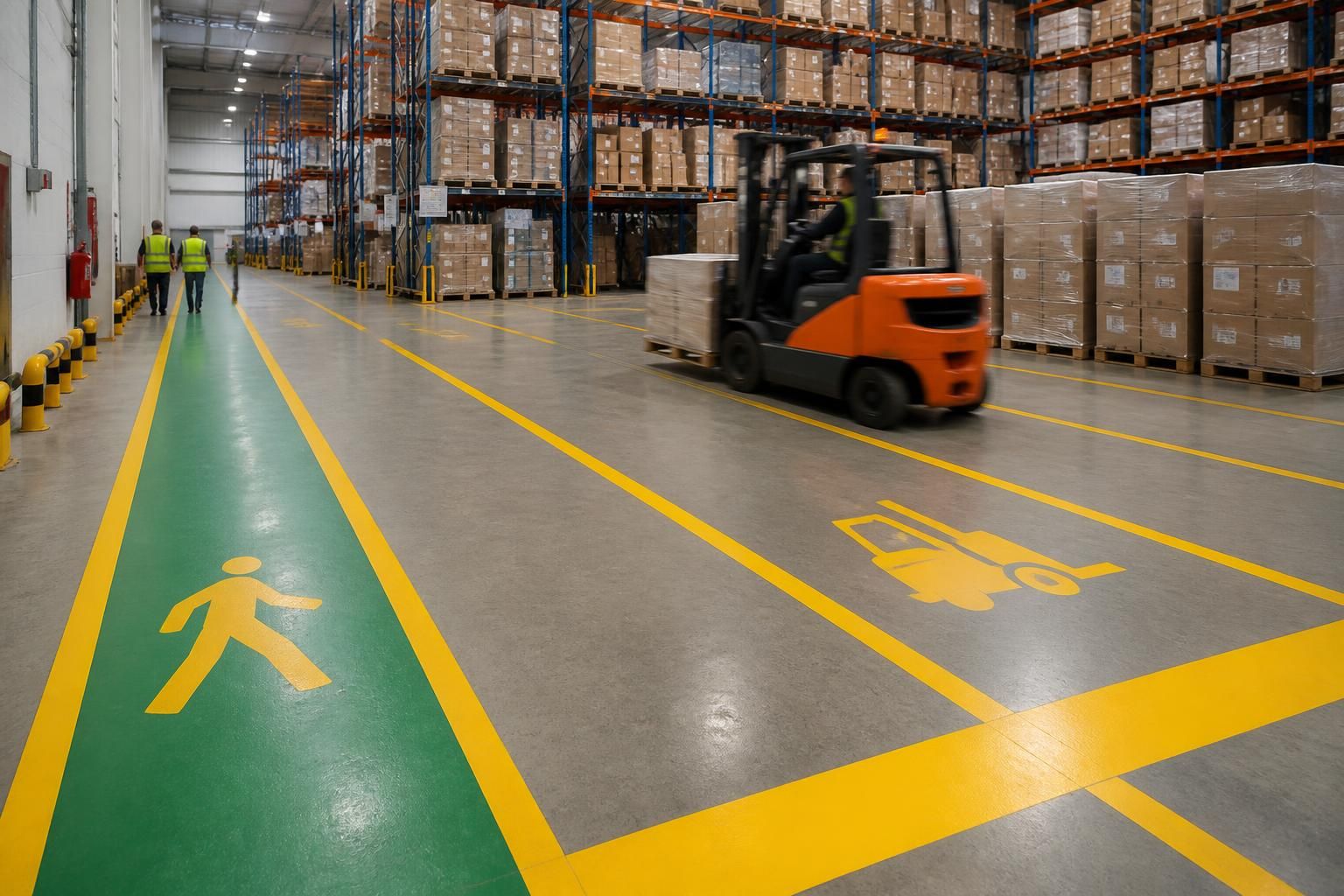
What floor surfaces are suitable for industrial line marking?
The most suitable surfaces for industrial line marking are sound, clean, dry concrete, resin-coated floors and suitable asphalt. Smooth, well-maintained surfaces provide clearer markings; damaged, dusty or contaminated floors may need preparation before application.
The best floor for industrial line marking is stable, sufficiently smooth and compatible with the chosen marking material. Surface condition matters as much as the floor type.
Concrete floors
Concrete is commonly used for warehouse aisles, storage bays and production areas. It provides a firm base when the slab is sound, dry and free from loose dust.
New concrete needs sufficient curing before marking. Residual moisture can affect adhesion and cause early deterioration. Older slabs may need cleaning, mechanical preparation or local repairs before application.
Power-floated concrete can have a dense surface that restricts adhesion. Polished areas, curing compounds and previous coatings also need assessment. Preparation should remove contaminants without damaging the slab.
Resin-coated floors
Epoxy and other resin-coated floors can provide a smooth base for clear warehouse and workplace markings. The existing coating must be firmly bonded, clean and compatible with the selected marking material.
Loose, peeling or damaged resin should be repaired before lines are applied. Very smooth finishes may require controlled abrasion. This creates a suitable key while preserving the surrounding floor.
Colour contrast is also important on resin floors. A marking colour should remain visible against the floor finish and surrounding equipment. Glare, lighting and traffic routes can affect how clearly people see each line.
Asphalt surfaces
Suitable asphalt can accept line marking in external yards, service areas and access routes. The surface should be stable, sufficiently even and free from loose chippings or contamination.
Fresh asphalt may release oils that interfere with adhesion. Cracking, rutting and movement can also affect line definition. Surface condition, weather exposure and the selected marking material should therefore be considered together.
Surfaces requiring closer assessment
Not every industrial floor provides a suitable base without preparation. The following surfaces need particular care:
- Dusty or friable concrete, which can prevent proper adhesion.
- Oil-contaminated floors, which can leave a bond-breaking residue.
- Uneven or heavily textured surfaces, which can produce irregular lines.
- Cracked or moving surfaces, where markings may follow existing movement.
- Old painted floors, where the existing coating may be loose or incompatible.
- Wet areas, where moisture can affect preparation and application.
Tiles, rubber flooring and specialist finishes should be assessed individually. Their texture, movement and surface treatment can differ significantly between premises.
How surface preparation affects the result
Preparation normally begins with a site assessment. This identifies contamination, surface damage, moisture concerns and areas where traffic has polished the floor.
Cleaning removes dust, oil and other residues. Repairs can address local cracks, holes and broken edges. Mechanical preparation may be appropriate for dense concrete or existing coatings.
Marking should not cover defects that could affect visibility or safety. Repairs may need to cure before the lines are applied. The required preparation depends on the floor and the marking material.
Consider the working environment
Floor suitability also depends on how the area operates. Forklift traffic, pallet movement, pedestrian access and cleaning methods all influence marking performance.
Areas exposed to rain, sunlight or standing water require different consideration from enclosed warehouse floors. Production spaces may also face oils, chemicals, heat or abrasive materials.
Marking layouts should follow the actual workflow and avoid placing lines across damaged joints or frequently repaired areas. This can reduce disruption during future maintenance.
Assessing the floor before marking
A site meeting and survey can establish whether the existing floor is suitable. We can then prepare written proposals and working drawings around the layout and site conditions.
This assessment can identify preparation requirements before work begins. It also helps coordinate line marking with safety barriers, workplace segregation, storage systems or other space changes.
For larger projects, project management may continue from proposal and tender stages through installation and final commissioning where required. The aim is a clear marking plan based on the floor, traffic and workflow.
Surface suitability also depends on whether you are applying paint or floor marking tape. Tape needs a smooth, dry surface that allows firm adhesive contact. Textured, dusty or damp finishes can affect edge contact.
Paint can suit a prepared floor finish, but the coating must be compatible with the substrate and allowed to cure. Comparing the marking method with cleaning equipment and traffic helps identify the right preparation for each area.