


What colours should industrial line marking use for different warehouse zones?
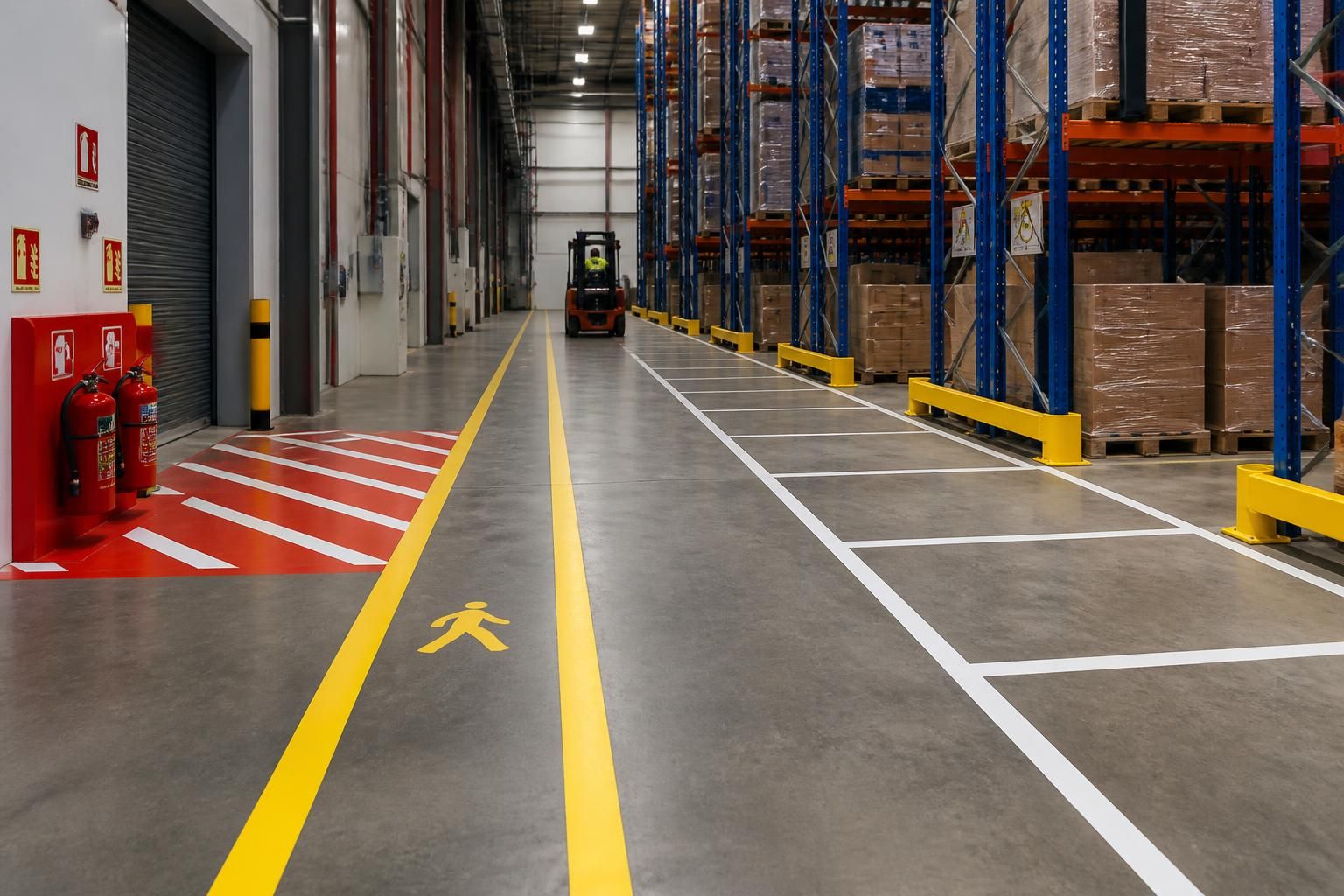
Use a consistent colour code: yellow for pedestrian and vehicle routes, white for storage or work-area boundaries, red for fire equipment and no-storage zones, and green for safe routes or first-aid areas. Confirm the scheme against site risks, workflow and relevant safety requirements, then apply it consistently across the warehouse.
Industrial line marking colours work best when each colour has one clear meaning across the site. The colour plan should support the warehouse layout, not replace physical separation, signs or operating controls.
Start with the activities taking place in each zone. Mark pedestrian routes, forklift aisles, storage locations, work areas, emergency equipment and restricted spaces separately. This helps visitors and warehouse teams read the floor without relying on guesswork.
- Movement areas: Use clear edge lines to distinguish walking routes from vehicle routes. Continue the markings through junctions, crossings and changes in direction.
- Pallet racking aisles: Set out the usable aisle space and keep stock, handling equipment and temporary loads within defined limits.
- Storage bays: Mark the footprint for pallets, cages, stillages or other loads. This helps prevent stock extending into access routes or doorways.
- Work areas: Separate packing benches, production tasks, loading points and maintenance spaces from general traffic.
- Fire and emergency equipment: Keep these locations visually distinct and free from stock, plant and other obstructions.
- Restricted areas: Mark spaces where pedestrians, vehicles or stored materials must not enter without suitable controls.
Use colour alongside other visual information. A colour alone may not be clear from every viewing angle, particularly where lighting, dust, traffic or wear affects the floor. Combine colour with line position, signs, symbols, barriers or changes in surface treatment where the risk requires more detail.
Line style can also add meaning. Continuous lines can define a permanent edge, while broken lines may indicate a route or boundary requiring interpretation. The chosen approach should remain consistent throughout the warehouse.
Contrast matters as much as the chosen colour. Check the proposed marking against the floor finish, lighting levels and surrounding equipment. A shade that appears clear beside pallet racking may be less visible near loading doors or darker work areas.
Consider how the floor will be used before selecting the marking system. Forklift traffic, pallet movement, dragging equipment and cleaning can affect the appearance and condition of industrial line marking. The suitable paint or tape depends on the surface, traffic and working conditions.
Avoid assigning one colour to several unrelated meanings. If the same colour identifies a pedestrian route, a storage boundary and a hazard area, people may interpret it incorrectly. Record the colour code and apply it to new zones, alterations and extensions.
Review the layout when racking, machinery, access points or work processes change. A colour code remains useful only when the markings match the way people, vehicles and stock now move through the building.
We can assess the warehouse layout and site risks through consultation and, where appropriate, a site survey. Written proposals and working drawings can show how industrial line marking should relate to pallet racking, storage areas, safety barriers and workplace segregation.
This approach helps you choose colours for a coherent floor plan rather than selecting shades in isolation. It also identifies areas needing physical protection, revised access arrangements or further review before work begins.
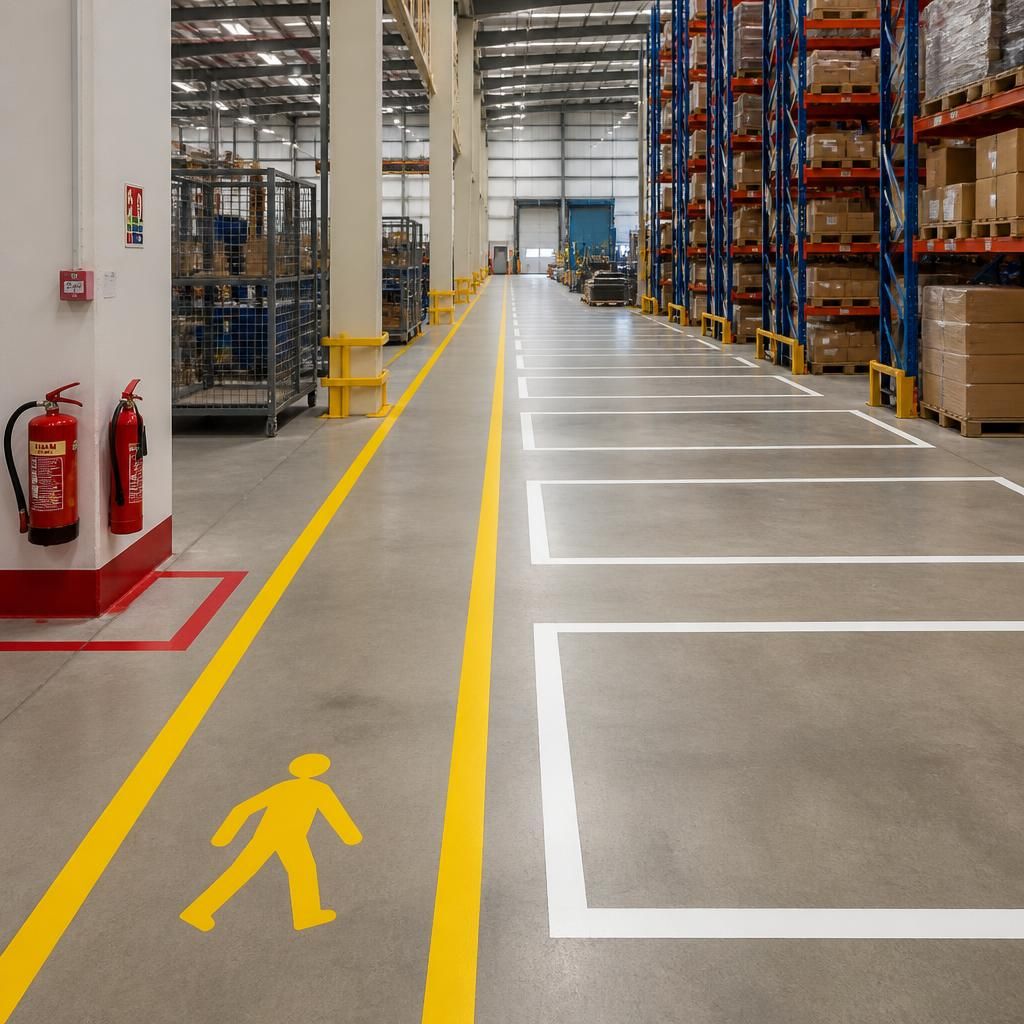
Industrial line marking should be checked in the conditions where people will use it, not selected from a colour chart alone. View sample markings from pedestrian routes, forklift positions, aisle ends and loading areas.
Check how the colours appear against the floor, racking and changing light. A site survey can identify viewing angles, worn areas and locations where symbols, signs or barriers should support the colour plan.
Plan Industrial Line Marking Colours for Your Warehouse
Arrange a no-obligation consultation with us to review industrial line marking colours against your warehouse’s access, storage and emergency requirements. We can follow this with a site survey, written proposal and working drawings where appropriate.



