


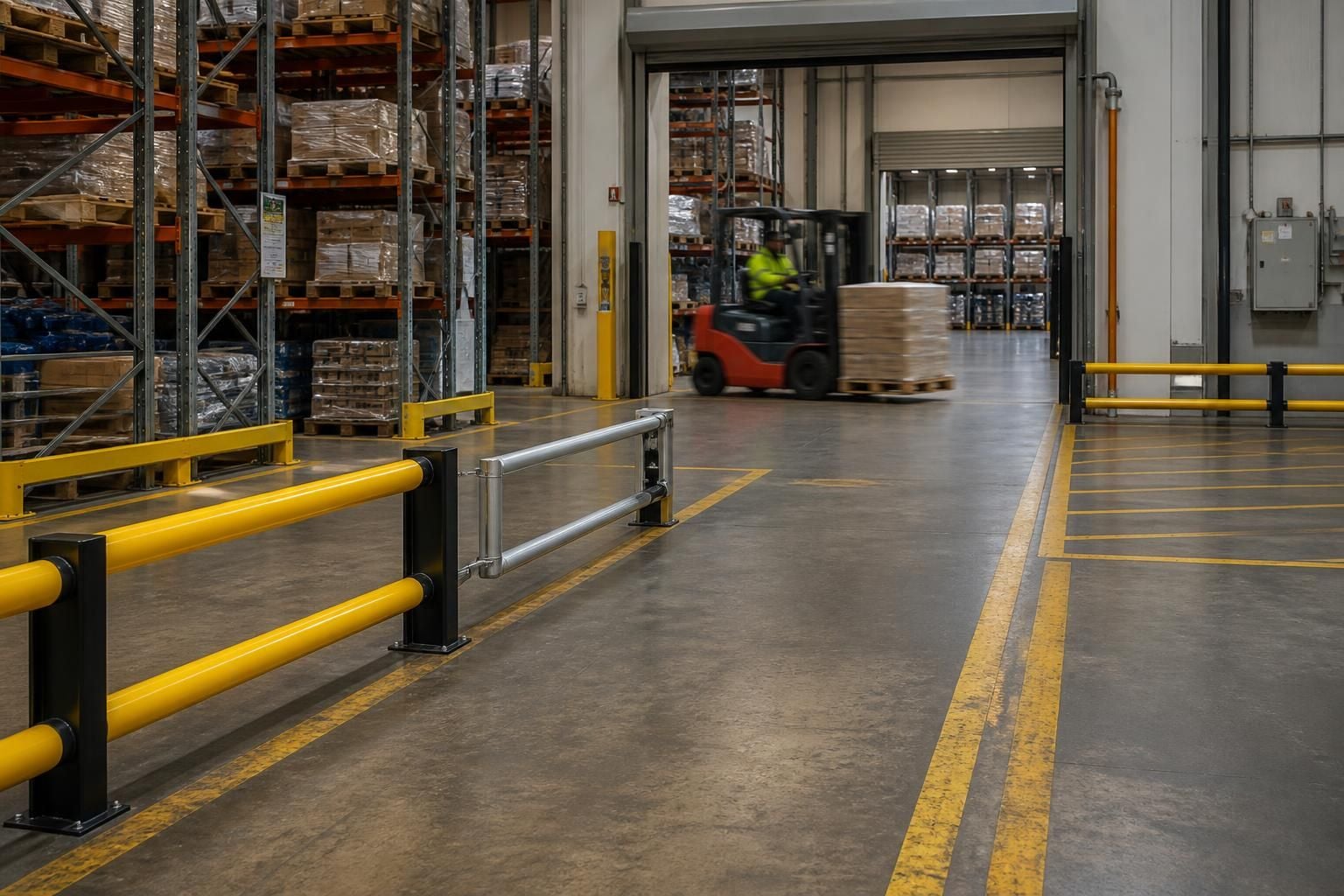
Which warehouse safety barrier suits changing access requirements?
Warehouse safety barriers with removable or reconfigurable sections suit access requirements that change, while fixed barriers suit routes that remain constant. We assess site access, stock movements and vehicle flow before recommending the appropriate arrangement.
Warehouse safety barriers for changing access requirements usually need a planned combination of permanent protection and controlled removable sections. This arrangement protects defined areas while allowing access points to change with storage, production or delivery activity.
Use removable sections where access changes regularly. They suit loading points, temporary work areas and routes requiring occasional stock movement. The proposal should identify which sections need removal, who controls that access and where the sections are stored when not in use.
Use fixed barriers where the boundary remains consistent. Permanent separation suits pedestrian walkways, machinery zones, office approaches and stock locations that should remain protected. It creates a clear physical boundary without relying on staff to reinstate equipment after every movement.
A combined arrangement can suit mixed warehouse activity. Fixed sections can protect the main perimeter, with removable sections positioned at planned access points. This avoids making every part of the barrier movable when only selected areas need regular change.
- Frequent access: identify entrances, loading points and storage areas requiring repeated movement.
- Occasional access: consider removable sections where access is necessary but not part of normal traffic flow.
- Changing layouts: allow for planned alterations to stock positions, workstations or vehicle routes.
- Constant hazards: retain fixed protection beside areas that should not become routine access routes.
- Restricted space: check doorways, turning areas, aisle widths and clearances before selecting barrier positions.
Changing access does not mean every barrier should be movable. Frequent removal can weaken control if sections are not replaced correctly or access remains open after the task.
We therefore assess the movement pattern rather than selecting a barrier from the access frequency alone. A site survey can record pedestrian routes, vehicle movements, stock handling, doors, floor conditions and proposed barrier lines.
We can then provide a written proposal and working drawings showing the protection layout and designated access points. These documents give you a clearer basis for comparing fixed, removable or combined arrangements.
Consider future access before installation. A barrier line that fits current stock positions may restrict later changes to racking, machinery or picking areas. Recording possible changes during consultation can reduce the need for avoidable alterations.
Our no-obligation consultation may include a site meeting and survey. Where required, project management can continue from proposal and tender stage through installation and final commissioning.
For a warehouse safety barrier arrangement, provide details of access frequency, stock movements, vehicle routes and areas requiring permanent separation. We can use that information to develop an arrangement suited to the site and its changing requirements.
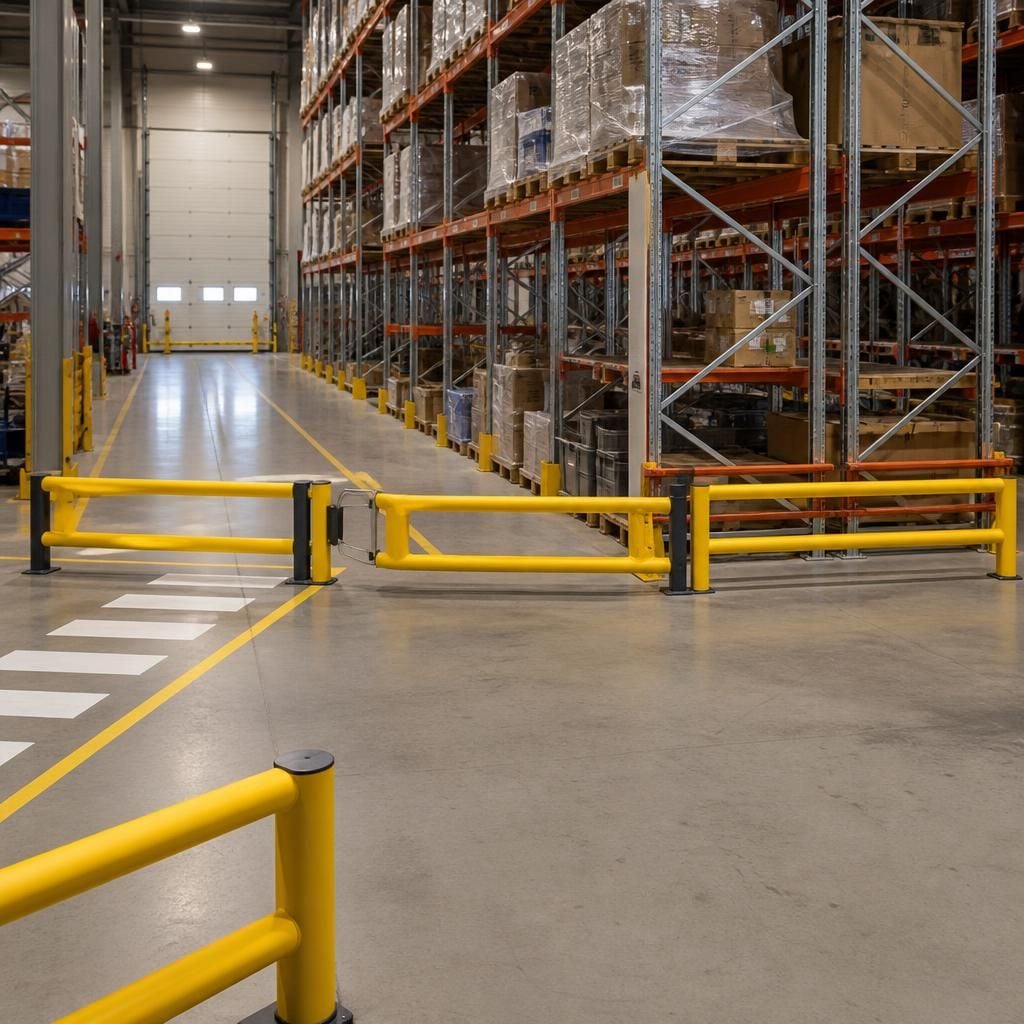
Separate planned access from occasional authorised entry. A barrier layout should show which openings support normal workflow and which require approval before use.
This distinction helps you judge when a removable section is appropriate, without turning every gap into a routine route. Review the arrangement when access patterns change, then update the control plan alongside any physical alterations.



