



When should you choose fixed safety barriers over removable warehouse segregation?
Choose fixed safety barriers when routes, equipment or stock need consistent separation and access points rarely change. Choose removable warehouse segregation when access requirements change and barriers need relocation.
Choose fixed safety barriers when separation must remain part of the warehouse layout. They suit defined traffic routes, protected stock positions and areas where access needs a deliberate control.
Removable warehouse segregation suits operations that regularly change. It can support temporary zones, phased projects or access arrangements that depend on current stock and workflow. The key decision is not simply how often access changes. Consider who needs access, why they need it and whether moving a barrier could weaken separation.
Fixed barriers are usually the stronger choice when:
- Pedestrian and vehicle routes need a consistent boundary.
- Stock, plant or work areas need protection from nearby movement.
- The warehouse layout supports a stable operating pattern.
- Unauthorised access would create a safety or workflow concern.
- Staff should not decide each day whether a barrier remains in position.
- The protected area needs a clearly defined edge for planning and supervision.
This approach can also make the layout easier to understand. A fixed barrier shows where movement should stop, where stock should remain and which route people should follow. That clarity matters where several activities share one building.
Removable segregation may be more appropriate when:
- Storage positions change as stock profiles change.
- Access is needed for planned tasks, deliveries or temporary work areas.
- The layout is being tested before a permanent arrangement is selected.
- A project will alter the warehouse’s internal routes.
- Teams can control when sections are opened, moved or reinstated.
However, a movable arrangement needs clear ownership. Someone must know when access can change, who authorises it and how the boundary is restored. If these controls depend on memory or informal decisions, a fixed arrangement may provide clearer day-to-day control.
Check the site before choosing the barrier type. The assessment should record pedestrian routes, handling equipment, stock locations, working areas and required access points. It should also consider the floor, surrounding structures and any services that could affect the proposed position.
Fixed safety barriers need an installation method that suits the building and its use. The position should not create a new obstruction beside an aisle, loading point or work area. A survey and working drawings help test the layout before installation begins.
Do not treat the word “fixed” as proof that an arrangement meets every safety requirement. The completed design still needs review against the site’s risks, operating methods and relevant requirements. Ongoing inspections may also be appropriate where barriers protect busy routes or working areas.
A practical decision test is simple: if access changes because the business is genuinely reconfiguring space, removable segregation can suit that need. If access changes only because people regularly move the boundary, fixed safety barriers deserve closer consideration.
We can discuss this distinction during a no-obligation consultation. A site meeting or survey can inform written proposals and working drawings, with project management available where the work requires coordination through installation and final commissioning. Spartan Direct provides this service for warehouse and industrial sites across the West Midlands.
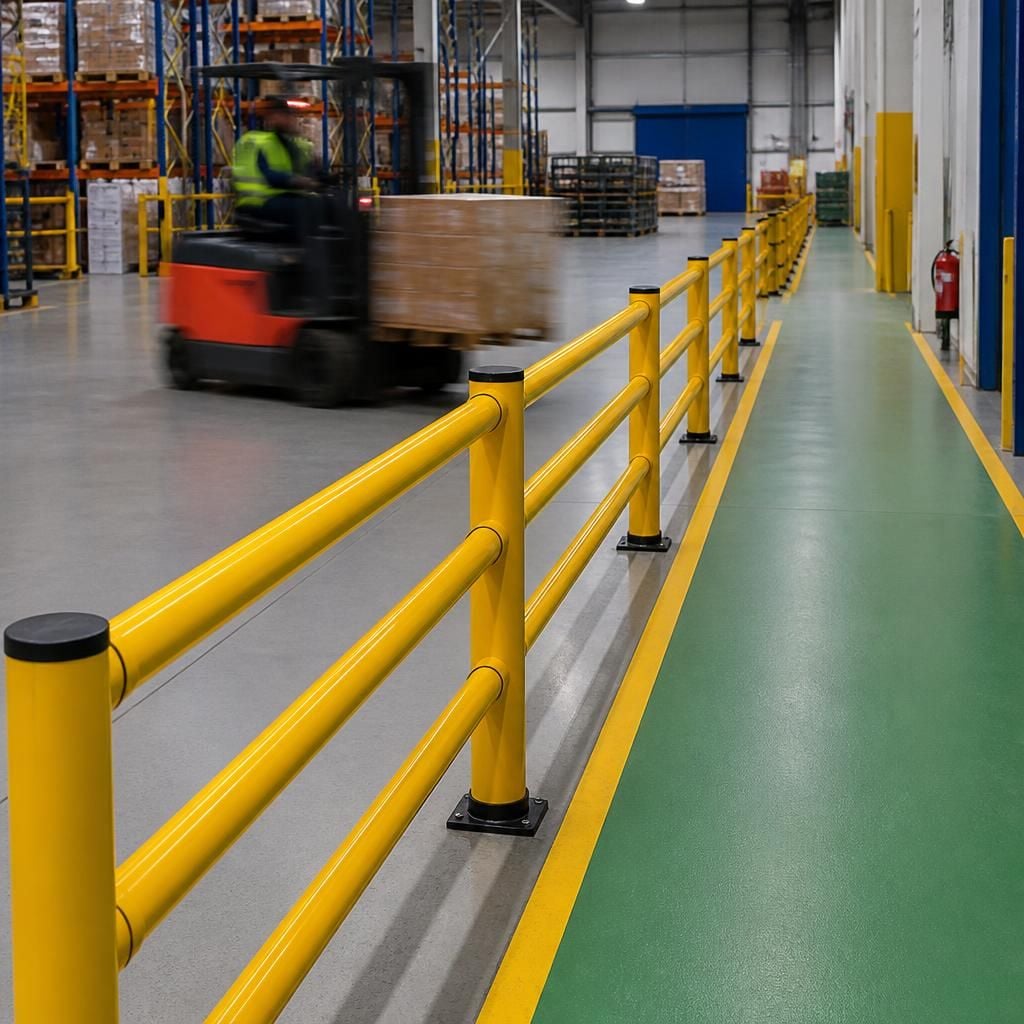
Fixed safety barriers suit sites where access can be concentrated at defined points. Instead of moving sections to create a route, you can plan controlled openings around loading tasks, maintenance work or stock handling.
Before selecting this arrangement, check that routine activities do not require regular dismantling. Record where people, vehicles and equipment must cross the boundary, then assess whether those movements can use designated access points without obstructing nearby work.
- Choose fixed barriers when crossing points can remain in consistent locations.
- Review the choice if work regularly takes place on both sides of the boundary.
- Include access points in the layout, rather than adding them after installation.



