What should a warehouse safety barrier quotation include?
A warehouse safety barrier quotation should set out the barrier type, layout, materials, fixing method, quantities, installation scope, price and exclusions. It should also explain the site survey, working drawings, compliance considerations, project responsibilities, quotation validity and assumptions affecting the final specification.
A useful warehouse safety barrier quotation should let you compare the proposed protection against site conditions, access needs, installation responsibilities and contractual terms. It should explain the reasoning behind the recommendation, not only present a total price.
1. A clear description of the protection required
The quotation should describe what the barriers protect and how the proposed arrangement supports warehouse movement. This may include stock, pedestrian routes, doors, machinery, racking ends or other vulnerable points.
It should also show how the arrangement separates people, vehicles and operational areas. If access must remain available, the quotation should identify openings, crossing points and any removable or adjustable sections included in the proposal.
Ask whether the recommendation reflects your workflow. A barrier can protect an area but still create problems if it obstructs loading, picking, maintenance or emergency access.
2. The basis for the recommendation
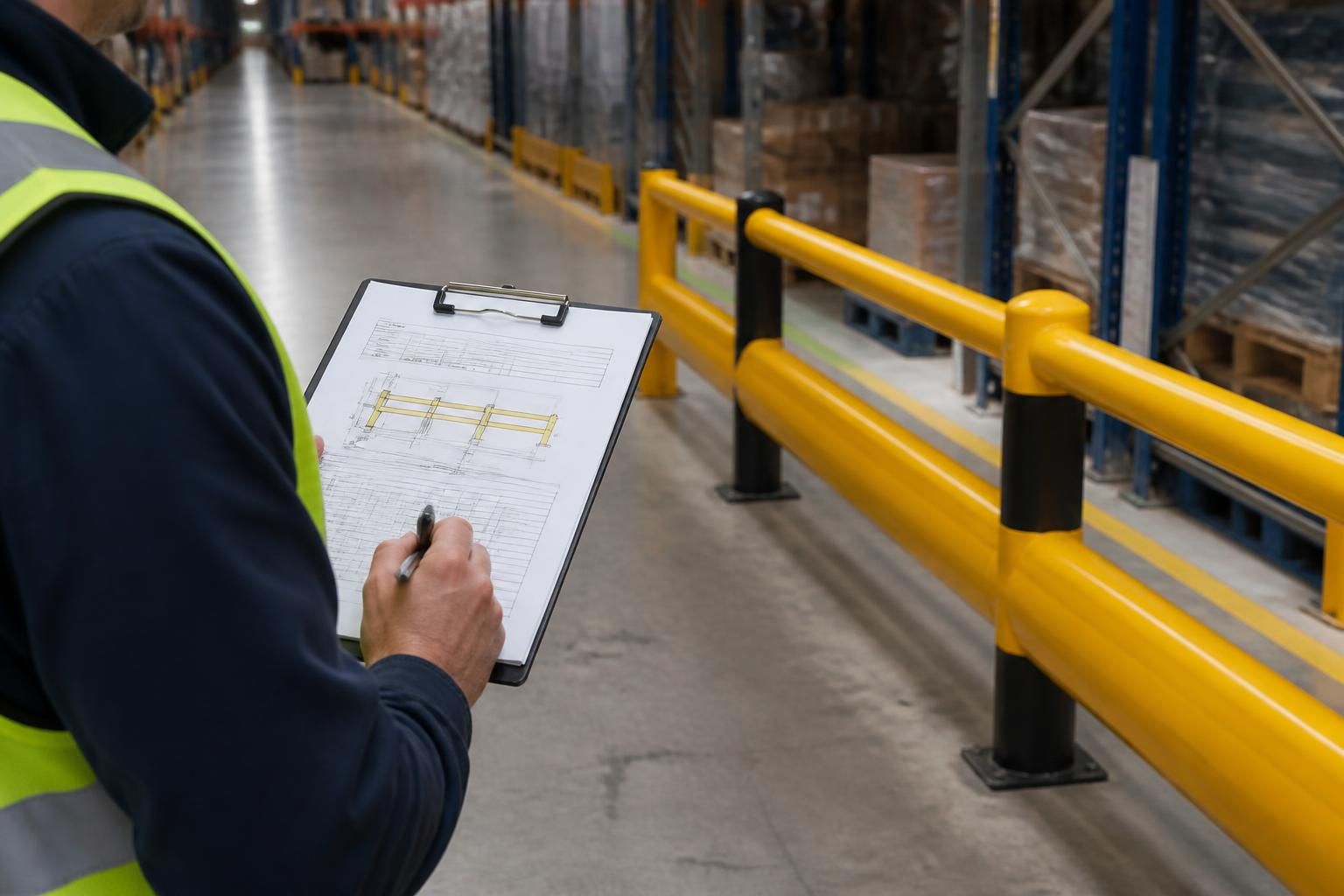
A quotation should explain the information used to develop the proposal. This normally comes from discussion, a site meeting or survey, and information about the premises and operating requirements.
Look for recorded site conditions that could affect the work. These may include floor condition, obstructions, clearances, traffic routes and the position of existing equipment. If the quotation relies on information supplied by you, that assumption should be stated clearly.
Where the site has not been surveyed, ask what remains subject to confirmation. A price based on unverified dimensions or conditions may change after a detailed assessment.
3. A practical explanation of access and use
The quotation should explain how people, pallet trucks, forklift trucks and other site users will pass the protected area. It should identify any effect on loading points, picking routes, fire exits or maintenance access.
It should also state whether the proposed arrangement requires changes to daily operations. This helps you compare a fixed installation with an arrangement that allows controlled access when your workflow changes.
If access requirements vary across the site, ask for separate options rather than accepting one general recommendation. The comparison should make the effect on protection, access and future changes easy to understand.
4. Installation responsibilities and site conditions
The quotation should distinguish work included in the installation from work that remains with you or another contractor. This is particularly important where the site has restricted access, ongoing operations, uneven floors or other trades working nearby.
It should identify any preparation required before installation and any conditions needed for the work to proceed. Ask who is responsible for providing site information, identifying services, maintaining safe working arrangements and approving the completed installation.
Where project management is required, the quotation should explain its scope. Spartan Direct can provide project management from proposal and tender stage through installation and final commissioning where required.
5. Drawings and approval points
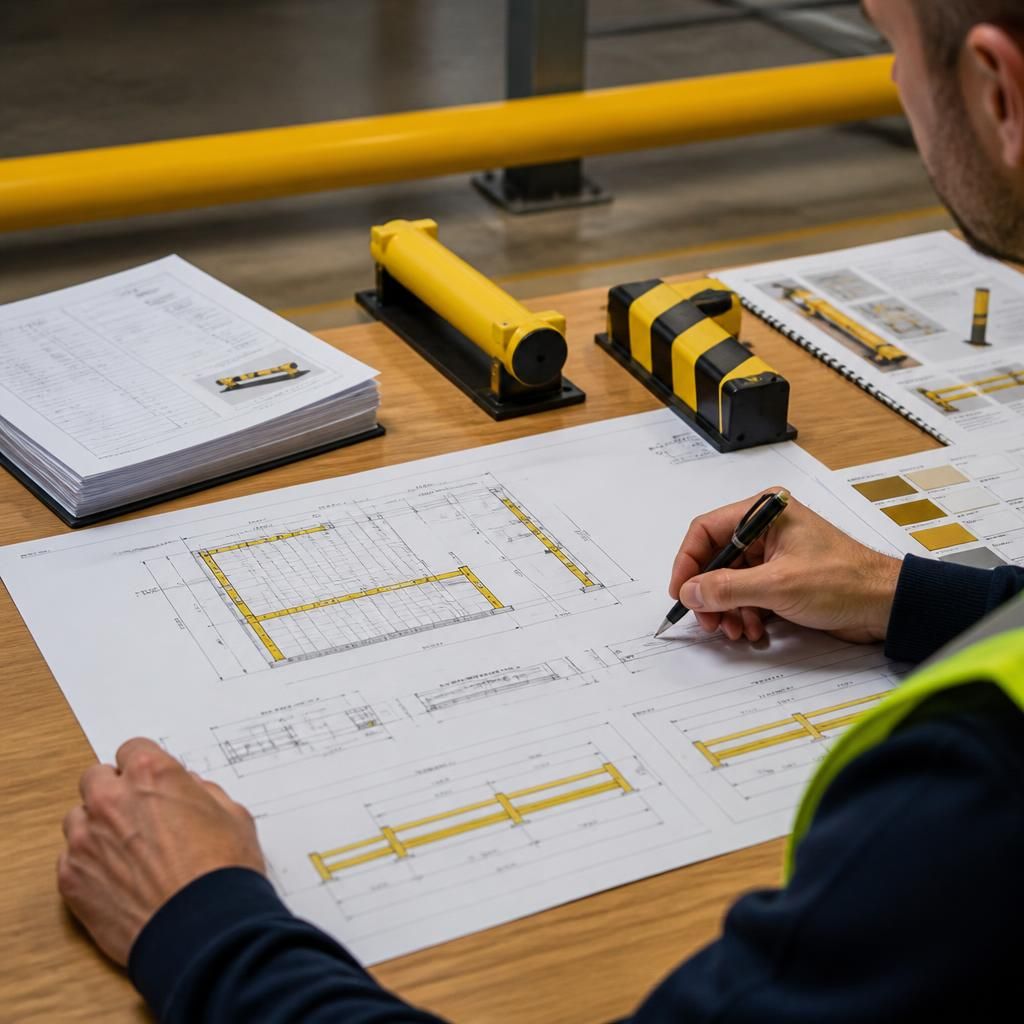
For a complex warehouse, the quotation should link the proposed barrier arrangement to drawings that can be reviewed before work starts. Check that the documents show the relevant areas clearly enough for you to confirm access, protection zones and interfaces with existing equipment.
Ask how changes will be handled after approval. A clear process should identify when a revised proposal is needed and how any resulting price change will be agreed.
6. Compliance information without unsupported claims
The quotation should state which compliance considerations have been reviewed and what records will be supplied at completion. It should also identify any inspections, assessments or actions that remain outside the quoted installation.
Do not treat a general reference to compliance as proof that every site obligation has been covered. Ask for the relevant basis of the recommendation and confirm who must approve it within your business.
A quotation should not imply accreditation or approved-installer status unless that evidence is provided. It should instead set out the work, responsibilities and records in precise terms.
7. Commercial terms and assumptions
Check the quotation date, its validity period and the assumptions used to calculate the price. Spartan Direct’s terms state that a quotation remains valid for 14 Business Days from issue.
Agreed installation dates should be treated carefully. The terms state that dates are estimates only, and that the supplier will use all reasonable endeavours to meet them. Time is not of the essence.
Review the terms covering changes, cancellation, access and site delays before accepting the quotation. These provisions can affect the final cost when the site or requirements differ from the original information.
Where the contracting supplier needs to be identified, Spartan Direct Limited is registered in England and Wales under company number 3275287. This helps ensure the quotation and purchase order refer to the correct legal entity.
8. Defects and aftercare
The quotation or accompanying terms should explain what happens if materials have a material defect. Under Spartan Direct’s terms, a defect notified in accordance with those terms may result in repair, replacement or a refund of the relevant price, at the supplier’s sole discretion.
Ask separately whether any inspection or aftercare has been included. Installation and later inspection are different services, so the quotation should make that distinction clear.
Before you compare totals
Compare quotations on the same basis. Confirm that each proposal addresses the same protection areas, access requirements, site conditions, responsibilities and completion records.
A lower figure may exclude preparation, changes arising from the survey, project management or follow-on checks. A higher figure may include activities that another quotation leaves for you to arrange.
Spartan Direct’s consultation process can include a no-obligation site meeting and survey, followed by a written proposal and working drawings. That process gives you a clearer basis for approving the arrangement before installation proceeds.
Warehouse safety barriers should be specified in enough physical detail to compare protection, access and installation accurately.
Look for barrier height, rail arrangement, post positions, end protection, finish, anchor type and any gates or removable sections. Each item should match the proposed layout and recorded site conditions. If a detail affects vehicle clearance, pedestrian movement or maintenance access, the quotation should identify it rather than leave it to installation. This schedule gives you a clear basis for checking the supplied materials and discussing changes before approval.