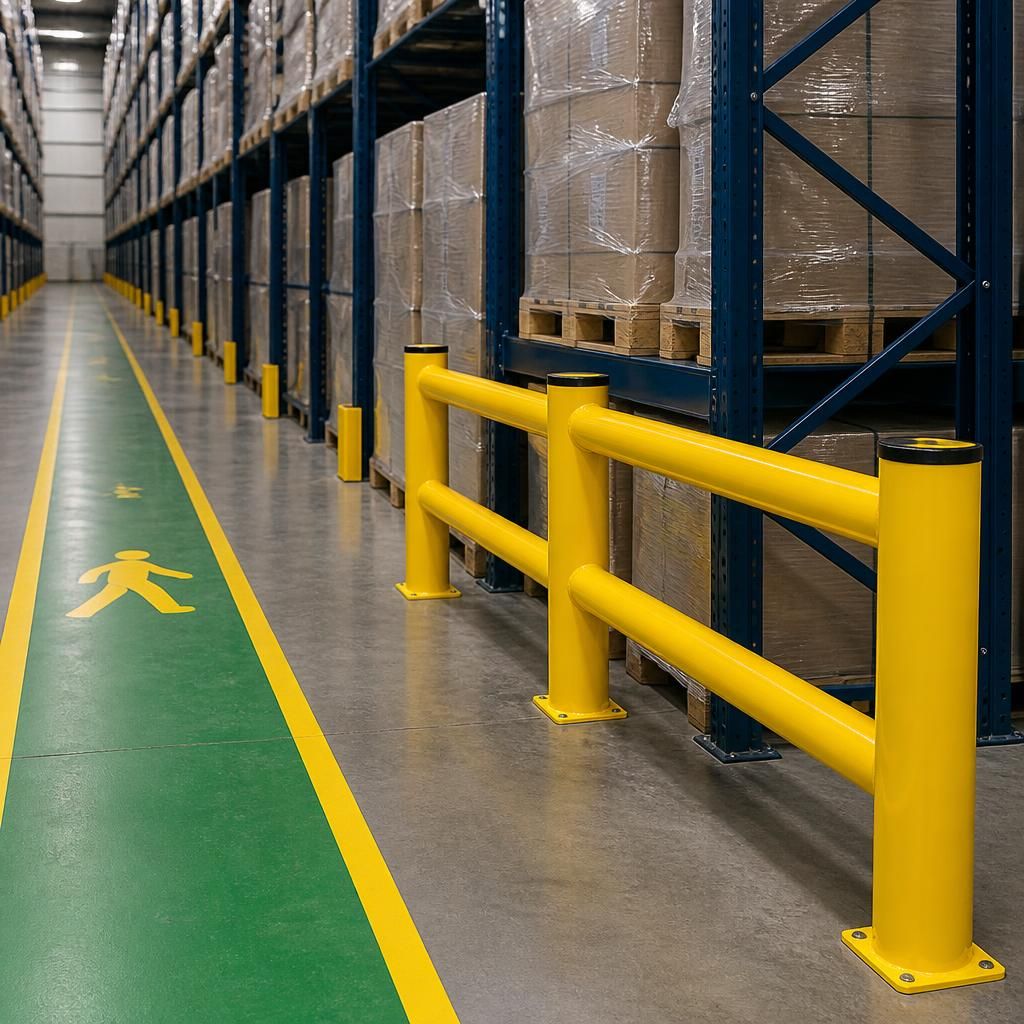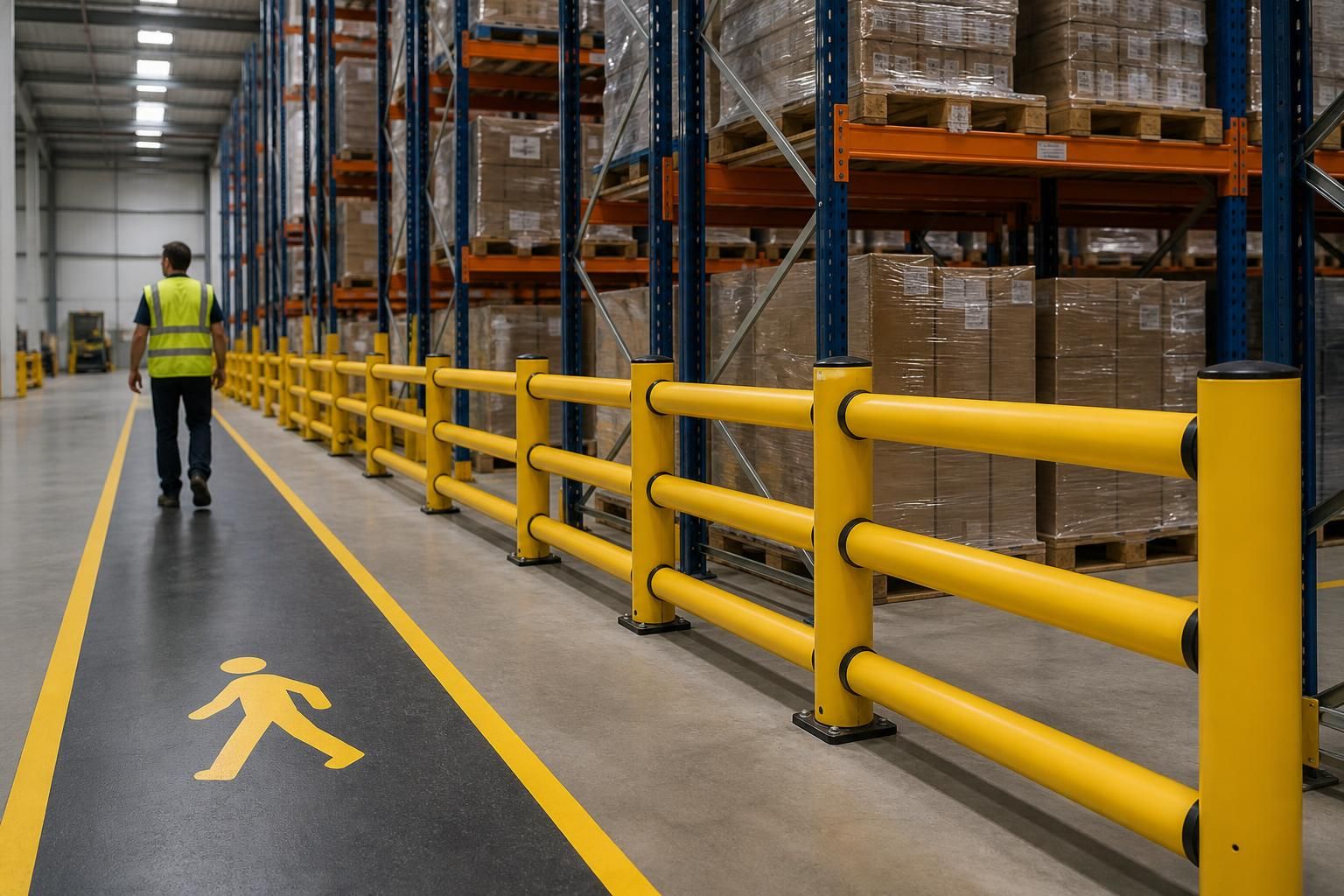
What safety standards should warehouse barriers meet?
Warehouse safety barriers should match the site risk assessment, vehicle movements, impact risks, required separation and the stock or equipment they protect. We use these factors to inform barrier design, installation and inspection, rather than treating one type as suitable for every site.
There is no single warehouse barrier standard for every site. The barrier must satisfy the site risk assessment, protect people and assets, and suit the vehicles, loads, traffic routes and floor conditions involved.
Start with the legal safety duties. The Health and Safety at Work etc. Act requires employers to protect employees and others from workplace risks. Workplace transport arrangements must also keep pedestrian and vehicle routes organised and suitably separated.
HSE guidance, including HSG76 Warehousing and storage, supports this approach. It does not prescribe one barrier type or one universal impact rating. Your risk assessment should explain the hazards, selected controls and reasons for the protection provided.
Key safety requirements usually include:
- Impact protection: the barrier should suit the foreseeable impact from forklifts, pallet trucks, delivery vehicles or other site traffic.
- Pedestrian separation: the arrangement should keep people away from moving vehicles, loading areas and reversing movements wherever practicable.
- Protection of assets: the barrier should protect racking, machinery, doors, columns, stock and building services from likely vehicle contact.
- Visibility: the barrier should remain easy to see in the lighting and traffic conditions present. Colour, contrast, height and warning markings can all affect recognition.
- Safe access: gates, openings and crossing points should support necessary movement without creating an uncontrolled route into a vehicle area.
- Structural suitability: fixings, posts, rails and the supporting floor should work together. A strong rail cannot provide suitable protection if the floor or anchors cannot resist the applied forces.
- Safe edges and finishes: the installation should avoid sharp projections, trapping points and unnecessary obstacles near working routes.
Use the correct technical evidence. Ask what impact performance the barrier has been designed or tested to withstand, and under which conditions. The stated performance should relate to vehicle type, speed, mass and impact direction, rather than relying on a general claim of strength.
Where protection connects with pallet racking, the racking specification and application guidance also matter. Standards covering the design, specification, use and maintenance of steel storage systems may apply to the racking installation, but they do not automatically approve every separate warehouse barrier.
Check the complete arrangement, not only the barrier. A compliant-looking rail may still leave a gap beside racking, expose a pedestrian crossing or obstruct an emergency route. Review turning areas, aisle widths, loading points, fire equipment, doors, escape routes and routine access before fixing positions.
Protection should also remain suitable after the warehouse changes. New vehicles, altered storage layouts, higher loads or changed pedestrian routes can affect the original assessment. Record damage and review the arrangement after significant changes or impacts.
Inspection and maintenance form part of safe use. Check barriers for bent members, loose fixings, damaged anchors, corrosion, missing components and movement. Investigate impact damage before returning the affected area to normal use. Keep inspection findings, repairs and layout changes with the site safety records.
For a project, we can discuss the working risks during a no-obligation consultation. A site meeting and survey may be followed by written proposals and working drawings. These documents can show barrier locations, access points, protection areas and fixing arrangements for review before installation.
Spartan Direct Limited has worked on office, commercial and industrial space since 1982. Our process can include installation, project management and final commissioning where required, helping you assess how the selected barrier arrangement fits the site.
Look for documented performance, not appearance alone. A bright finish or substantial-looking rail does not show that a warehouse safety barrier meets the site’s protection requirements.
Ask for the design basis, including the vehicle assumptions, impact conditions, fixing method and floor requirements. Keep this information with the installation records, so future layout or vehicle changes can be assessed against the original protection standard.