What does traffic management installation include?
Traffic management installation includes reviewing site conditions, planning vehicle and pedestrian routes, then fitting barriers, signage and other safety measures.
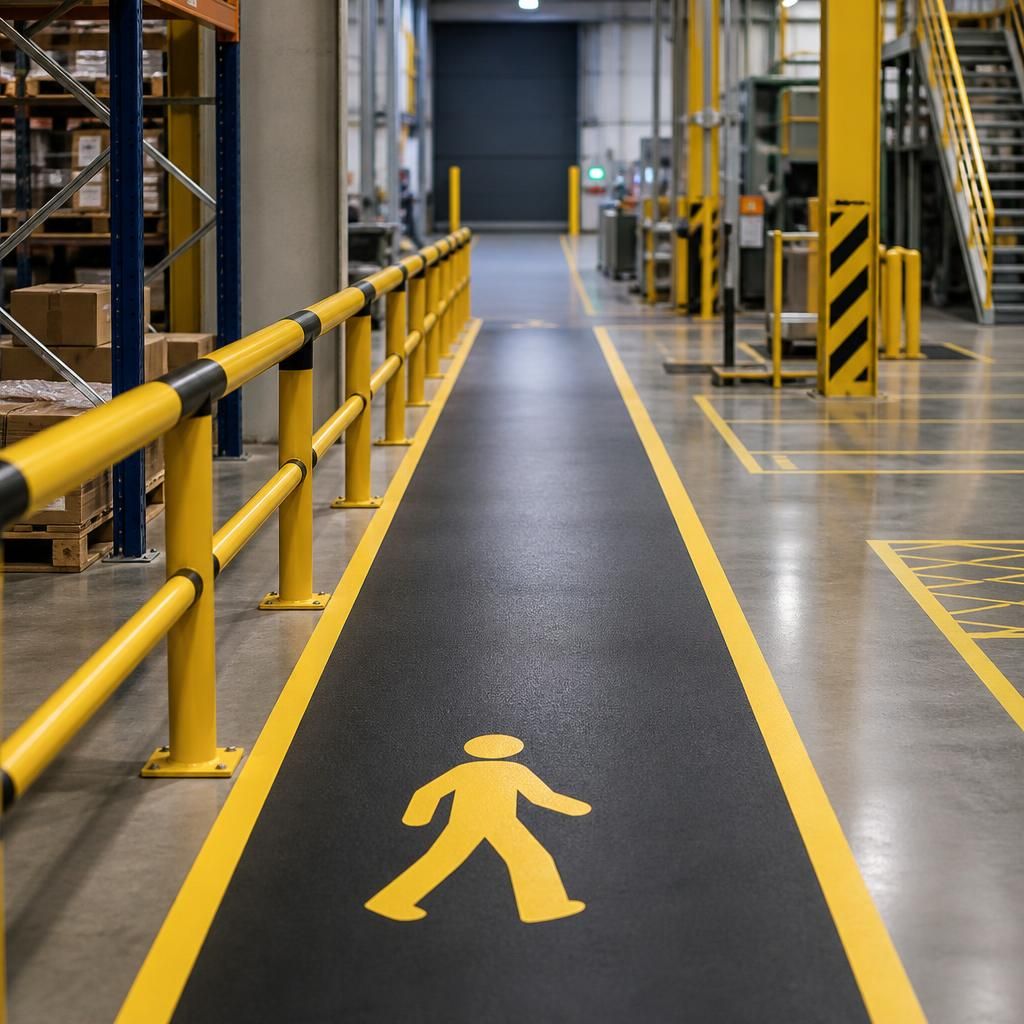
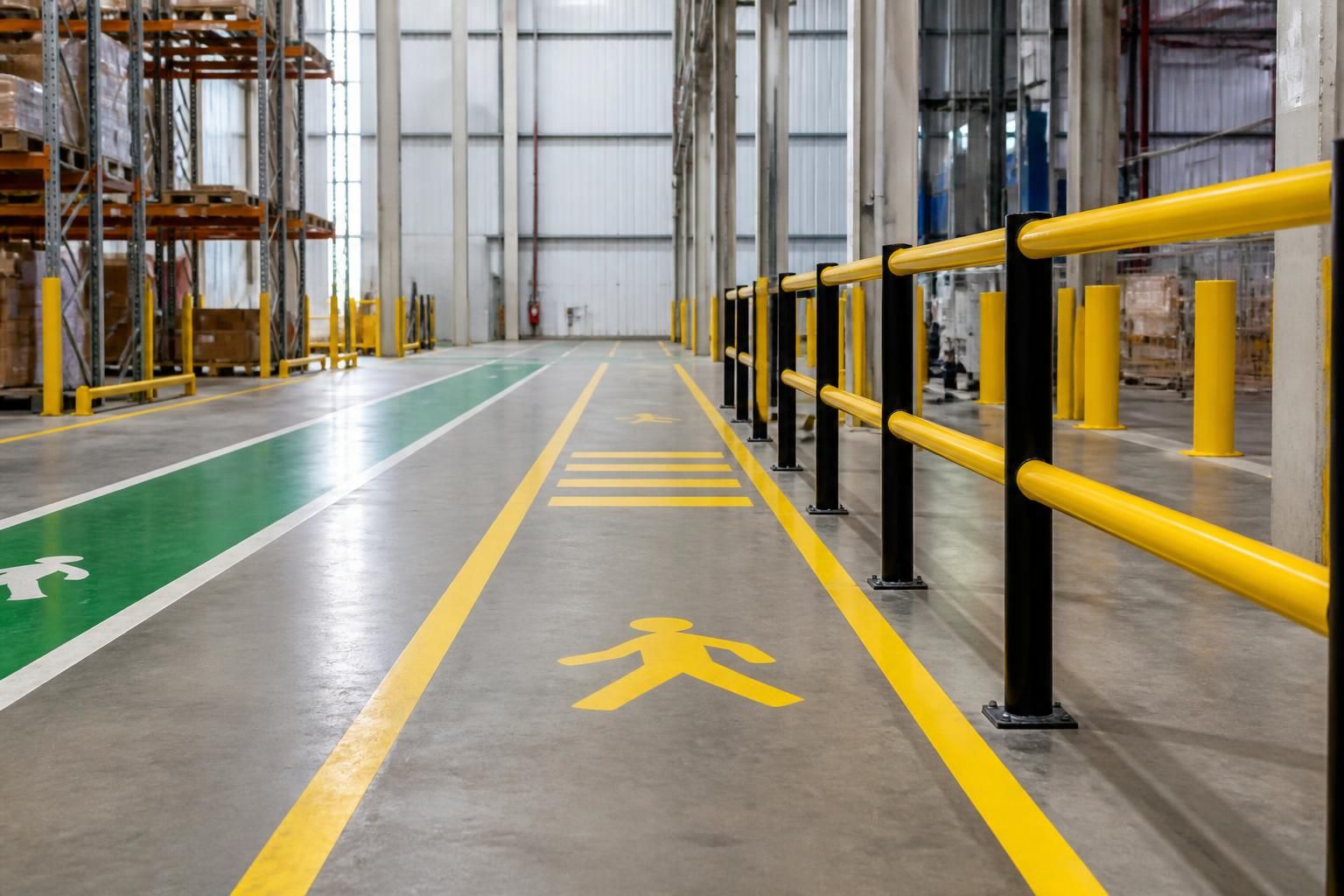
A complete traffic management installation covers the physical measures that organise movement through a workplace. Safety barriers, pedestrian segregation and line marking define usable routes, while signage communicates controls at key points.
For warehouse and industrial sites, the installation may include:
- Safety barriers that separate people from vehicle movements, storage areas or exposed workplace zones.
- Pedestrian segregation that creates clearer walking routes through busy operational areas.
- Line marking that identifies walkways, vehicle routes, working zones and access areas.
- Traffic signage that reinforces route directions, restrictions and safety instructions.
- Protection measures around vulnerable areas where workplace activity could cause damage or unsafe access.
The installation starts with a site meeting or survey. We consider the existing layout, movement patterns and practical constraints before producing a written proposal and working drawings.
Those documents provide a basis for agreeing the arrangement before fitting begins. They also help you assess how the planned segregation and protection measures fit the site’s workflow.
We then coordinate the agreed installation, including the positioning and fitting of barriers, signs and marked routes. The work must suit the available space, vehicle movements, pedestrian access and operational requirements.
Where a project requires it, project management can continue from proposal and tender stages through installation and final commissioning. This gives larger workplace changes a clearer line of responsibility.
Traffic management installation is therefore more than placing signs or marking a floor. It brings the agreed layout and physical controls together, so people, vehicles and work areas have clearer separation.
Where included, final commissioning provides a structured review of the installed traffic management measures. The agreed barriers, signs and marked routes can be checked against the working drawings before the project is completed.
This helps identify positioning issues that could affect pedestrian access, vehicle movements or entry to working areas. It also gives you a clear point to consider whether the installed arrangement matches the site’s requirements and workflow.