What disruption should you expect during traffic management installation?
Expect disruption around work areas, access routes and vehicle or pedestrian movements, with the extent depending on the site layout and installation requirements. We assess this during a site meeting or survey, then set out proposed arrangements in written proposals and working drawings.
Traffic management installation can interrupt local vehicle, pedestrian and stock movements, but the effect depends on the work area, access routes and measures required. Planning should focus on keeping people separated from moving equipment while maintaining practical access around the site.
Typical sources of disruption include:
- Temporary restrictions around the installation area.
- Changed routes for pedestrians, forklifts or other workplace vehicles.
- Short pauses while materials, equipment or installation teams occupy an access point.
- Reduced space around loading, storage or production areas during the work.
- Clear zones needed for line marking, barrier protection or workplace segregation.
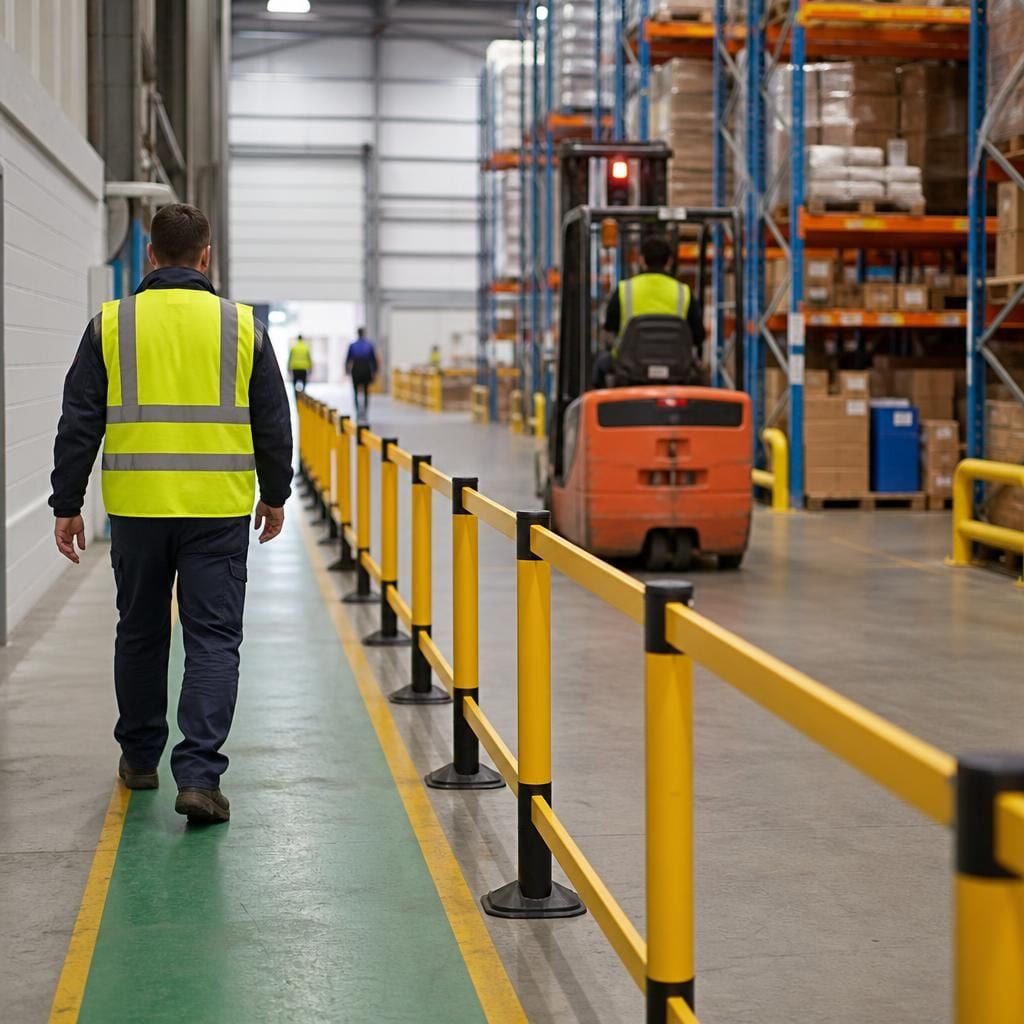
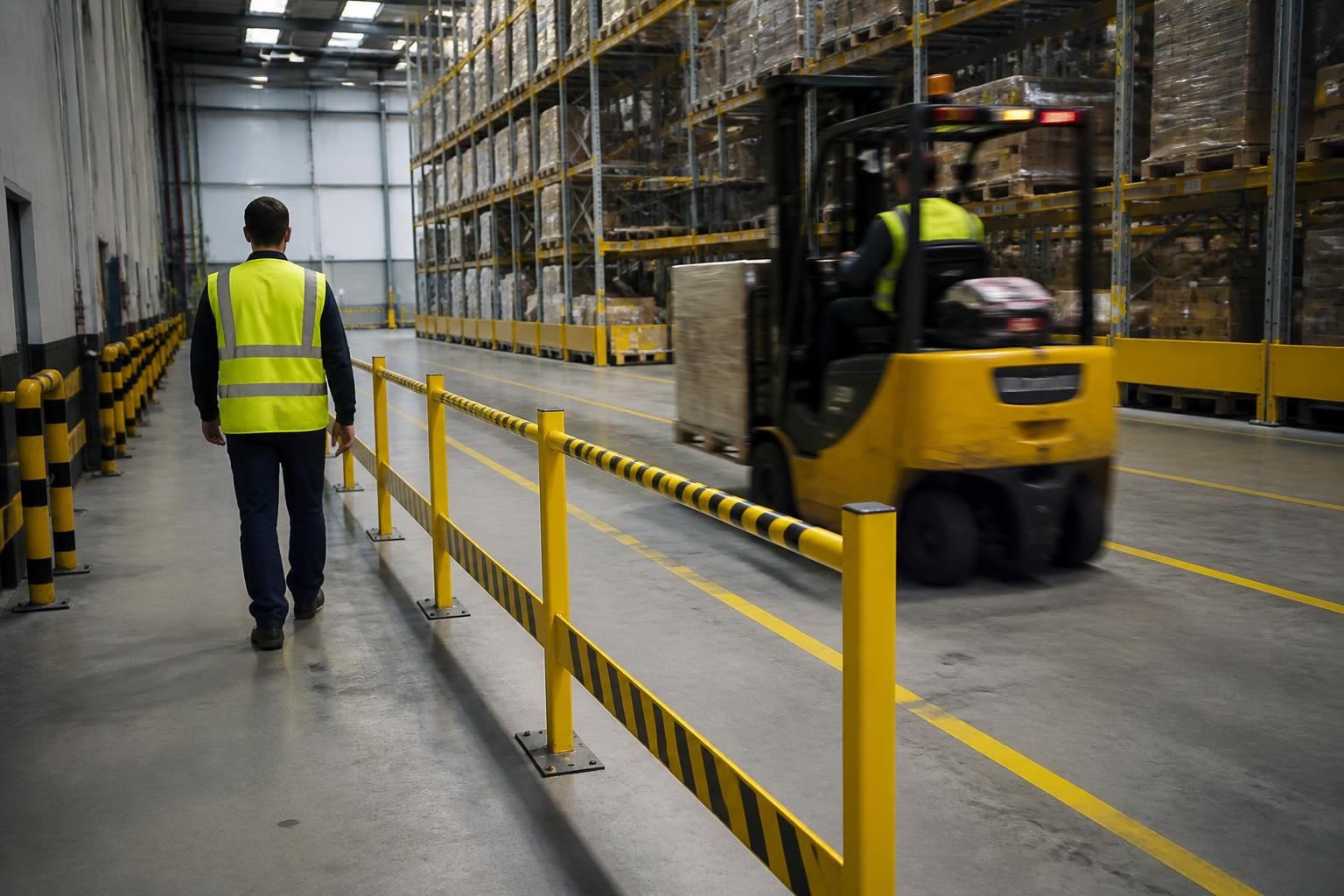
The impact may differ across a warehouse, manufacturing facility and office environment. A warehouse may need revised routes around stock and loading areas. A production site may need separation between work activity and vehicle movements. An office fit-out may require controlled pedestrian access through shared areas.
Access arrangements are normally considered before installation. You may need to identify alternative routes for staff, visitors, deliveries, forklifts and other site traffic. Stock movements can also require temporary changes, particularly where the work affects aisles, doors, loading points or shared circulation areas.
We can use site meetings and surveys to understand these constraints. Written proposals and working drawings can then show the intended arrangement, including the relationship between vehicle routes, pedestrian areas, barriers and line marking. This gives you something practical to review before work begins.
Installation disruption usually follows the work being carried out. Barrier protection and segregation can require a clear working area. Line marking requires access to the relevant floor surface and may affect movement while the work proceeds. If several measures form part of one project, their installation may need coordinating with other site activities.
Good preparation helps you identify which movements can continue and which may need temporary control. You should consider:
- Where people and vehicles normally enter, leave and cross the work area.
- Which aisles, doors, loading points or workstations cannot be obstructed.
- How deliveries, collections and internal stock transfers will operate during installation.
- Where temporary separation or revised pedestrian routes may be needed.
- Who needs to understand the agreed arrangements before work starts.
Project management may be provided from proposal and tender stage through installation and final commissioning, where required. This can help coordinate the work with the wider site programme when traffic management forms part of a larger storage, workplace or fit-out project.
The final disruption should be judged against the proposed layout, not a standard timescale. Site access, existing operations, installation requirements and the number of measures involved all affect the arrangements. We can discuss these factors during consultation and set them out in the proposal.
Agreed dates remain estimates under our terms. We use all reasonable endeavours to meet them, but time is not of the essence. This means you should coordinate site activities using the confirmed project information rather than treating an estimated date as an absolute deadline.
Once the installation is complete, the arrangements can be checked against the working drawings and agreed requirements. Any remaining access or segregation points can then be identified before final commissioning.
Traffic management installation can change how people use a work area while barriers, segregation or line marking are being fitted. Keep stock, equipment and personal items outside the defined work zone to avoid additional obstructions.
Brief employees, visitors and contractors that barriers and temporary routes form part of the agreed controls. Moving them or using a closed route can recreate the access risk the installation is intended to address. Raise practical difficulties against the working drawings rather than altering the arrangement informally.