


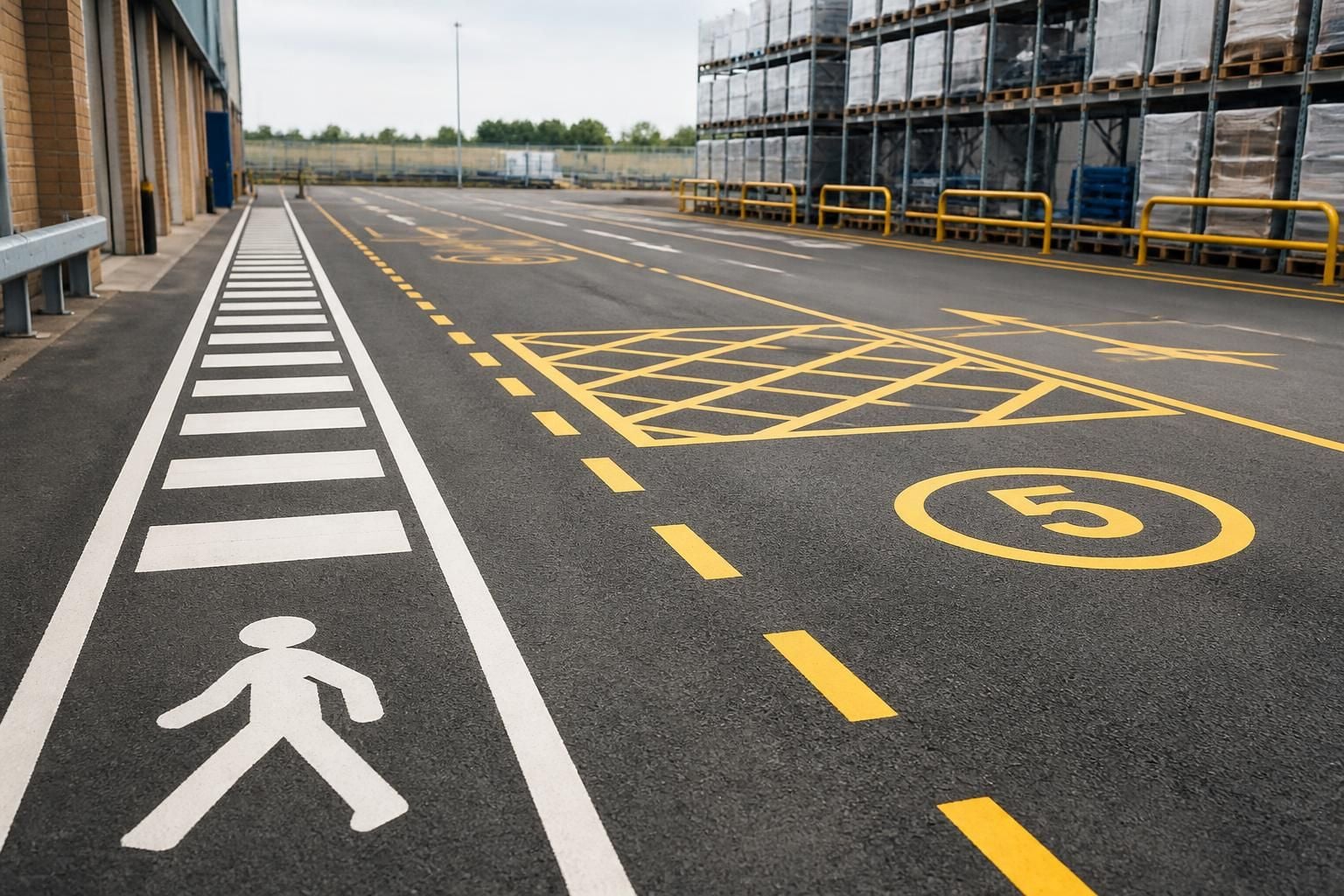
What should an outdoor line marking quotation include?
An outdoor line marking quotation should set out the marked areas, surface preparation, materials, access requirements, costs and compliance considerations. It should also identify estimated dates and project conditions, so you can compare the proposal with your site requirements.
A useful quotation should explain the proposed work clearly enough for you to check its scope, assumptions and commercial terms before accepting it. It should connect the quotation to site information, drawings and any discussions held during consultation.
Project identification
- Site address and the areas covered by the proposal.
- The quotation date, reference number and named contact.
- A description of the operational purpose, such as traffic separation, storage layout or pedestrian guidance.
- Any drawing, site plan or marked-up photograph used to prepare the price.
Defined work and quantities
The document should describe the proposed line layout in enough detail for you to verify it against the agreed plan. This may include line dimensions, colours, symbols, bays, walkways, hatchings or numbered areas where they form part of the brief.
It should also distinguish included work from items requiring separate instruction. For example, warehouse line marking may sit alongside workplace segregation, barrier protection or other safety infrastructure. Separating those items prevents an assumption that every visible site requirement forms part of the price.
Survey findings and assumptions
A quotation based on a site meeting or survey should record the information used to prepare it. This can include measurements, access observations, existing drawings and the condition of the areas examined.
Any assumptions should be stated plainly. These might concern the availability of clear working areas, the accuracy of supplied plans or work by others. If the quotation depends on information that has not been confirmed, you should know that before comparing proposals.
Preparation and application details
The quotation should explain the preparation included within the price and identify any preparation that remains outside the scope. It should describe the proposed marking material and application method at an appropriate level for the site.
Where existing coatings, damage or contamination could affect the work, the quotation should explain how that issue has been treated in the price. If further investigation is needed, the proposal should identify it rather than present an uncertain allowance as a fixed conclusion.
Price structure
A clear price should show what the figure covers, rather than presenting one unexplained total. Useful information includes:
- Materials and application work.
- Preparation and removal work, where included.
- Equipment or access requirements included in the price.
- Separate options, provisional items or excluded work.
- Any applicable tax treatment and the payment terms stated in the quotation.
You can then compare quotations on the same basis. A lower figure may exclude preparation, additional areas or work needed after the initial site information changes.
Responsibilities and changes
The proposal should state what you need to provide before work starts. This may include access to the agreed areas, suitable site information and decisions on layout or markings.
It should also explain how changes will be handled. If the layout, quantities or site conditions change after the quotation, ask how the effect on price and scope will be confirmed. Written clarification helps prevent disagreement about additional work.
Drawings and approval
For a larger warehouse or commercial site, a working drawing can make the quotation easier to assess. You can check circulation routes, storage positions and separation points before approving the proposed layout.
Our no-obligation consultation may include a site meeting and survey, followed by a written proposal and working drawings. Where required, we can also coordinate project management from proposal and tender stage through installation and final commissioning.
Commercial terms
Read the quotation alongside its terms and conditions. Spartan Direct Limited states that its quotations remain valid for 14 Business Days from issue. The contracting supplier is Spartan Direct Limited, registered in England and Wales under company number 3275287.
The terms also state that agreed dates are estimates only. We use all reasonable endeavours to meet them, but time is not of the essence. This distinction matters when you are coordinating warehouse activity or other contractors.
Finally, the quotation should explain how material defects are dealt with under the applicable terms. Spartan Direct Limited’s terms provide for repair, replacement or a refund of the relevant price, at the supplier’s sole discretion, where material defects are notified correctly.
Before acceptance, check that the quotation matches the latest drawing, identifies exclusions and reflects the site information you supplied. If any point remains uncertain, raise it before work is commissioned.
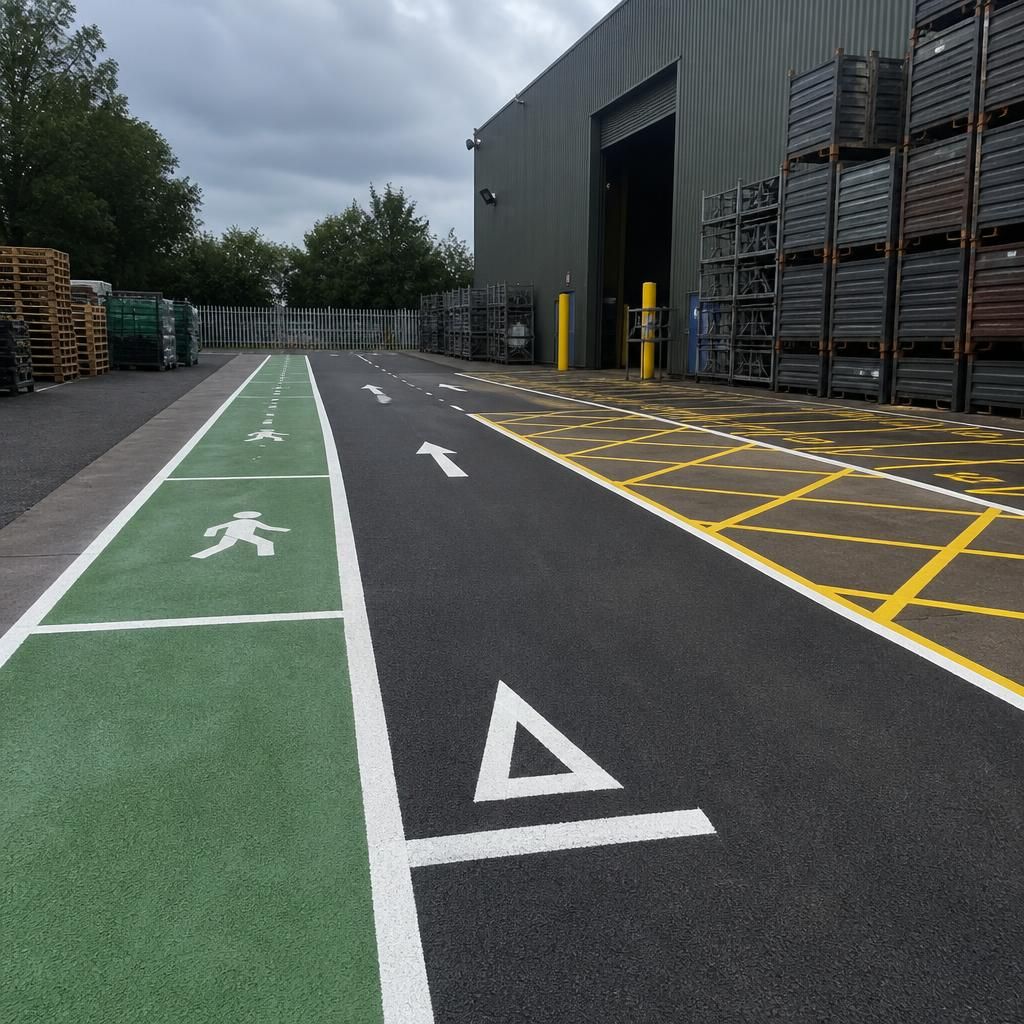
Review the quotation against the way people, vehicles and stock move through the outdoor area. Markings should support the intended separation and storage arrangement without creating conflicts at entrances, loading points or access routes.
Ask the proposer to explain any layout point that remains open, particularly where existing routes or storage positions limit the available space. Resolving these details before approval gives the marked plan a clear operational purpose and helps you assess whether the quotation reflects the site’s actual use.



