


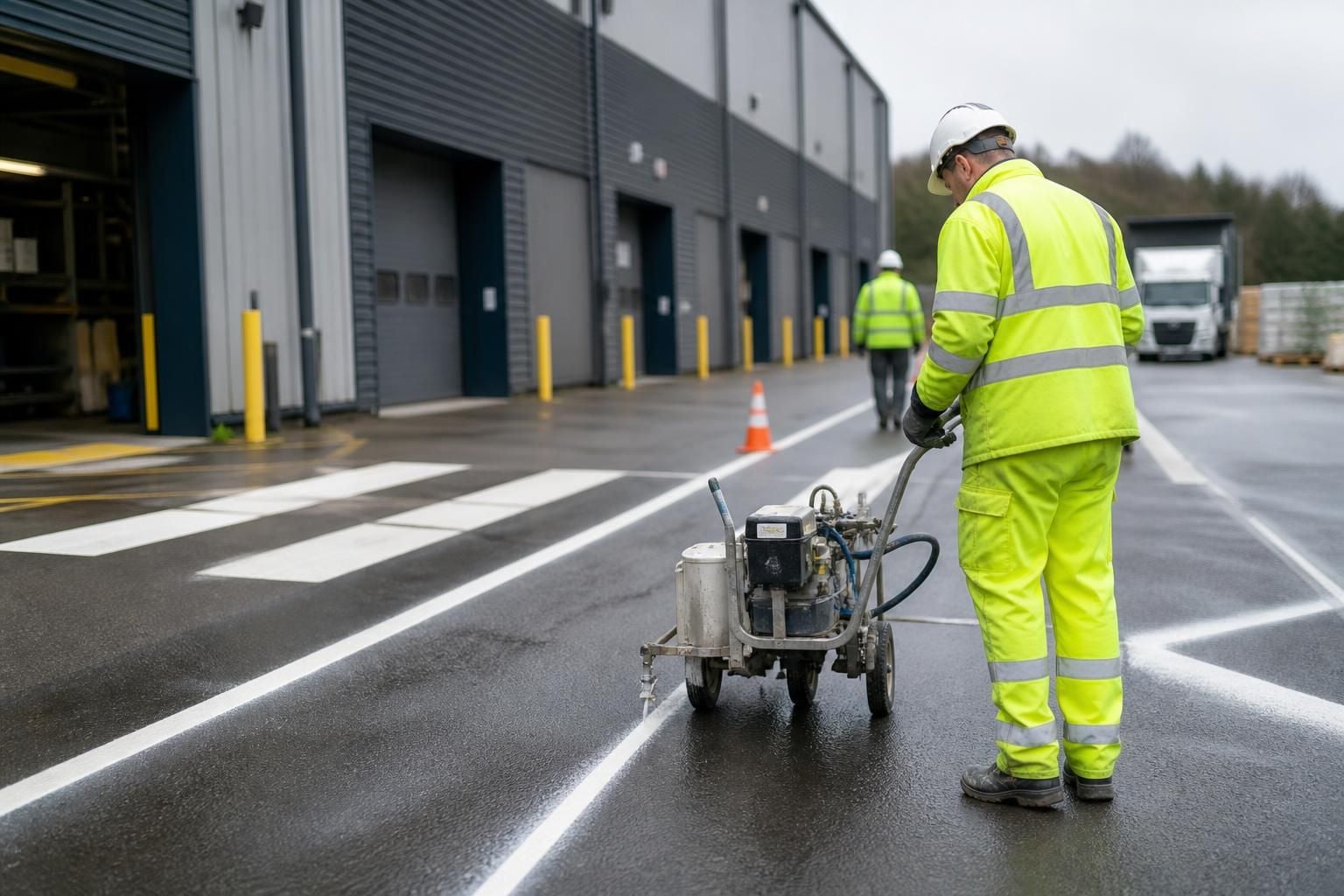
What disruption should you expect during outdoor line marking?
Expect temporary restrictions around the areas being prepared and marked, with disruption shaped by site access, traffic and the required layout. We can discuss sequencing during a no-obligation site meeting or survey, then set out the proposed work in writing.
The main planning issue is separating active outdoor line marking from normal vehicle, pedestrian and loading movements. Restrictions should be limited to agreed work areas where the programme allows, but access arrangements need deciding before work begins.
Disruption commonly affects four parts of site activity:
- Vehicle movements: Routes may need temporary adjustment around areas being prepared or marked. This can affect deliveries, collections, yard movements and access to loading points.
- Pedestrian movement: Walkways or crossing points may require temporary separation. Staff and visitors should follow the agreed alternative route rather than entering active work areas.
- Parking and operational areas: Parking bays, storage positions and working zones may be unavailable while their markings are being completed. Moving stock or vehicles beforehand can prevent avoidable delays.
- Site coordination: Someone responsible for the premises should understand the sequence, restrictions and handover points. This helps operators communicate changes to drivers, contractors and staff.
Before the work is planned, consider which routes are essential, which areas can be temporarily released, and how vehicles will reach them. Also identify movements that cannot easily stop, such as regular deliveries or transfers between buildings.
Where several outdoor areas require marking, sequencing can separate the work into manageable sections. One section may remain available while another is being prepared or marked, subject to the site arrangement and proposed layout. This approach needs enough space for safe separation and must reflect actual working patterns.
Do not rely on a drawing alone to decide the practical arrangement. Site conditions, access points, vehicle sizes, pedestrian routes and existing obstructions can change how work affects the operation. A site meeting or survey gives us the opportunity to examine those details with you.
We can then reflect the agreed approach in a written proposal and working drawings. These documents should make the proposed areas, sequence and responsibilities easier to review before the work is arranged. They also give your team a reference for preparing the site.
To reduce avoidable interruption, you should:
- remove vehicles, stock and movable equipment from the planned work areas;
- tell staff and visiting drivers about temporary routes and restricted zones;
- keep access points clear for the agreed movement plan;
- identify a site contact who can confirm operational requirements;
- avoid changing the layout after drawings have been agreed without discussing the effect.
Outdoor line marking is complete for planning purposes only when the marked areas can return to their intended use under the agreed site arrangements. The point at which each area is released should be clear between you, the site team and the contractor.
At Spartan Direct, our consultation process brings together site information, proposals and drawings before installation. That gives you a clearer basis for judging disruption against access, workflow and safety requirements, rather than treating the work as a standalone marking exercise.
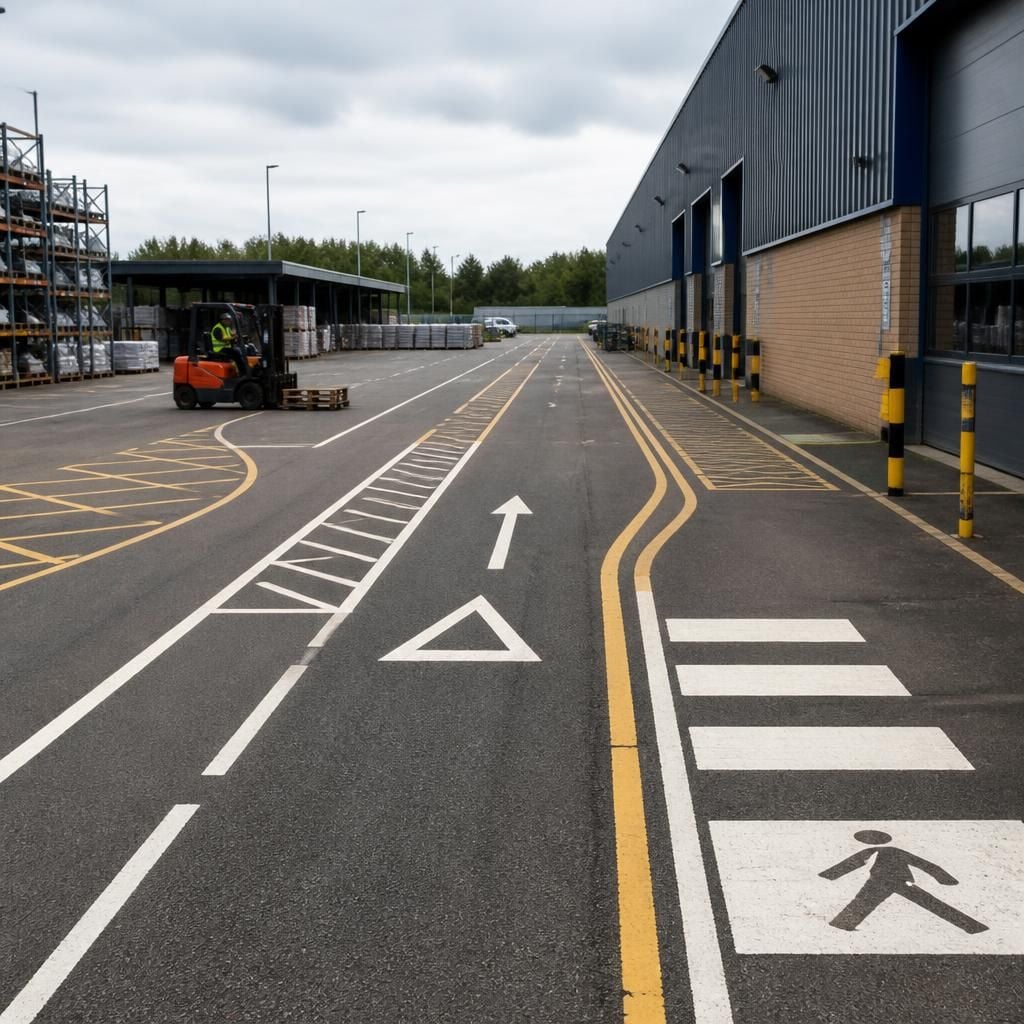
The area needing temporary control may extend beyond the marked lines. Vehicles might need space to approach, turn or wait without entering active work areas.
Identifying these surrounding movements before work begins helps separate marking activity from essential site operations. We can review the arrangement during a site meeting or survey, then show relevant access considerations in the working drawings.



