How should we prepare the surface for outdoor line marking?
For crisp, durable outdoor line marking, prepare a clean, sound and dry surface. Remove dirt, oil and loose material, repair defects, and allow moisture to dry before marking; priming may be needed where the surface requires it.
Outdoor line marking preparation depends on the substrate, existing markings, traffic and planned use. Assess these factors before choosing cleaning methods, repairs, primers and setting-out methods.
Start with a site assessment. Check whether the area is concrete, asphalt, resin-coated or previously painted. Note joints, slopes, drainage channels, surface texture and damaged sections. These details affect how lines should be positioned and which preparation methods are suitable.
Review how vehicles, pedestrians, stock and equipment use the area. Marking should support clear routes, loading areas, parking arrangements and workplace segregation. Setting out also needs to account for gates, doors, ramps, columns and turning movements.
Deal with existing markings carefully. Old lines can influence the new layout, especially where routes or storage arrangements have changed. Decide whether they should be removed, covered or retained. Grinding or other mechanical removal may be appropriate, but the method must suit the surface and avoid creating further damage.
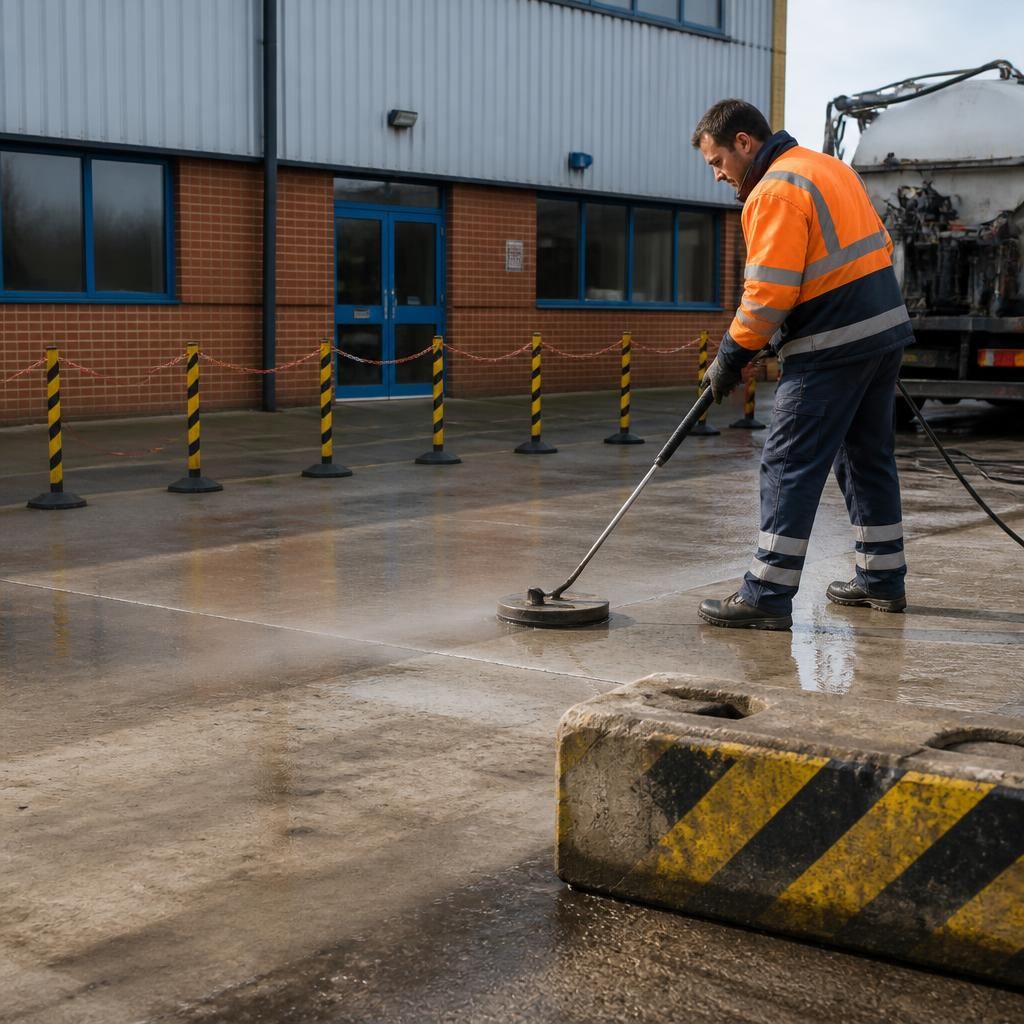
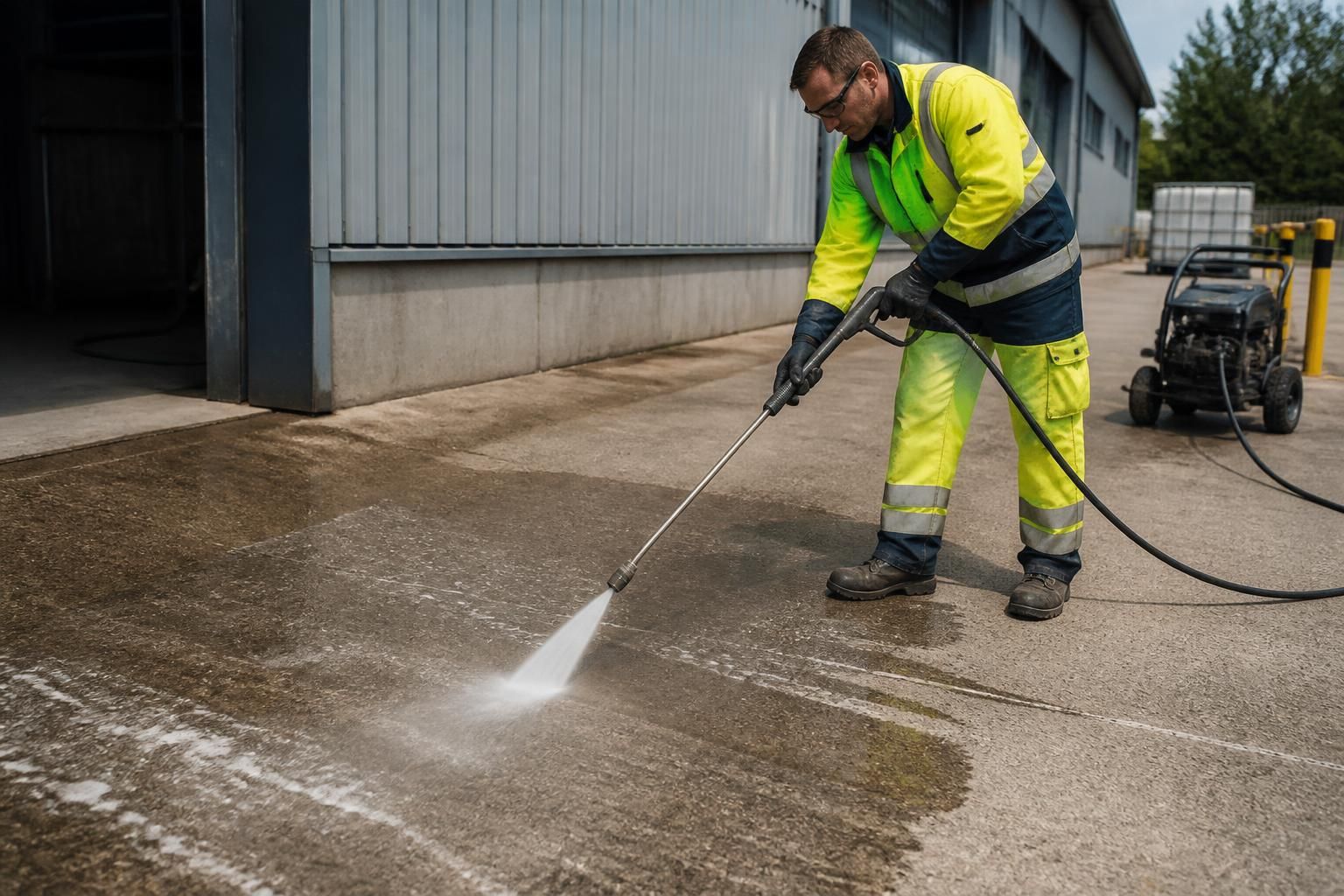
Match cleaning to the substrate. Concrete, asphalt and coated floors can react differently to mechanical cleaning, detergents and degreasers. Residue from cleaning must not remain where it could affect the marking material. Dust and waste should also be removed before setting out begins.
Inspect repairs before marking. Cracks, potholes, damaged edges and failed coatings should be assessed as part of the preparation plan. Marking should not be used to conceal defects that could affect appearance, adhesion or safe movement.
Consider moisture and weather exposure. Outdoor areas can hold moisture in pores, joints and uneven sections. Rain, dew, temperature changes and shaded locations may affect the preparation sequence. The surface needs suitable conditions before marking proceeds, rather than simply appearing dry at first inspection.
Use primer only where the surface requires it. A primer may be considered for particular substrates, old coatings or difficult adhesion conditions. Its suitability depends on the marking material and the existing surface. Applying primer without checking compatibility can create another preparation problem.
Agree the layout before work starts. Use measurements, site information and working drawings where needed. Confirm line positions, widths, colours, hatch areas, bay markings and pedestrian routes before preparation begins. This avoids preparing areas that later move during the setting-out stage.
A site meeting and survey can identify these requirements. We can then provide written proposals and working drawings where the project needs them. For wider workplace changes, project management may continue through installation and final commissioning.
Plan protection around the marked area. Identify traffic that must be diverted during preparation and marking. Keep people and vehicles away until the material has reached the required condition for use. The necessary restriction depends on the product, surface and site conditions.
Before reopening the area, inspect line positions, edges, coverage and the condition of surrounding surfaces. Record any changes from the agreed layout. This provides a clear handover for warehouse, industrial and office teams using the marked space.
For outdoor line marking, preparation is therefore a planned sequence rather than a quick cleaning task. Substrate assessment, layout confirmation, suitable treatment and controlled access all contribute to a clear finished arrangement.
Protect the surrounding area while preparing the surface for outdoor line marking. Shield doors, vehicles, walls and stored materials from dust, debris and cleaning residue.
Keep removed coatings and wash water away from drainage channels. Plan collection and disposal before mechanical cleaning begins, then inspect nearby surfaces before marking starts.