Which line marking paint suits indoor warehouse floors?
For indoor warehouse floors, choose line marking paint whose adhesion, abrasion resistance, visibility and application method match the floor and traffic.
We can assess the floor and operating requirements through a site survey, then recommend a suitable paint and application approach.
There is no single best line marking paint for every indoor warehouse floor. The suitable choice depends on the existing surface, vehicle traffic, cleaning regime, stock-handling demands and application method.
Water-based acrylic paint can suit many indoor areas where lower odour matters. It is commonly considered for concrete and previously painted surfaces, subject to preparation and compatibility checks. It may suit pedestrian routes, storage bays and areas with moderate traffic.
Solvent-based line marking paint can suit some surfaces and operating conditions where stronger initial adhesion or wear performance is required. It produces more noticeable fumes during application, so the site’s ventilation and access arrangements need consideration.
Two-component epoxy or polyurethane markings may suit demanding warehouse areas exposed to repeated forklift movements, pallet trucks, impacts or cleaning. These products require accurate mixing and controlled application. Their higher performance does not remove the need for correct preparation.
Do not select paint by product type alone. A coating that performs well on concrete may not bond correctly to resin, sealed flooring or an existing paint layer. Check compatibility with the actual surface before committing to the full marking layout.
- Concrete: assess dusting, porosity, laitance, oil contamination and moisture.
- Resin flooring: confirm whether the marking paint can bond with the finish.
- Existing markings: check loose paint, polishing, contamination and areas requiring removal.
- Heavy traffic: consider turning points, loading areas, dock approaches and crossing routes.
- Cleaning: match the paint to the cleaning products and methods used on site.
Surface preparation often determines the result more than the paint label. The floor should be clean and free from oil, dust, loose material and other contaminants. Mechanical preparation may be needed where the surface is polished, sealed or poorly bonded.
Moisture also needs attention. Damp concrete can affect adhesion and curing. The marking plan should account for the floor condition, building use and any restrictions affecting preparation or application.
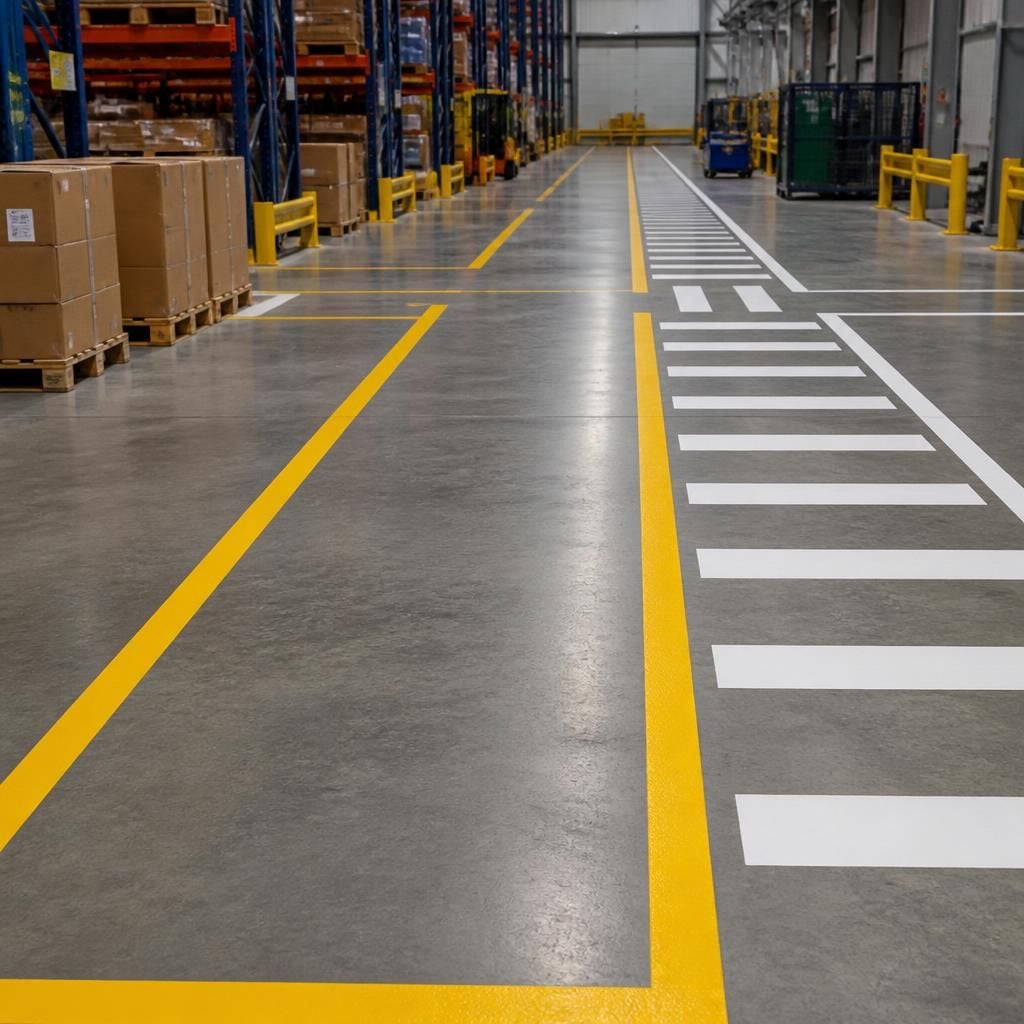
Colour and contrast should support the warehouse’s agreed traffic and storage layout. Markings can identify aisles, pedestrian routes, exclusion zones, loading areas and workstations. Do not rely on colour alone where signs, barriers or other controls are needed.
The application method must match the paint. A line marking machine can produce consistent lines across larger areas, but the paint must suit the machine’s nozzle, pressure and working method. Hand application may suit smaller sections or detailed corrections, provided the surface and paint allow it.
Ask for the paint specification to confirm the following points:
- Suitable substrates and compatible existing coatings.
- Required surface preparation.
- Recommended line width and application equipment.
- Colour, finish and expected visibility in the warehouse lighting.
- Drying and curing requirements before foot or vehicle traffic.
- Resistance to abrasion, impact, cleaning chemicals and routine wash-down.
- Storage, handling and touch-up instructions.
A product described as durable may still fail if applied over contamination, dampness or unstable old paint. It may also wear sooner where forklift wheels turn sharply or repeatedly cross the same marking.
For that reason, paint selection should follow the floor and workflow assessment, rather than precede it. We can record the substrate, traffic patterns, storage arrangement and application constraints within the project proposal and working drawings.
This approach gives you a clear basis for comparing paint types and identifying where a more robust coating is justified. It also helps separate product performance from preparation, layout and operating factors that affect the finished marking.
Test the paint before marking the full floor. Apply a small sample to the prepared surface, then check adhesion, appearance and curing.
View the sample under warehouse lighting and compare it with the planned marking layout. This can reveal compatibility or visibility issues before wider application.
We can record the trial area and agreed checks within the project proposal, giving you a clearer basis for selecting indoor warehouse floor paint.