Which line marking machine suits high-volume warehouse floor marking?
For high-volume warehouse floor marking, a powered line marking machine usually suits better than hand-applied paint. We can assess the site, floor and workflow before recommending a suitable machine-based approach.
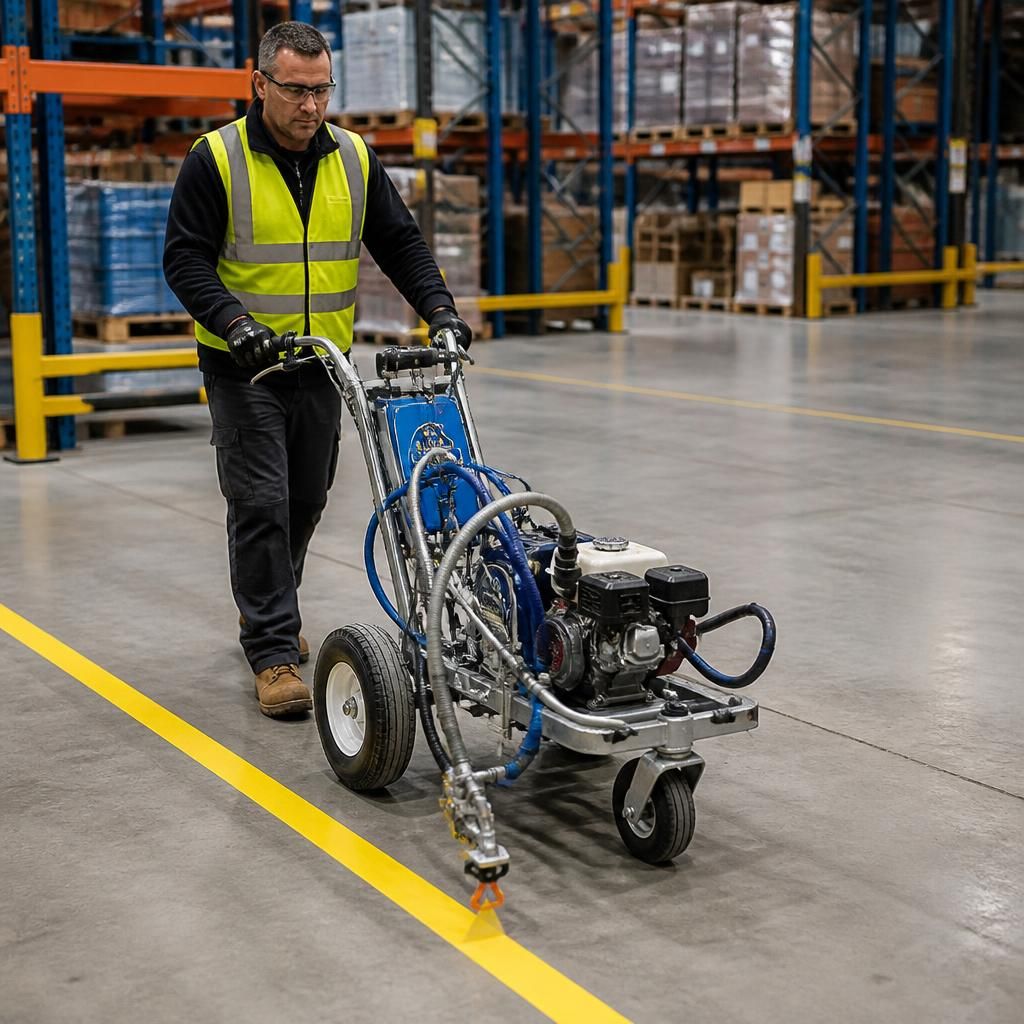
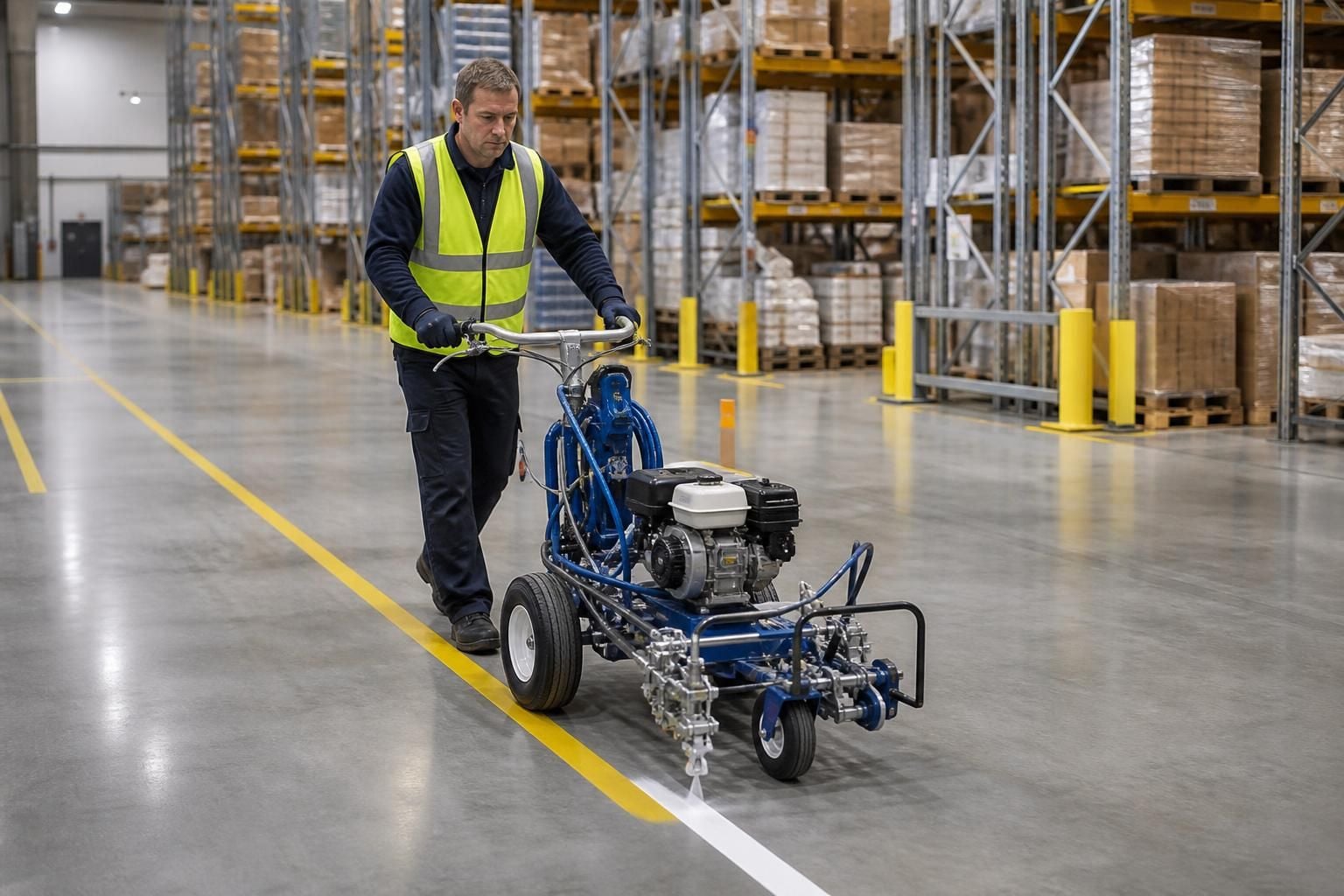
For most high-volume warehouse marking, choose a powered walk-behind line marking machine. It provides controlled movement while remaining practical around racking, doors, columns and working areas.
A ride-on machine may suit a large, open warehouse with long, uninterrupted runs. However, its size can restrict access around loading points, storage aisles and production equipment. Select it only when the available floor area, turning space and marking pattern support that movement.
Compare the main options against the site.
- Powered walk-behind machine: Usually the most balanced choice for busy warehouses. It supports repeated marking while allowing the operator to negotiate tighter routes.
- Ride-on machine: Consider this for extensive open areas with long runs and fewer obstructions. Confirm that access routes and turning areas accommodate the machine.
- Manual push machine: It may suit smaller areas or occasional work. High-volume marking can make operator effort and slower progress more important considerations.
- Hand-applied paint: This offers flexibility for small corrections and isolated markings. It is less suited to repeated, extensive warehouse lines where consistent movement matters.
Match the machine to the marking pattern. Simple long lines place different demands on a machine than frequent junctions, corners and changes of direction.
- Choose a machine that can follow the required line width consistently.
- Check that the operator can see the intended line without unsafe leaning or reaching.
- Confirm that the machine can negotiate the aisle widths and turning points shown in the layout.
- Consider how the machine will reach areas around pallet racking, shelving, doors and safety barriers.
- Check the paint delivery arrangement against the floor surface and marking specification.
High-volume work also makes refilling, cleaning and adjustment important. A machine with a practical paint capacity can reduce avoidable stops between marking sections.
Do not select capacity alone. A larger machine may carry more paint, but it can be harder to position accurately in restricted areas. A smaller machine may offer better control, but require more frequent preparation.
The warehouse workflow should influence the choice. Marking around live storage, picking routes or vehicle movements requires a clear work sequence.
- Identify the areas that need marking first.
- Separate pedestrian routes, vehicle routes and storage locations on the working drawings.
- Plan machine access before stock, equipment or temporary obstructions restrict the route.
- Set out stopping points where lines meet doors, racking or other floor features.
- Confirm how operators will work safely around people, vehicles and stored goods.
A suitable machine should support the required layout without forcing unsafe access or unnecessary movement through operational areas.
Floor condition matters as much as machine type. Record the floor material, surface condition, contamination and existing markings before choosing the paint delivery approach.
Dust, oil, damaged concrete or previous coatings can affect preparation and marking work. The machine cannot compensate for unsuitable preparation or an unsuitable paint specification.
Where the warehouse includes pallet racking, mezzanine floors, office fit-outs, partitioning or safety barriers, coordinate the line layout with those features. This helps maintain clear separation between storage, access and workplace areas.
Use a site survey before committing to equipment. Our no-obligation consultation may include a site meeting and survey. We can then prepare written proposals and working drawings for the marking requirements.
The drawings should show line positions, widths, crossings, turning points and interfaces with existing storage or workplace areas. They also provide a reference for checking machine access before work begins.
For larger projects, project management may cover proposal and tender stages through installation and final commissioning. This gives you one coordinated process when floor marking forms part of wider workplace changes.
In practical terms, start with a powered walk-behind machine. Move towards a ride-on option only when the warehouse has enough open floor, long runs and suitable access to justify it.
Bring the site dimensions, floor information, marking layout and workflow requirements into the comparison. That evidence provides a stronger basis than choosing by machine size alone.
For high-volume work, the best machine is the one that keeps the operator in control throughout the planned marking route. A powered walk-behind model can balance steady progress with access around warehouse features, making it the practical starting point for most layouts.