When is a warehouse line marking machine preferable to hand-applied paint?
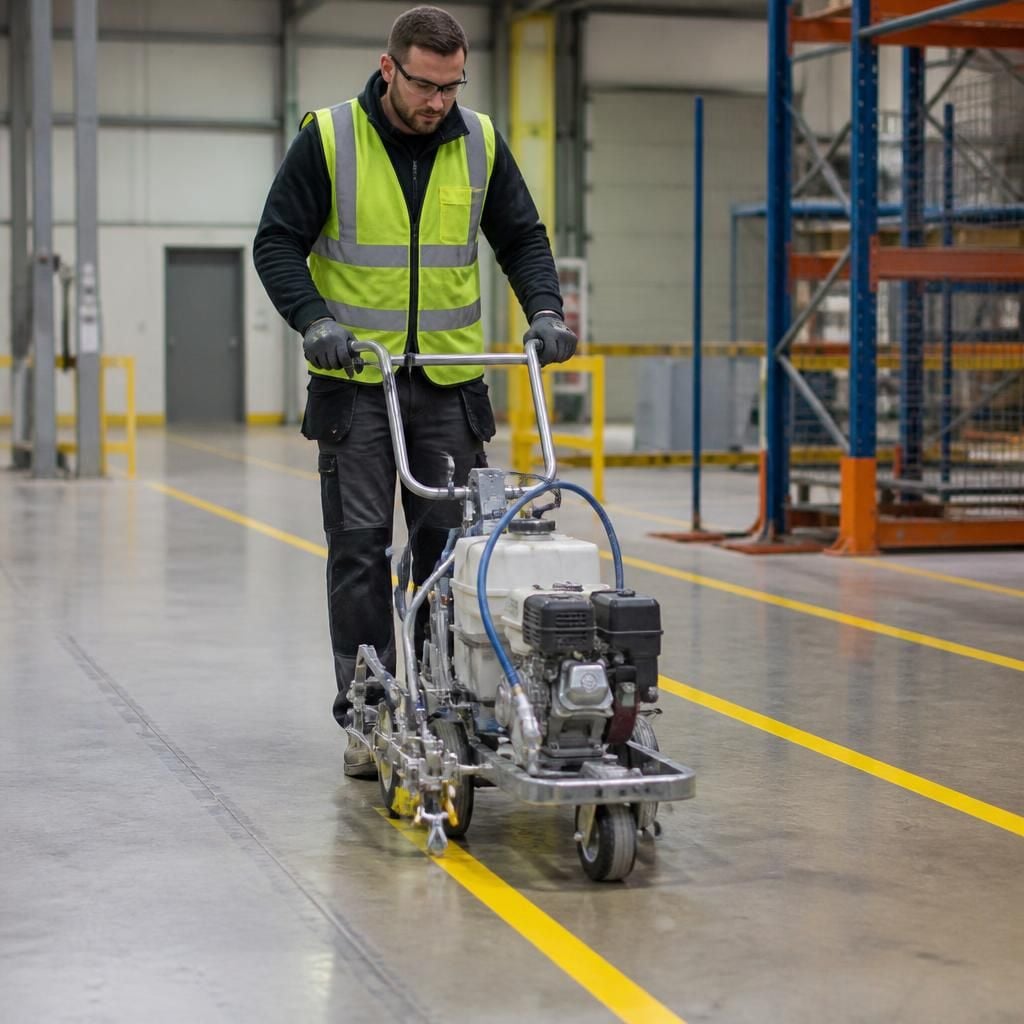
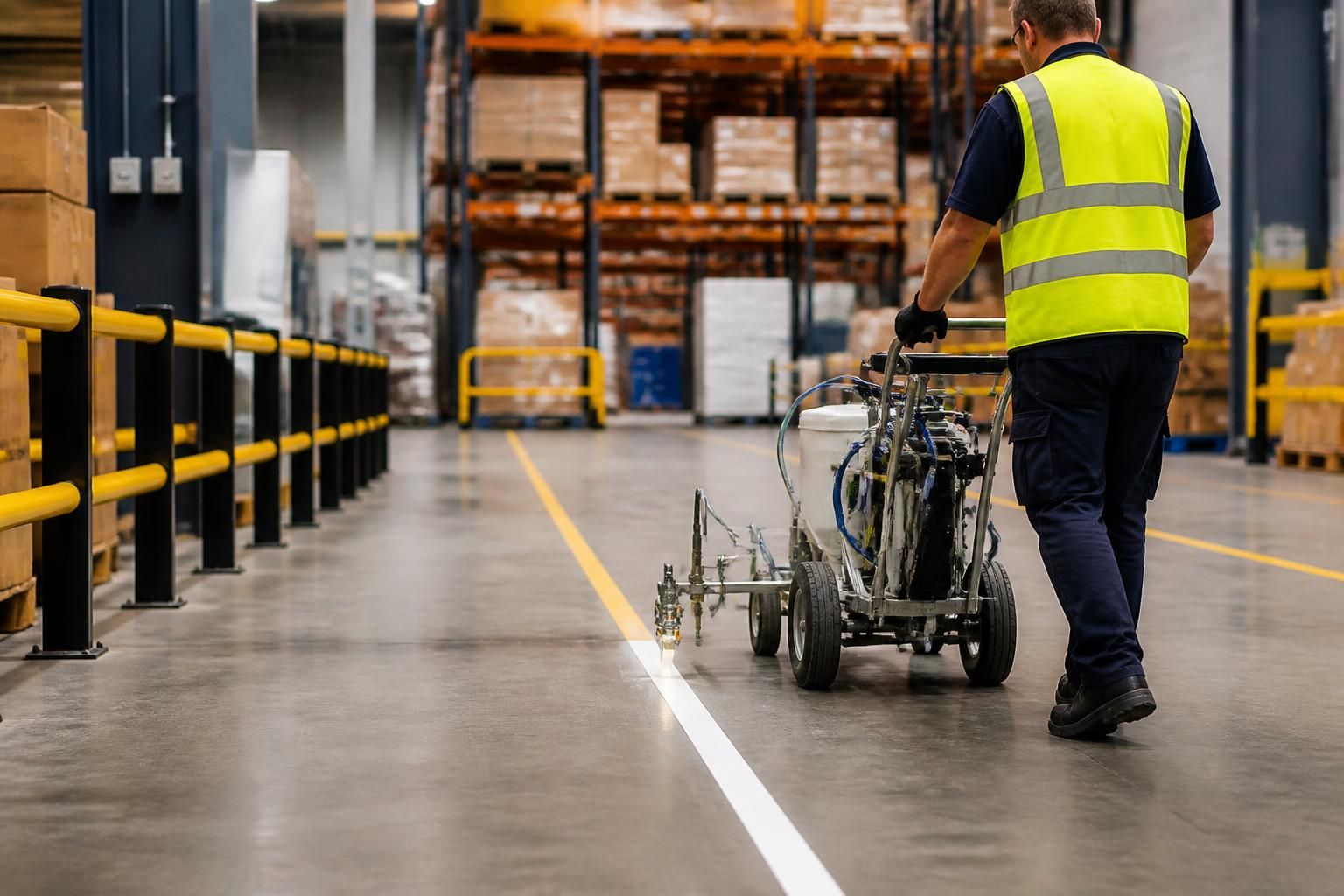
A warehouse line marking machine is preferable when you need consistent lines across larger floor areas, repeated markings or straighter results than hand-applied paint can provide.
Choose a warehouse line marking machine when marking forms part of a planned layout, rather than an isolated repair. The machine becomes more suitable when you need controlled application across defined routes, storage areas or workplace segregation.
Hand-applied paint can remain appropriate for a small alteration, a short section or an isolated repair. It may suit work where bringing equipment into the area adds unnecessary preparation. Compare the amount of marking with the time needed to set out, apply and review the lines.
A warehouse line marking machine is the stronger option when several parts of the layout must follow the same standard. This could include aisle edges, pedestrian routes, storage boundaries and exclusion areas. Repeated settings can help the operator follow the working drawings consistently across the marked areas.
Consider a machine when the layout includes:
- Long runs that need a controlled edge from one end to the other.
- Several parallel lines requiring consistent spacing.
- Repeated bays, routes or boundary markings.
- Workplace segregation that must remain clear around operational areas.
- A planned change affecting several connected sections of the warehouse.
Hand application may suit a layout with isolated markings or frequent local changes. It can also be easier to consider when access is restricted around fixed equipment, stock or existing workplace arrangements. The decision still depends on the required finish, the available access and the amount of marking involved.
Assess the floor and the layout before choosing equipment. A machine cannot correct unclear setting-out, unsuitable paint selection or a floor that needs attention before marking. The existing surface, traffic pattern, access points and required separation should inform the method.
A site survey gives you a practical basis for that decision. We can discuss the proposed markings, review the working area and prepare written proposals with working drawings. These documents can show the intended routes, boundaries and interfaces with other workplace features.
This matters when line marking sits alongside safety barriers, partitioning or other workplace segregation. The application method should fit the wider layout, rather than treating each line as a separate task. A planned drawing also gives the installation team a reference for positioning and sequence.
Use hand-applied paint when flexibility matters more than repeatability. Small changes may not justify equipment setup, particularly where the work involves only a few short markings. However, repeated manual setting-out can introduce more opportunity for variation between sections. A machine may therefore provide better control when the same arrangement continues throughout the site.
Access and disruption also affect the choice. Before work starts, identify how operators, pedestrians, stock and equipment move through the area. Marking should be planned around those movements, with the work sequence agreed during the proposal stage. Where required, we can provide project management from proposal and tender stage through installation and final commissioning.
For a warehouse in the West Midlands, the practical comparison is therefore:
- Choose a machine for a planned scheme with repeated lines, connected routes or several areas requiring consistent setting-out.
- Consider hand application for limited repairs, short sections or local changes with restricted equipment access.
- Arrange a survey first when the floor, traffic pattern, access or workplace segregation affects the marking method.
Spartan Direct Limited brings its stated work designing and installing storage and workplace systems to this assessment. We can coordinate proposals, drawings, installation and project management where the project includes related space or safety infrastructure. The right method should support the site’s requirements without assuming that a machine suits every marking task.
Check the paint specification and floor condition before choosing a warehouse line marking machine. The machine must suit the selected paint, surface and required finish; otherwise hand application may be the safer comparison.
We can review these points during a site survey and record them in written proposals. That gives you a clearer basis for deciding whether machine application justifies its preparation and setup for the planned marking.