What operator safeguards should you check on a warehouse line marking machine?
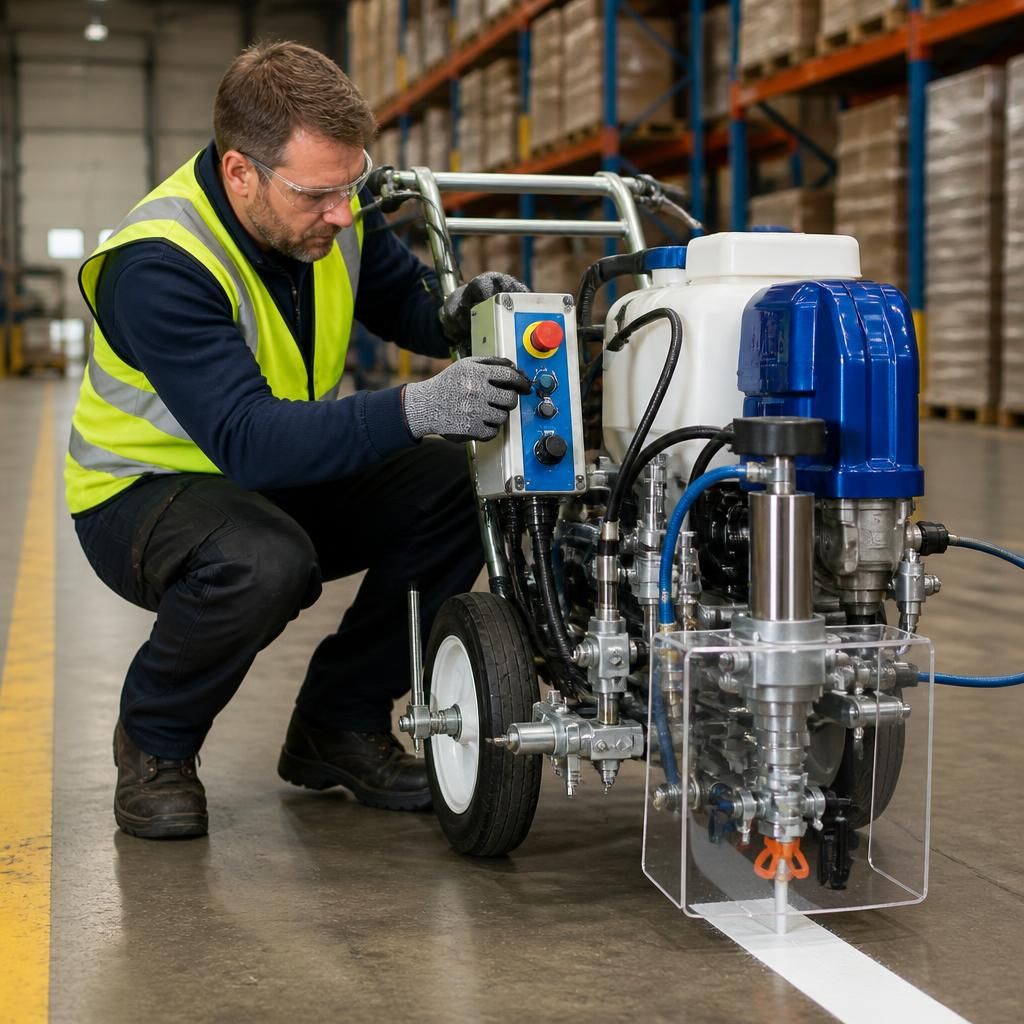
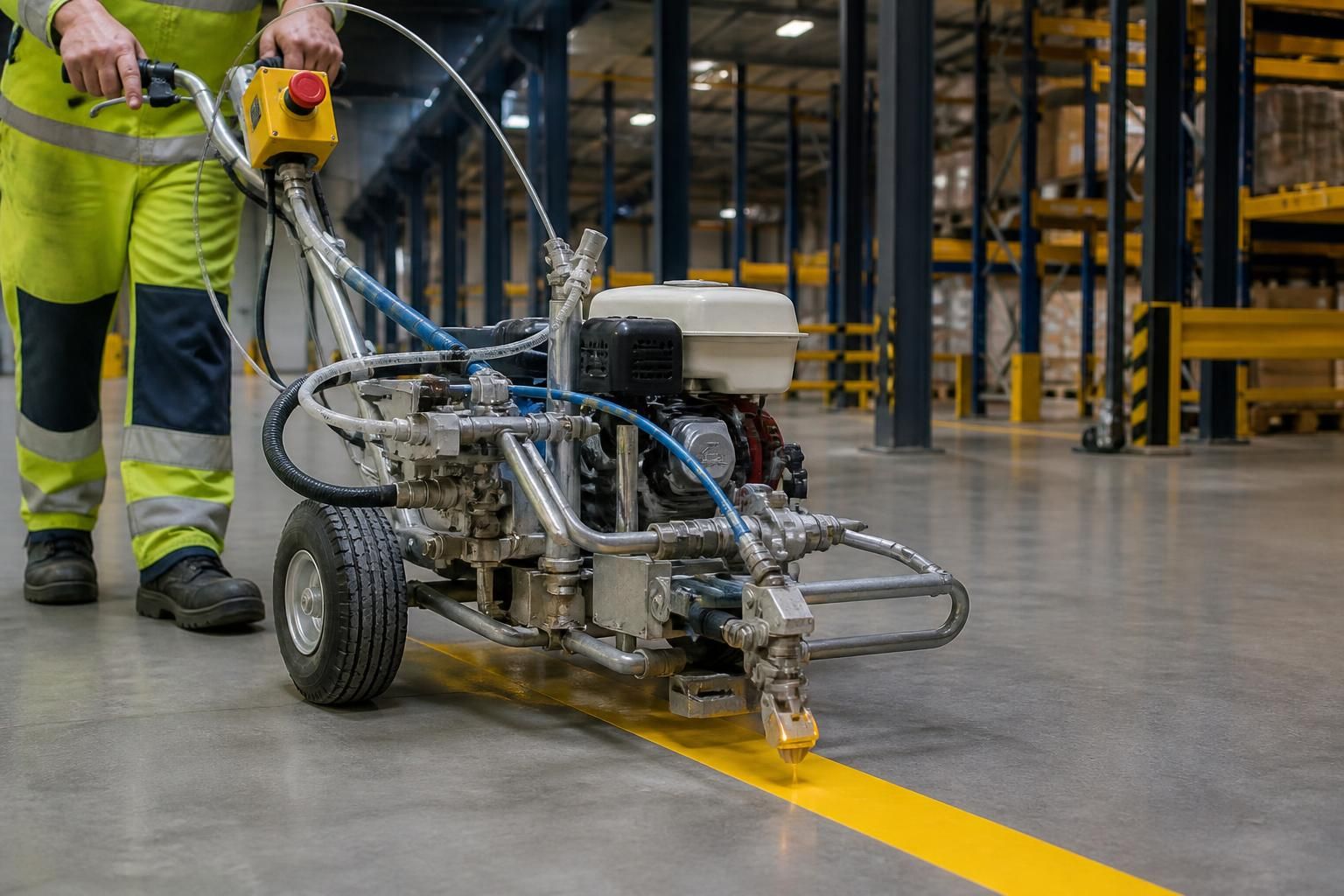
Check the warehouse line marking machine has an accessible emergency stop, guarded moving parts, stable wheels and clear controls.
Confirm the operator can see the marking path, control paint delivery safely and report defects before work begins.
Check the machine’s safeguards before use, during operation and after cleaning. The key checks cover spray pressure, operator exposure, pedestrian interaction, stability on the floor and safe isolation.
- Read the machine instructions: Confirm the operator understands the controls, approved materials, cleaning method and limits of use. Keep the instructions available at the work area.
- Check the spray system: Inspect hoses, connections, seals, filters and nozzles for damage or leaks. Check that pressure controls and pressure-release arrangements work as intended.
- Prevent accidental discharge: Confirm the trigger, valve or application control cannot operate unintentionally during transport, adjustment or cleaning. Isolate the machine before reaching near the nozzle.
- Protect against spray exposure: Check the paint’s safety information before use. Provide the protective equipment and ventilation identified for that product, particularly where marking creates mist or vapour.
- Inspect the power source: Examine batteries, chargers, plugs, leads and connections for damage. Keep charging arrangements away from wet areas, paint spills and vehicle movements.
- Check access around the machine: The operator needs a clear route without trailing leads, containers, pallets or loose materials. The machine must not force the operator into traffic routes or restricted gaps.
- Control nearby movement: Use a clearly defined exclusion area while marking takes place. Coordinate with warehouse staff so pedestrians and vehicles do not enter wet lines or approach the machine unexpectedly.
- Check warning arrangements: Use signs, cones or barriers where they are suitable for the site. Warning arrangements should identify the work area, wet paint and any temporary route change.
- Assess floor conditions: Remove loose debris and deal with contamination that could affect footing or machine control. Check ramps, joints, thresholds and uneven surfaces before starting.
- Confirm machine stability: The machine should remain controllable during starts, stops, turns and changes in direction. Take extra care near dock edges, slopes and areas affected by vehicle vibration.
- Keep controls within safe reach: The operator should not need to lean across moving equipment, walk backwards into an obstruction or release the handle to make a normal adjustment.
- Protect stored goods: Keep paint, cleaning fluids and equipment away from stock, packaging and ignition sources. Use suitable spill controls and remove contamination before it reaches access routes.
Stop work if the machine leaks, loses control, behaves unpredictably, develops a damaged cable or produces an unusual spray pattern. Do not bypass a safeguard or continue with a temporary repair.
After use, isolate the machine, relieve pressure where the instructions require it and clean the application system safely. Store paint and cleaning materials according to their safety information.
Record pre-use checks, defects, isolation and corrective action. A site survey can also record traffic routes, pedestrian separation, floor conditions, access restrictions and the proposed marking sequence.
We can use that information to prepare written proposals and working drawings for line marking work. Where required, project management can continue through installation and final commissioning.
Test the safeguards with the paint, nozzle and line width planned for the job. A controlled demonstration should show clear stop controls, predictable application and safe adjustment without reaching into the spray assembly.
Ask the operator to demonstrate isolation before changing a nozzle or clearing a blockage. The machine should remain safe during these tasks, with safeguards restored before marking resumes.