


How should industrial floor marking paint and machines be maintained?
Maintain industrial floor marking paint by keeping surfaces clean and dry, checking wear or damage, and repairing unclear lines promptly. Clean line marking machines after use, inspect hoses, nozzles and controls, and follow the manufacturer’s maintenance instructions.
Maintain industrial floor marking paint and machines through planned inspections, controlled repairs, accurate records and servicing based on actual use. This preserves clear traffic routes, storage zones and workplace separation.
Set maintenance intervals around site conditions. Inspect more often where forklifts turn, loads are dragged, pallets overhang lines or cleaning equipment passes repeatedly. Review the interval after changes to traffic routes, storage layouts or working methods.
Record each inspection by area, marking type and condition. Note fading, lifting edges, contamination, impact damage, missing sections and changes around junctions. Photographs can show whether deterioration is spreading or linked to a particular activity.
Repair damaged markings in a controlled sequence. First identify the cause, such as impact, abrasion, moisture, unsuitable preparation or altered access routes. Correcting the cause before repainting helps prevent the same defect returning.
Remove loose material and define the repair boundary. Protect adjacent markings from overspray or coating. Reapply compatible paint according to the product information, including preparation, mixing, application and curing requirements.
Keep repaired areas separate from traffic until the coating has reached the stated usable condition. Follow the product information rather than opening routes based only on surface appearance.
Do not cover a failed coating with another layer without checking compatibility and thickness requirements. Accumulated paint can create raised edges, poor adhesion or an uneven surface that affects cleaning and vehicle movement.
Manage paint storage carefully. Keep containers identified, sealed and stored in the conditions stated by the manufacturer. Use stock in date order, and quarantine containers with damaged seals, contamination or unclear labels.
Before use, check that the paint remains suitable for the intended floor and application method. Keep the safety data and technical information available to the person preparing and applying it.
Maintenance also includes reviewing the marking plan. Remove redundant lines only when the related storage, pedestrian or vehicle arrangement has changed. Conflicting lines can create uncertainty even when the paint itself remains sound.
When routes change, prepare a clear removal and reinstatement plan. Confirm the new layout with the people responsible for warehouse operations before applying replacement markings.
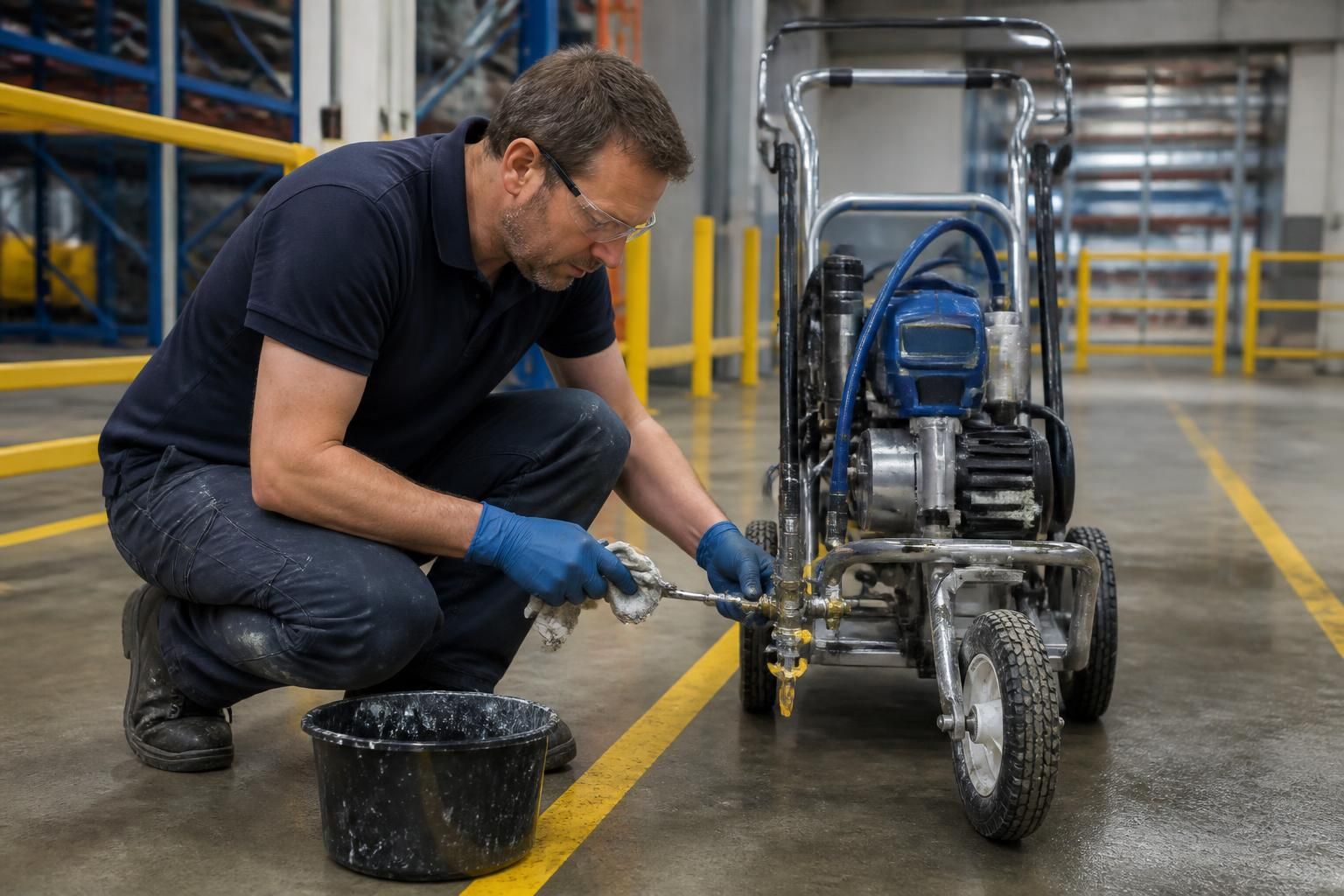
Maintain machines beyond the end of each application. Check the service items identified in the machine instructions, including filters, seals, wheels, drive components and power or fuel systems where fitted. Replace worn parts before they affect application control.
Check spray performance using the approved setup rather than adjusting pressure without reference to the instructions. Uneven fan patterns, pulsing or inconsistent coverage can indicate a blockage, wear or incorrect settings.
Keep adjustment points identified and record settings used for different paint types. This gives operators a repeatable starting point without treating one setting as suitable for every material.
Store machines securely with paint removed from components where the manufacturer requires it. Prevent unauthorised use and keep service information with the equipment.
Only people who understand the machine instructions and site controls should operate or service it. Isolate power and release stored pressure before maintenance where the instructions require those steps.
Use suitable personal protective equipment and follow the paint’s safety information during preparation, repair and equipment servicing. Control access around wet coatings, moving equipment and stored materials.
Keep an auditable maintenance record. Include the date, location, observed defect, action taken, materials used, machine identification and any follow-up inspection. Record the person completing the work and the date when the area returned to service.
These records help you identify recurring damage and decide whether the issue concerns traffic behaviour, storage arrangements, paint selection or machine condition. They also support discussions with a line marking contractor during a survey or planned remedial work.
Where maintenance reveals wider layout problems, review the complete workplace arrangement. Line marking can work alongside pallet racking, mezzanine floors, office fit-outs, partitioning and safety barriers when access, separation and protection need to be considered together.
We can discuss the findings through a no-obligation consultation, including a site meeting or survey where appropriate. Written proposals and working drawings can then set out the recommended maintenance or alteration work.
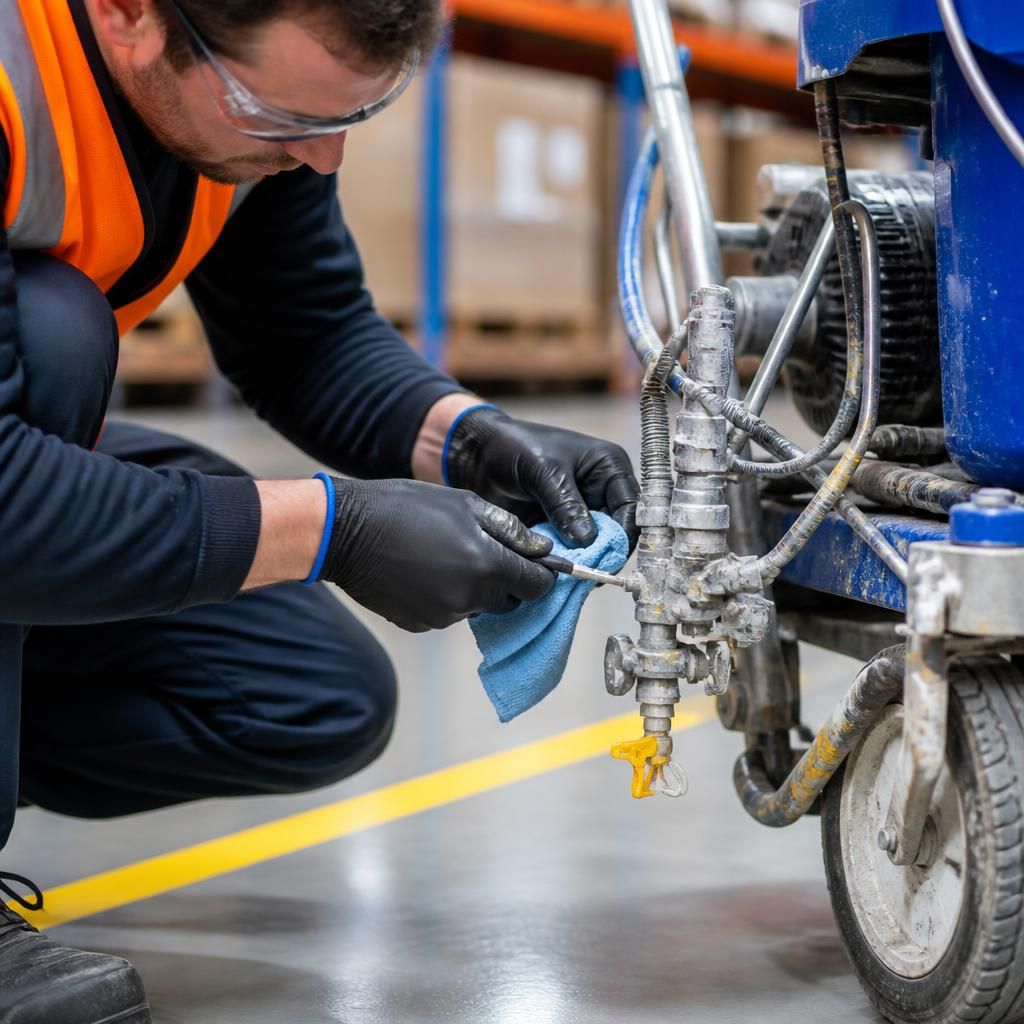
Cleaning products can affect cured marking and machine components. Check the paint, floor-cleaning and equipment information before introducing detergent, solvent or rinse methods.
Test an unfamiliar cleaning method in a controlled area first. Look for colour change, softening, whitening or altered adhesion after the stated exposure period. Record the product and result, so future maintenance follows an agreed method.



