



What affects the lifespan of industrial products in daily use?
Industrial products last longer when materials, loading, handling, maintenance and environmental conditions suit their intended daily use. Regular inspections and timely repairs can identify wear before it affects safe operation, while unsuitable loads or harsh conditions may shorten service life.
Industrial product lifespan depends on suitability, installation, use, alteration and ongoing control. There is no fixed service life that applies to every pallet racking system, shelving installation, mezzanine floor or safety barrier.
A product may remain in usable condition while no longer meeting the needs of the site. Changes to stock, access routes, equipment, staffing or building use can alter the demands placed on an installation. Reviewing suitability after significant changes helps prevent an older system becoming unsuitable simply because the operation has moved on.
Design suitability affects longevity from the start. Pallet racking, cantilever racking and industrial shelving should match the stock dimensions, storage method and access pattern. A poor fit can encourage awkward placement, overloading or repeated rearrangement. Those pressures may cause deterioration sooner than normal use.
Mezzanine floors also depend on their intended use. Storage, production space and office areas create different requirements for layout and access. The design needs to reflect the planned use rather than an assumed future arrangement. If the purpose changes, the floor and its access arrangements should be reviewed before the space is adapted.
Installation quality and commissioning influence how an industrial product performs in daily operation. Components need correct positioning, secure assembly and suitable connections. The surrounding layout also matters. Narrow routes, obstructed access or poorly positioned protection can increase the chance of damage during routine activity.
For a new project, our process can include a site meeting and survey, followed by written proposals and working drawings. These documents provide a clearer basis for checking the intended arrangement before installation. Where required, project management can continue through installation and final commissioning.
Unauthorised alterations can shorten service life. Removing components, changing beam positions or adding parts without checking compatibility can affect the original arrangement. The same applies to moving racking, shelving, partitioning or barriers to a different area without reviewing the new conditions.
Keep records of the installed arrangement and any approved changes. Records can include drawings, component details, inspection findings and repair decisions. This information makes later reviews more accurate and helps identify when an alteration has changed the product’s intended use.
Compatibility between components is another important factor. Replacement parts should suit the existing system and its configuration. A visually similar component may not perform in the same way. Mixing parts without checking their relationship can create weaknesses that are difficult to identify during normal operation.
Ageing can also affect products differently across one installation. A damaged upright, worn barrier or altered partition may need attention before neighbouring components. Treating the whole installation as the same age and condition can conceal local problems.
Site organisation supports longer service life. Clear routes and defined storage positions reduce unnecessary movement and make changes easier to spot. Good housekeeping also helps reveal damage, displacement or deterioration before the issue becomes part of normal working practice.
For office fit-outs and partitioning, lifespan is also affected by how often the layout changes. Frequent dismantling, drilling or relocation can affect panels, fixings and finishes. Planning future changes into the initial arrangement can reduce avoidable disturbance.
Safety barriers and workplace segregation can lose their value if the surrounding operation changes. A barrier may no longer protect the relevant area after machinery, traffic routes or workstations move. Reviewing the purpose of the protection is therefore as important as reviewing its physical condition.
Signs that a product needs a closer review include:
- Repeated changes to the stored stock or its dimensions.
- Alterations to access routes, equipment positions or work areas.
- Components that no longer match the recorded arrangement.
- Repairs or replacements whose compatibility has not been confirmed.
- New uses for mezzanine floors, offices, partitions or storage areas.
- Damage or displacement that keeps returning after correction.
A review should consider the product, its current purpose and the surrounding layout together. A site survey can identify changes that are not obvious from drawings alone. Written proposals and working drawings then give you a structured basis for deciding whether to retain, adapt or replace the installation.
Spartan Direct works with pallet racking, cantilever racking, shelving, specialist storage, mezzanine floors, office fit-outs, partitioning and safety infrastructure. Considering lifespan during design and later reviews helps you keep each installation aligned with the way your site operates.
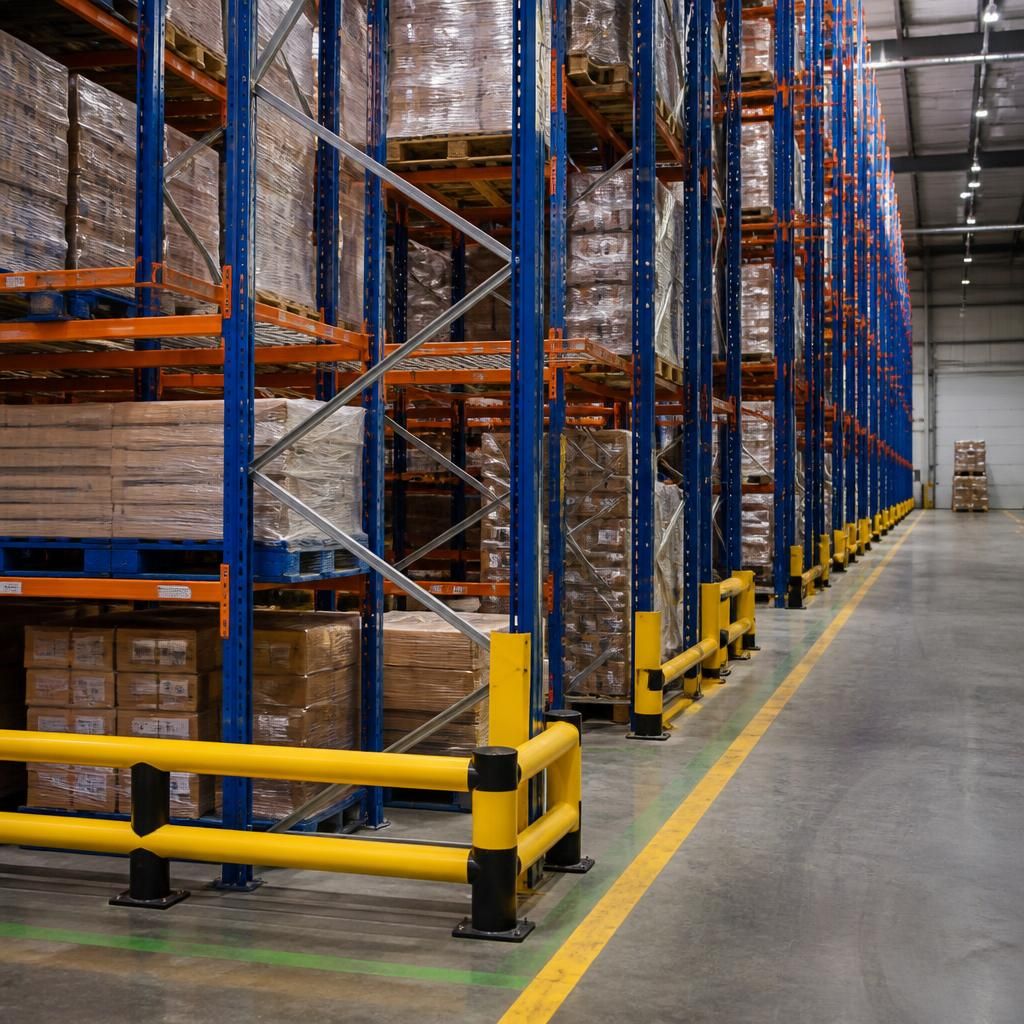
Pallet racking, mezzanine floors and safety barriers experience different stresses during daily use. Frequent loading, vehicle movements and repeated handling can gradually affect components, even when the original design suited the operation.
Moisture, dust, chemicals and temperature changes may also affect materials and finishes. A racking inspection should therefore consider operating conditions alongside visible damage, so any recommended repair or replacement reflects how the installation is used.



