


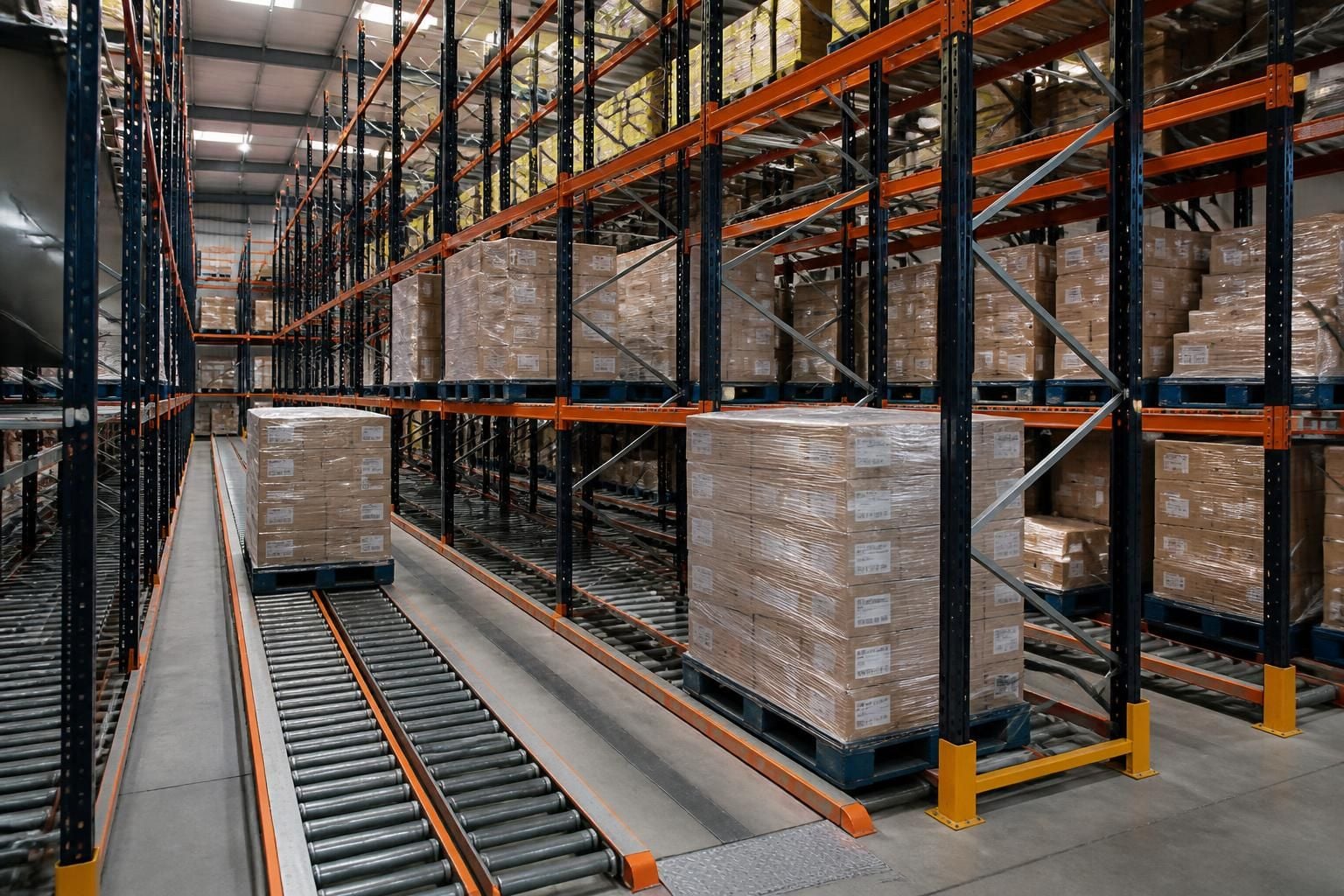
Which pallet racking system best suits your stock rotation?
Pallet racking for FIFO stock rotation suits date-sensitive goods, while LIFO storage suits stock accessed from the front without chronological priority. The right system depends on stock requirements, access frequency and warehouse workflow, confirmed through a site survey and working drawings.
Pallet flow racking usually suits a controlled FIFO process, while drive-in and push-back racking usually suit LIFO. Adjustable pallet racking can support either method when operators follow clear location and picking rules.
FIFO means first in, first out. The oldest pallet leaves storage before newer stock. This approach supports stock with expiry dates, production batches, freshness limits or traceability requirements.
Pallet flow racking uses inclined lanes and rollers. Operators load pallets from one side and pick them from the other. As the front pallet leaves, the next pallet moves forward.
This arrangement separates replenishment from picking. It can therefore support consistent rotation across individual product lanes. The design still needs suitable pallets, load information and lane allocation.
LIFO means last in, first out. The most recently loaded pallet leaves first. This arrangement may suit durable goods, reserve stock or products without chronological picking requirements.
Drive-in racking places pallets within shared storage lanes. It reduces separate aisle access for every pallet position, but operators normally load and retrieve from the same side.
Push-back racking also stores several pallets within a lane accessed from the front. Loading a newer pallet pushes earlier pallets further back. Retrieval reverses that movement.
These systems can provide useful density, but they do not offer the same individual access as adjustable pallet racking. They need careful consideration when stock changes frequently.
Adjustable pallet racking suits mixed requirements. Each pallet position can remain directly accessible from the aisle. Operators can apply FIFO manually using labels, location controls and agreed picking instructions.
This arrangement may suit warehouses with many stock keeping units, changing pallet quantities or frequent access. It normally requires more aisle space than systems using shared storage lanes.
Stock rotation should therefore be assessed alongside the following points:
- Stock life: Goods with expiry dates or batch controls generally need a dependable oldest-stock-first process.
- Product consistency: Shared lanes work better when pallets have compatible dimensions, weights and product references.
- Access frequency: Frequently picked items may need direct access, even when the warehouse also stores reserve stock.
- Replenishment pattern: Loading and picking from separate sides can support FIFO, while front-only access may favour LIFO.
- Stock quantity: A system must reflect how many pallets each product requires and how often those quantities change.
- Handling equipment: Forklift access, pallet dimensions and load weights affect the practical arrangement.
- Available layout: Aisle positions, travel routes, doors and working areas influence which system fits the premises.
One warehouse may need more than one racking type. For example, date-sensitive goods may use FIFO lanes, while durable reserve stock uses LIFO storage. Fast-moving lines may remain in directly accessible locations.
This zoning approach keeps the storage method aligned with each product group. It also prevents one rotation rule from being applied inappropriately across all stock.
Stock rotation depends on operating discipline as well as equipment. Clear pallet identification, location rules and picking instructions help operators follow the intended sequence.
Before selecting pallet racking, we can discuss stock characteristics, access requirements and warehouse workflow. A no-obligation consultation may include a site meeting and survey.
We then use the findings to prepare a written proposal and working drawings. These show how the selected arrangement relates to storage positions, access routes and the available space.
Where a project requires it, project management can continue from proposal and tender stage through installation and final commissioning. This provides a coordinated route for more involved warehouse changes.
The right system is the one that supports the required rotation without making everyday access impractical. Review stock rules, pallet details and workflow together before confirming the racking layout.

For pallet flow racking, check that pallets entering the same lane share compatible dimensions and bases.
Mixed pallet types can affect how loads travel through rollers, so grouping should be confirmed before specifying lanes. This matters where suppliers use different pallets. The same product may therefore need separate lane planning.
A survey can record these variations alongside load details, helping the proposal distinguish suitable FIFO lanes from locations needing another method.



