


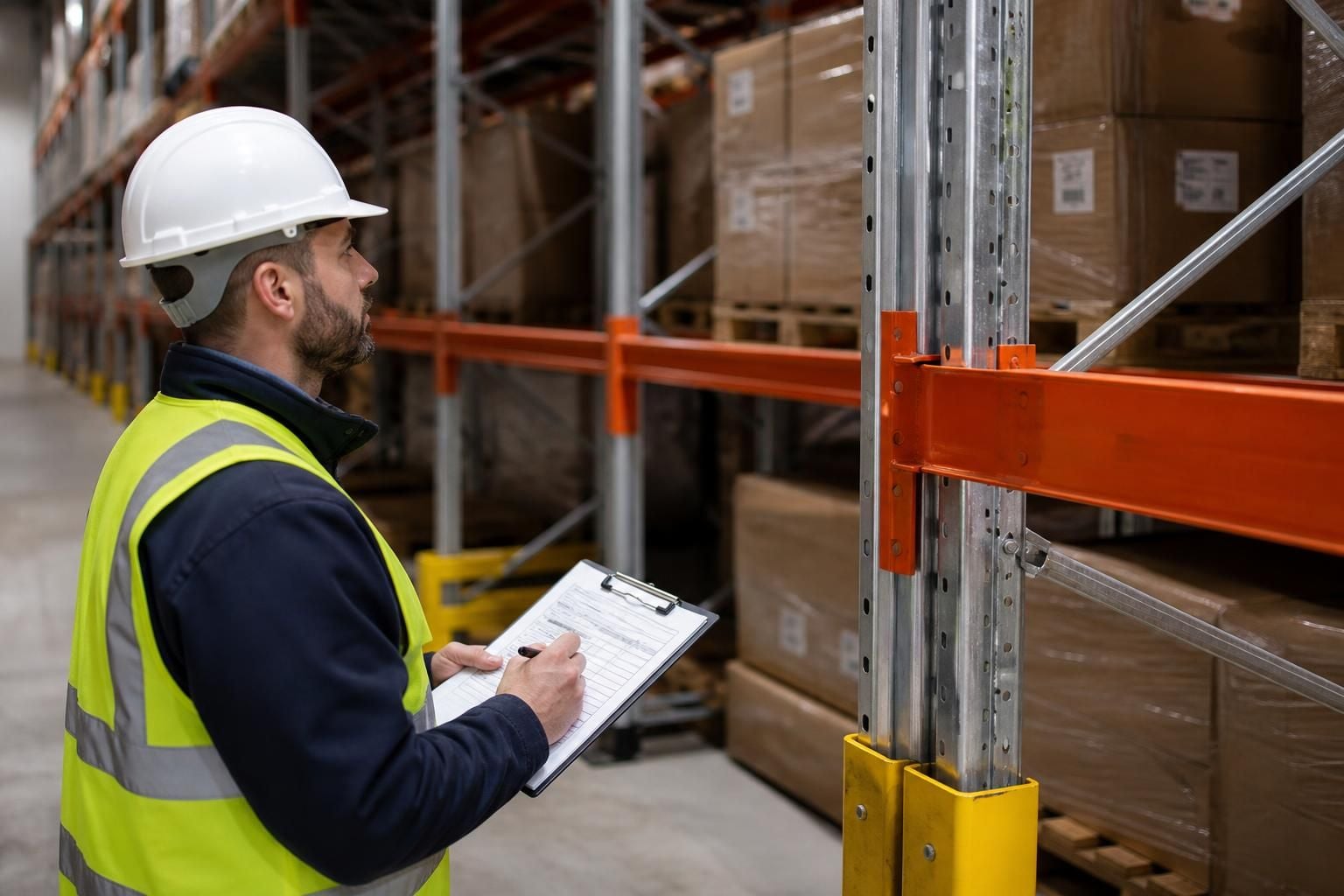
What maintenance plan should accompany warehouse pallet racking?
A warehouse pallet racking maintenance plan should set inspection intervals, identify damage, record findings and control repairs before use resumes. We can discuss inspection and aftercare arrangements that reflect your site, stock and operating requirements.
The strongest maintenance plan links warehouse routines, inspection records and clear decisions about damaged equipment. It should define who checks each area, what evidence you retain, and how issues are resolved.
Set the plan’s scope. Record each rack run, bay reference, frame, beam level, protection component and load notice. Include floor areas, anchors, locking devices, uprights, beams and other visible components. An asset register makes findings easier to locate and compare.
Match checks to site conditions. The plan should reflect forklift traffic, handling patterns, stock loads, operating areas and previous impact damage. Higher-risk locations may need closer attention than quieter storage areas. Review the arrangements after layout changes, stock changes, equipment changes or an incident.
Give people clear reporting duties. Warehouse staff should know what damage to report and who receives the report. Use simple location references and photographs where useful. Report bent frames, damaged beams, displaced components, missing locking devices, damaged protection and signs of movement.
Separate routine checks from planned inspections. Routine checks can identify visible problems during normal warehouse activity. A planned inspection should examine the installation more systematically and consider recurring damage, loading practices and access conditions. The person carrying out the review should understand the equipment and the conditions at the site.
Define the response to damage. The plan should state who decides if a bay remains in use. Where equipment presents a safety concern, prevent further loading until the issue receives an appropriate assessment. Mark the location clearly and communicate the restriction to relevant staff.
Do not treat a repair as complete because a damaged part has been moved or straightened. Record the proposed action, replacement requirements and person responsible. Check the affected area after repair before normal use resumes.
Keep records that support decisions. Each entry should show the inspection date, location, finding, severity, photograph where useful, action required and closure date. Retain repair information and follow-up checks with the inspection record. This creates a usable history for recurring impact points and layout reviews.
Control changes to the installation. Adding beams, changing levels, moving frames or altering stored loads can affect the original arrangement. Review the drawings, load information and working conditions before making changes. Keep updated records when the layout or storage pattern changes.
Include housekeeping and safe use. Keep access routes clear and prevent stock from obstructing frames, protection or inspection points. Make sure loads suit the stated arrangement and remain positioned as planned. Staff should report impacts rather than leaving damage for the next inspection.
Plan aftercare alongside installation. Our racking inspections and aftercare can form part of a wider maintenance arrangement. A no-obligation consultation may include a site meeting and survey, followed by written proposals and working drawings where required. This helps relate the maintenance plan to the actual layout, stock and workflow.
For larger projects, we can also discuss project management from proposal and tender stage through installation and final commissioning. The result should be a documented process that remains practical for the people using the warehouse each day.
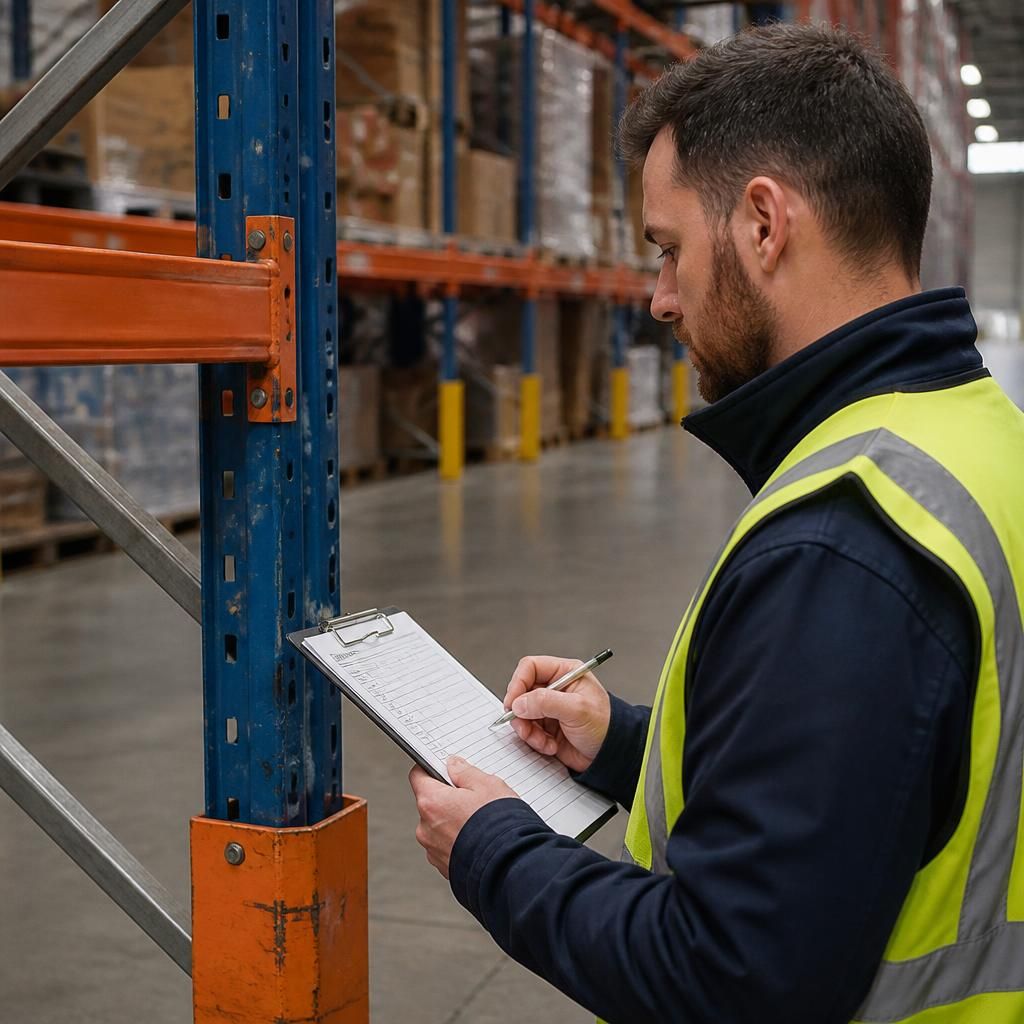
A maintenance plan should remain a live control document, not a checklist filed after each inspection. Name the person responsible for reviewing recurring findings and confirming actions.
This gives decision-makers a clear view of unresolved issues and emerging patterns. It also keeps warehouse pallet racking maintenance linked to actual operating conditions.



