Is pallet racking suitable for warehouses with limited ceiling height?
Pallet racking can suit warehouses with limited ceiling height when rack height, load requirements and safe clearance work together. A site survey can confirm whether the layout supports stock access and workflow without unsafe handling.
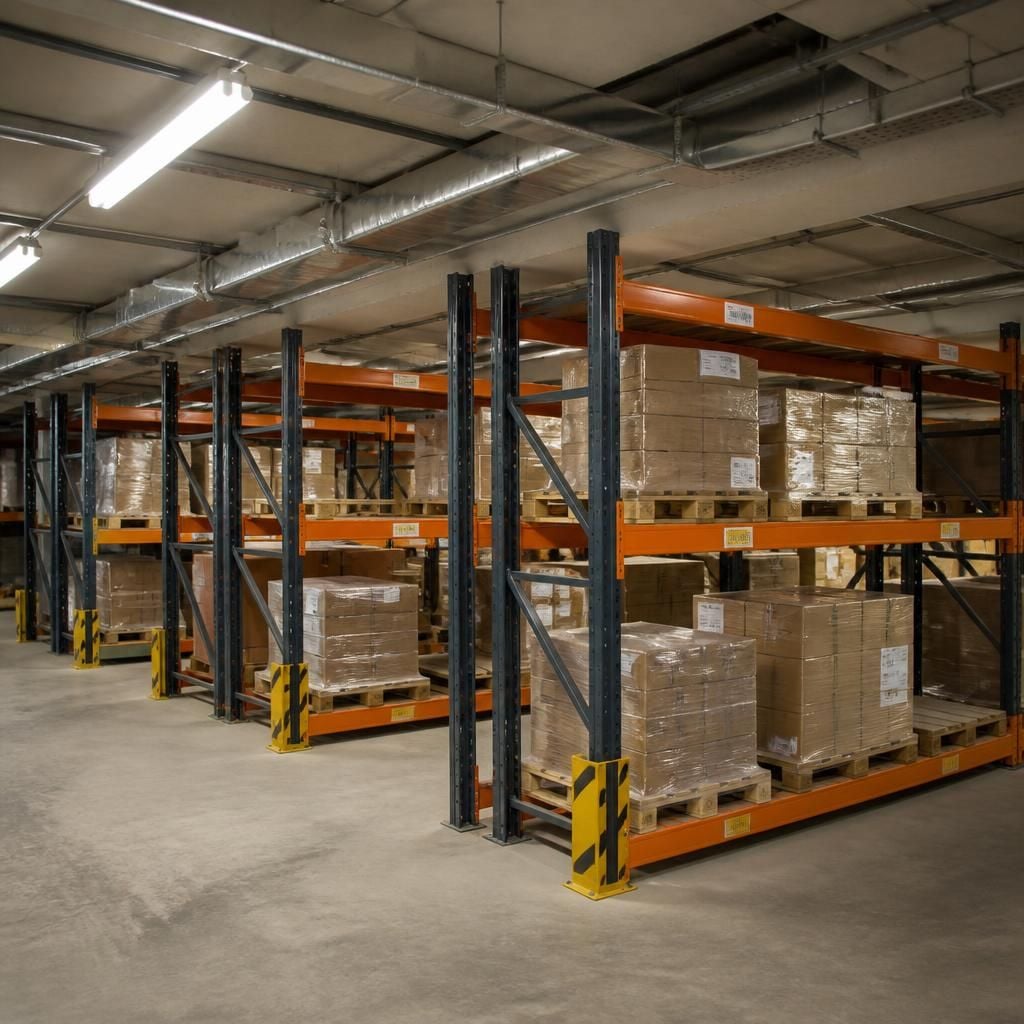
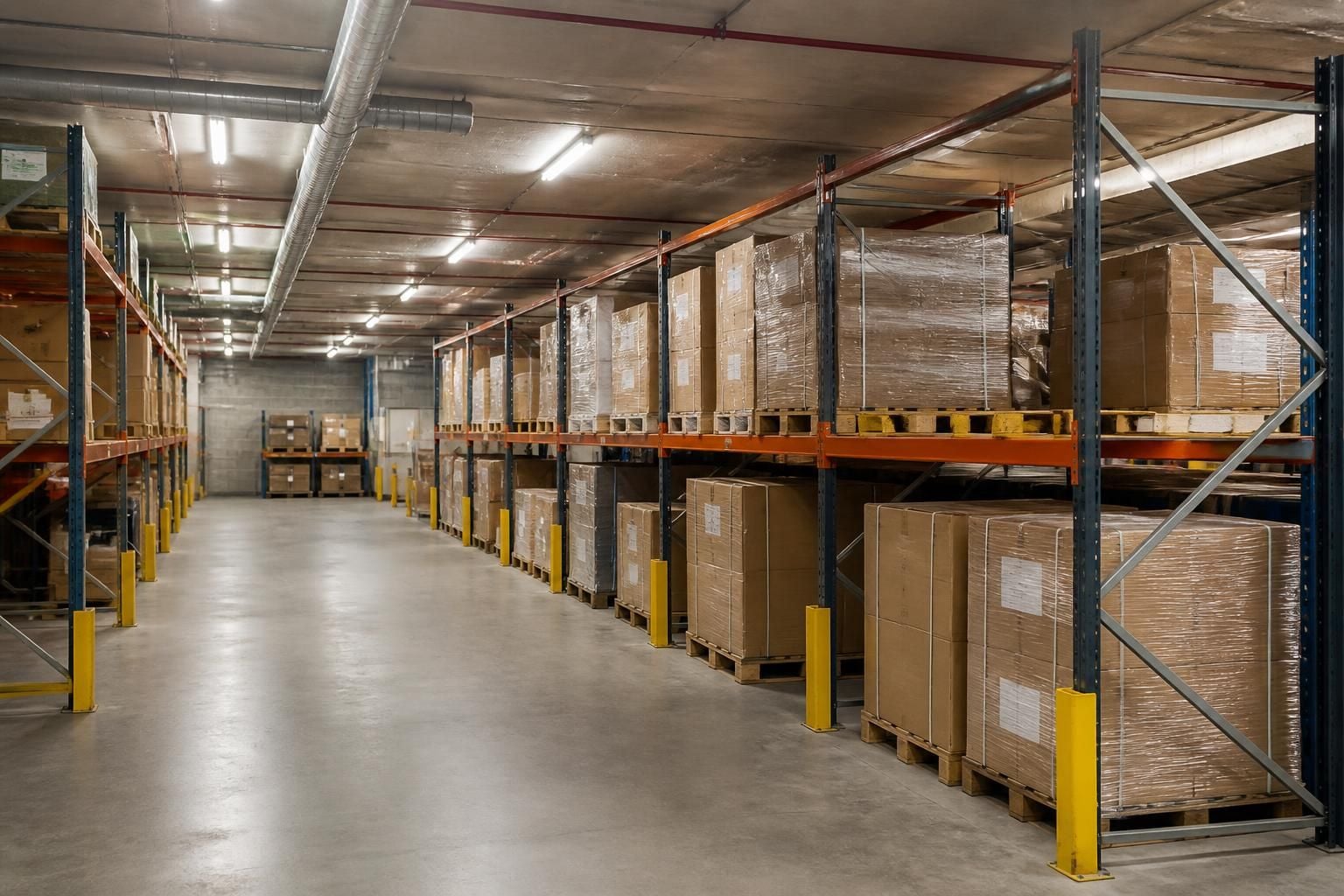
The limiting factor is usable clear height, not the building’s overall height alone. Low ceilings can still support pallet racking when each storage level leaves enough room for handling, load clearance and building services.
Start by measuring the clear height from the finished floor to the lowest obstruction. Include beams, lighting, sprinkler equipment, ducting, door mechanisms and any changes in roof level. A single low point can affect the rack position or the number of usable levels.
Measure the pallets and loads you intend to store. Record their height, weight, dimensions and stability. The proposed rack height and beam positions must suit those loads without forcing operators to lift or place pallets into restricted spaces.
Leave practical clearance above each stored load. This space supports safe placement and removal, while allowing for variations between pallets. The required clearance depends on the handling method, load dimensions and rack arrangement.
Clearance also matters above the top beam level. The space between stored goods and the ceiling, roof structure or services must be checked against site requirements. Do not assume that unused space can become storage space without review.
What a low-ceiling assessment should examine
- Finished floor level and the lowest ceiling obstruction.
- Available height at each proposed rack position.
- Pallet dimensions, load weights and load variation.
- Forklift or other handling equipment used on site.
- Aisle space needed for safe movement and pallet access.
- Lighting, fire protection equipment, doors and service routes.
- Pedestrian routes, emergency access and working areas.
- Future stock changes that could make present clearances unsuitable.
Rack height is only one part of the layout. Reducing the number of beam levels may protect access and clearance, but it also reduces the available pallet positions. That trade-off should be considered alongside stock rotation and picking requirements.
Lower frames can suit restricted buildings where operators need straightforward access. They may provide fewer storage levels, so the layout must still support the required stock volume. The best arrangement depends on the balance between capacity, access and safe operation.
Narrower aisles may appear to create more room for storage, but they can restrict handling equipment. Check the turning requirements and operating method before reducing aisle space. A layout that holds more pallets may perform poorly if access becomes difficult.
Adjustable pallet racking can support changes to beam positions as stock dimensions change. However, every new position still needs a review of load capacity, access and clearance. Moving beams should not replace a planned assessment of the complete installation.
Where pallet racking cannot provide enough practical capacity, other storage or workplace options may deserve consideration. Shelving can suit smaller items, while a mezzanine floor may create additional working or storage space where the building and project requirements allow it.
These options do not automatically solve a low-ceiling restriction. A mezzanine reduces the height available below and above its deck. It therefore requires careful assessment of both levels, access routes, headroom and intended use.
Building services can change the usable layout. Lights may need to remain accessible, and fire protection arrangements must not be obstructed. Equipment, barriers and pedestrian routes also need to remain usable after installation.
Handling equipment affects the answer directly. The mast height, lift height and operating position determine how easily pallets can reach each beam level. Confirm those requirements before fixing rack heights or aisle dimensions.
A site survey brings these details together. We can review the building, stock, handling arrangements and workflow during a no-obligation consultation. The survey can include site meetings, measurements and discussion of operational constraints.
We then prepare written proposals and working drawings for the intended arrangement. These documents can show rack positions, levels, access routes and the relationship with existing features. They provide a clearer basis for checking suitability before work begins.
Where a project requires it, we can coordinate the work from proposal and tender stages through installation and final commissioning. The extent of project management depends on the agreed requirements.
After installation, pallet racking inspections can support ongoing checks of its condition. Inspections do not remove the need for correct loading, sensible access and reporting of damage. Any change to stock or handling equipment should prompt a review of the arrangement.
Low ceiling height does not rule out pallet racking. It does mean the design must be based on measured clearances, actual loads, handling equipment and the way you use the warehouse.
Pallet racking should support practical loading, not simply fit beneath the ceiling. A top level may be reachable yet difficult to use if operators cannot see the load position clearly. Review how pallets are placed and removed before retaining every possible level.
Lower storage levels can leave clearer working space around the rack and handling equipment. This may suit a warehouse where straightforward access matters more than achieving the maximum number of pallet positions.