


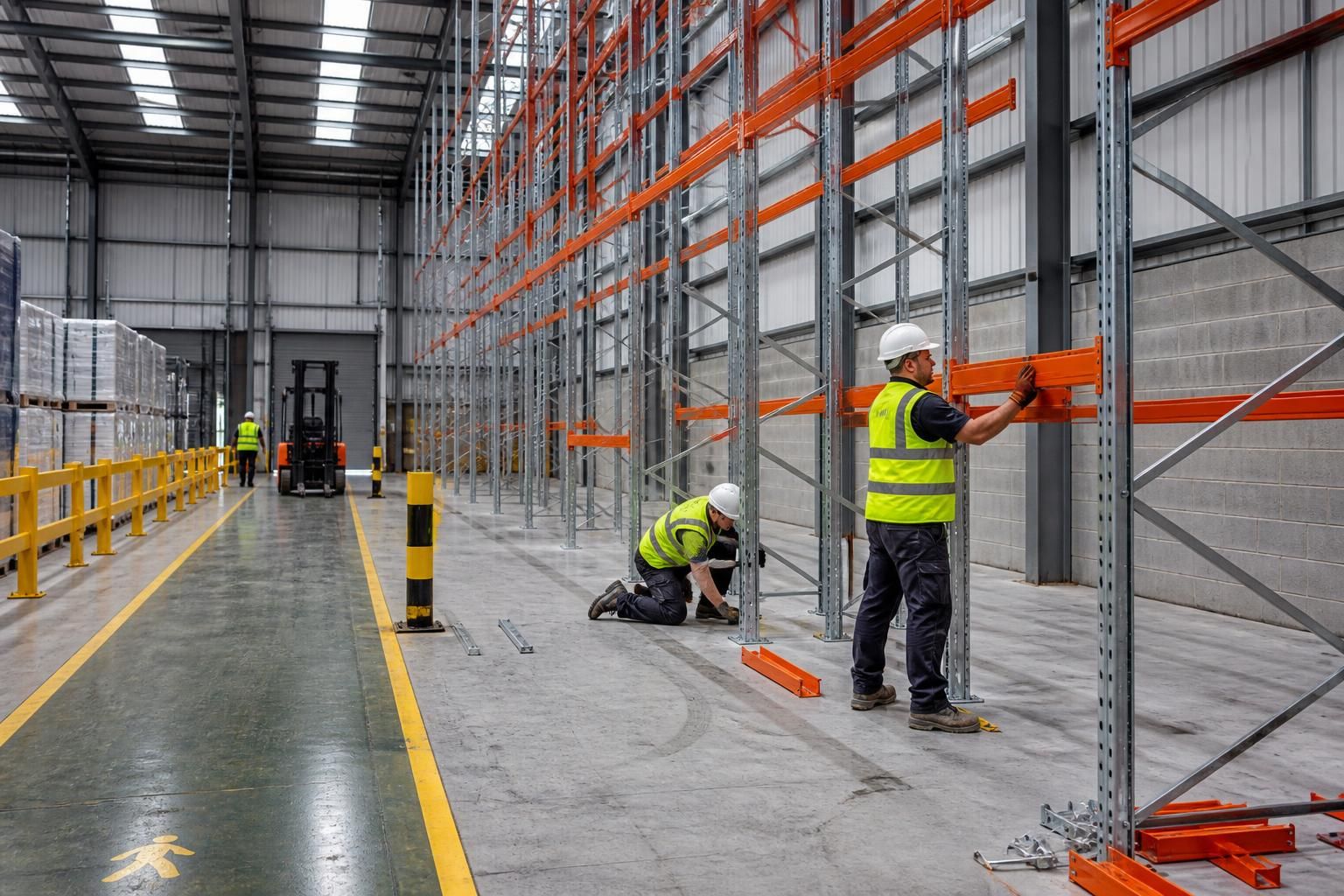
How much warehouse disruption will pallet racking installation cause?
Pallet racking installation need not halt a warehouse, but disruption depends on the layout, access, stock movement and installation sequence. We assess these factors through a site survey, then use written proposals and working drawings to plan the work around your requirements.
Pallet racking installation does not always require a complete warehouse shutdown. The practical impact depends on the work area, stock position, access arrangements and installation method. Planning can help keep unaffected activities moving while work takes place.
Disruption commonly comes from several activities taking place around the installation area:
- Deliveries and unloading require suitable access to the warehouse.
- Existing stock may need moving before installers can reach the work area.
- Vehicle and pedestrian routes may need temporary changes.
- Some picking, packing or production activity may need separating from installation work.
- Completed areas may require checking before stock returns.
These requirements should be agreed before work starts. A site meeting and survey can identify access points, working areas, stock movements and operational restrictions. We can then prepare written proposals and working drawings for review.
A defined installation zone can help separate construction activity from live warehouse operations. Safety barriers, workplace segregation and line marking may also support clearer separation where required. The appropriate arrangements depend on the premises, the work involved and your operating requirements.
Stock planning is another important consideration. You may need to move stock temporarily, reduce activity in one area or schedule installation between planned warehouse tasks. The survey and drawings provide a basis for identifying these points before installation begins.
For larger projects, project management may be offered from proposal and tender stage through installation and final commissioning. This provides a single point for coordinating drawings, site activities and the handover process where several space-planning requirements are involved.
Installation dates should be treated as estimates rather than fixed guarantees. We use all reasonable endeavours to meet agreed dates, but the terms state that time is not of the essence. Confirming site readiness, access and stock arrangements can reduce avoidable changes to the planned sequence.
Before choosing an installation approach, consider:
- Which warehouse areas must remain operational.
- Which stock can be relocated, and where it can go temporarily.
- How vehicles, pedestrians and installers will move safely through the premises.
- Which tasks depend on the area being completed first.
- What checks and commissioning steps are needed before use.
A no-obligation consultation can help establish the likely disruption for the specific premises. It can also show whether pallet racking installation can take place in stages, rather than treating the whole warehouse as one work area.
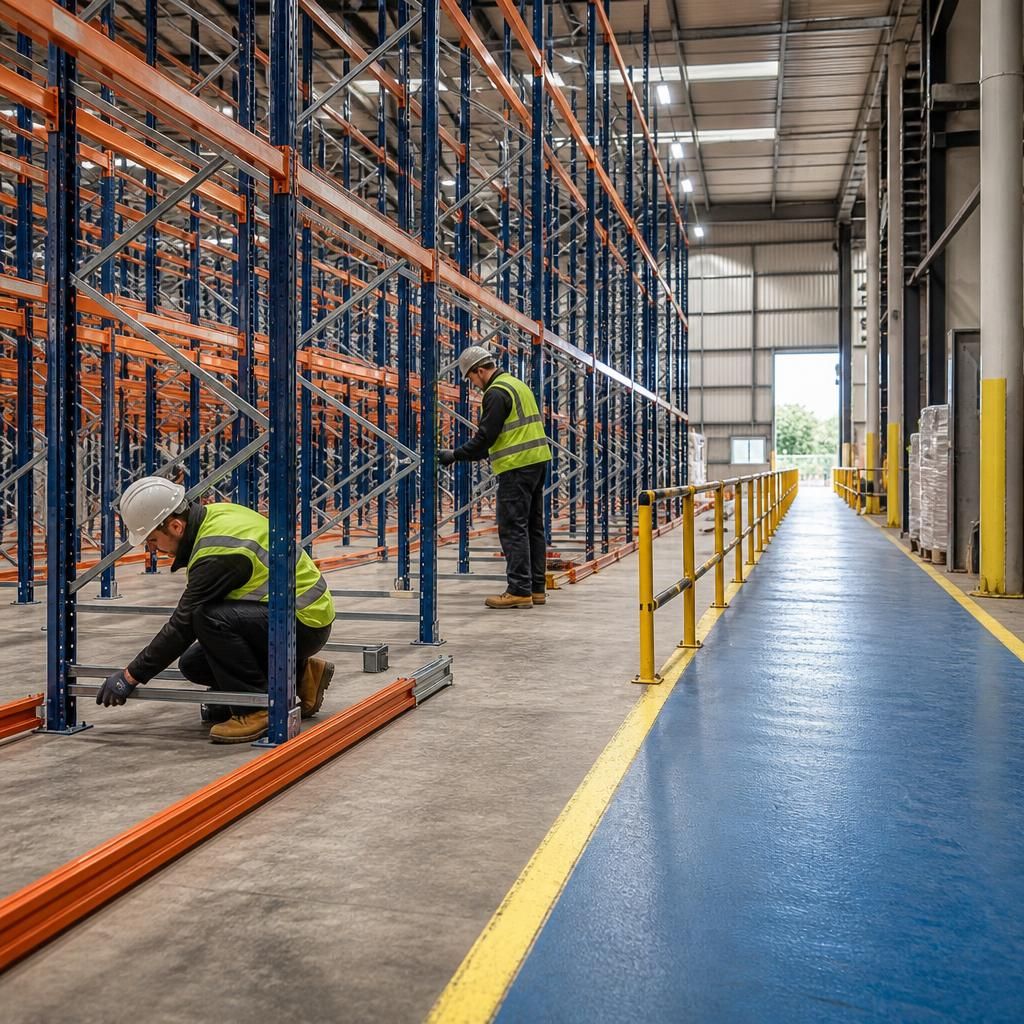
Disruption can continue after pallet racking installation if stock locations and picking information no longer match the warehouse layout. Before each completed area returns to use, check bay references, access routes and stock records against the working drawings.
This creates a controlled handover between installation and warehouse operations. It also gives you a clear point to identify outstanding work before normal picking or storage resumes in that area.
Discuss your pallet racking installation plan
Discuss your pallet racking installation plan with us through a no-obligation consultation, including a site meeting and survey where appropriate. We can then prepare written proposals and working drawings around your site, stock and operational requirements.



