


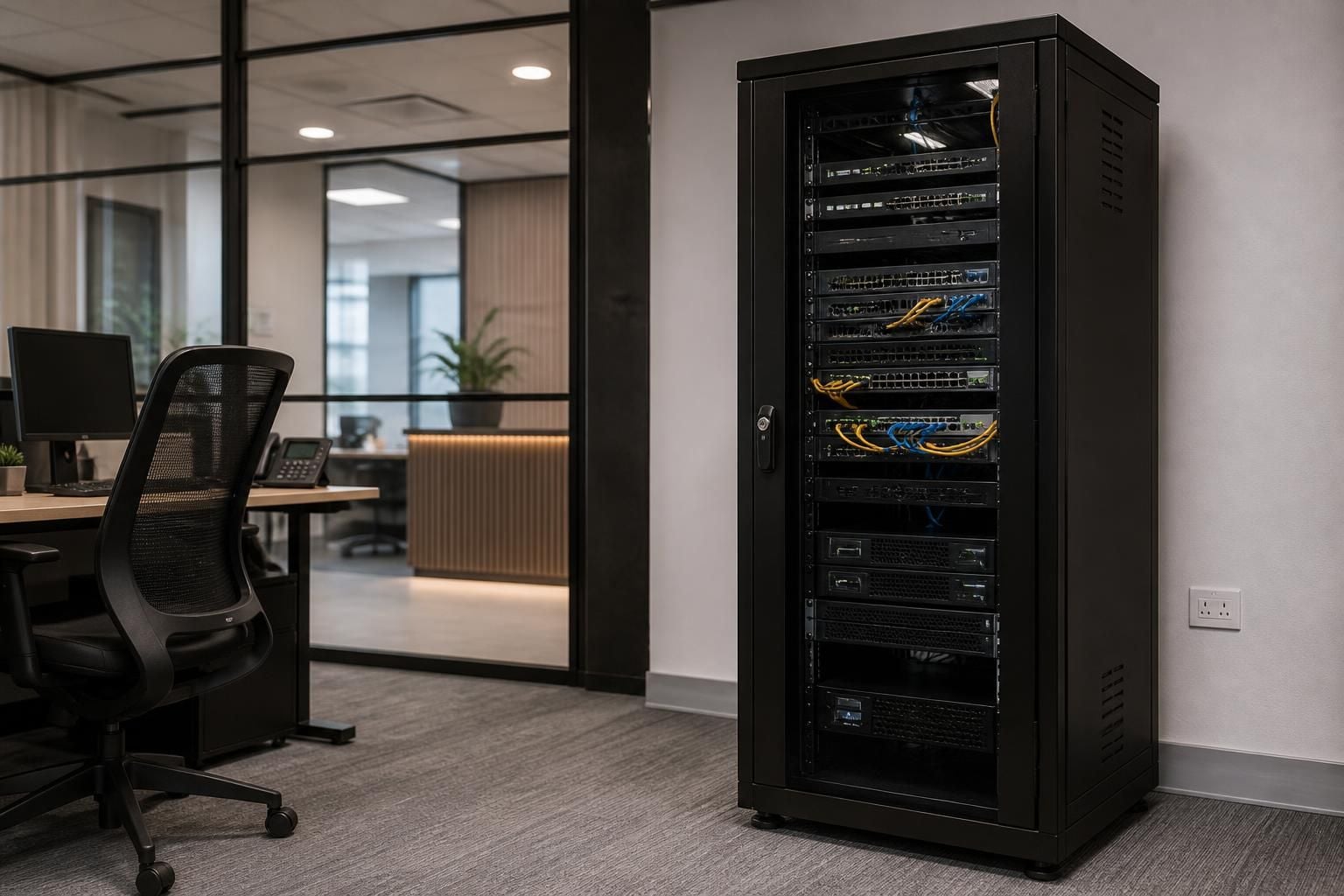
When is a lockable server rack cabinet the better choice?
A lockable server rack cabinet is the better choice when equipment needs controlled physical access in a shared office, warehouse or commercial space. It keeps servers, network hardware and cabling contained while limiting casual interference.
A lockable server rack cabinet is the better choice when physical security must form part of the equipment layout, not just the storage arrangement. It suits sites where access needs clearer control than an open frame can provide.
Consider a lockable cabinet when:
- Several teams use the same room or working area.
- Visitors, contractors or non-technical staff may pass near the equipment.
- Network hardware supports important operations and needs protection from accidental contact.
- Cabling and connections must remain organised while access stays limited.
- The cabinet sits in an area that cannot function as a dedicated server room.
The decision depends on more than the presence of a lock. Check who needs access, how often equipment requires attention, and whether the cabinet location supports safe servicing. A lock can discourage unauthorised entry, but it does not replace suitable room access controls or clear responsibility for the key.
Think about routine maintenance before selecting the cabinet. Technical staff may need to reach front and rear connections, replace equipment, or trace cables. The cabinet must allow those tasks without forcing unsafe movement or obstructing nearby work. A cabinet that restricts access too heavily can make fault finding slower and less practical.
Security also needs to fit the equipment and the site. Confirm the required cabinet height, depth, usable mounting space and load rating before choosing a model. Check ventilation requirements separately, because a lock does not address heat produced by operating equipment. Leave suitable room for cabling and future changes where the site allows.
An open rack may remain suitable in a dedicated, controlled room with limited access. It can also suit equipment that needs frequent adjustment during an active installation. A lockable cabinet becomes more appropriate when the surrounding area is shared, access varies, or exposed connections create an avoidable risk.
Placement matters as much as the cabinet itself. Avoid locations where doors, aisles, stock movement or office activity could obstruct access. In warehouse and industrial settings, review nearby handling routes and protection needs. Workplace segregation, line marking and safety barriers may support the wider layout where equipment sits close to operational activity.
We can review the cabinet requirement as part of a wider space assessment. A no-obligation consultation may include a site meeting and survey, followed by written proposals and working drawings. This helps relate the cabinet to existing storage, office layouts, access routes and future requirements.
Where a project includes several workplace changes, we can coordinate proposals, drawings, installation and project management through final commissioning where required. Office fit-outs and partitioning may also affect the cabinet’s position, access route and separation from general activity.
Before deciding, record the following points:
- Who needs regular access and who must remain excluded?
- How will authorised staff reach the cabinet during maintenance?
- Where will keys be held and responsibility assigned?
- What equipment dimensions, weights and cabling routes must the cabinet accommodate?
- Could future equipment changes alter the required space or access?
- Does the surrounding layout need additional separation or protection?
If the answers show a need for physical control, organised access and protected connections, a lockable server rack cabinet is likely the more suitable arrangement. The final choice should follow the site survey, equipment requirements and working layout rather than the lock alone.
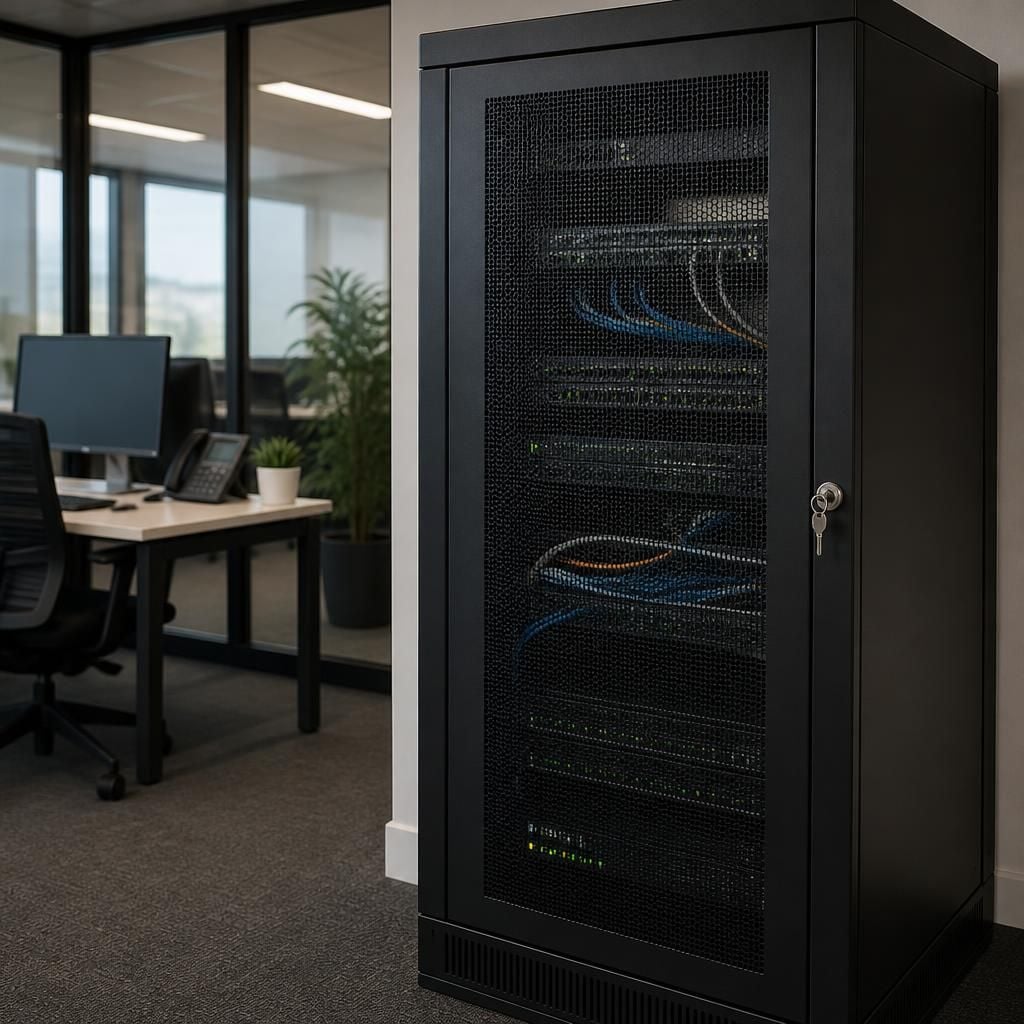
A lockable server rack cabinet can keep technical equipment contained where the rack shares space with desks, reception areas or operational work. Closing the cabinet presents a defined equipment enclosure instead of leaving network hardware exposed within the wider room. This can support a clearer separation between IT equipment and everyday activity without allocating a separate room solely to the rack.



