


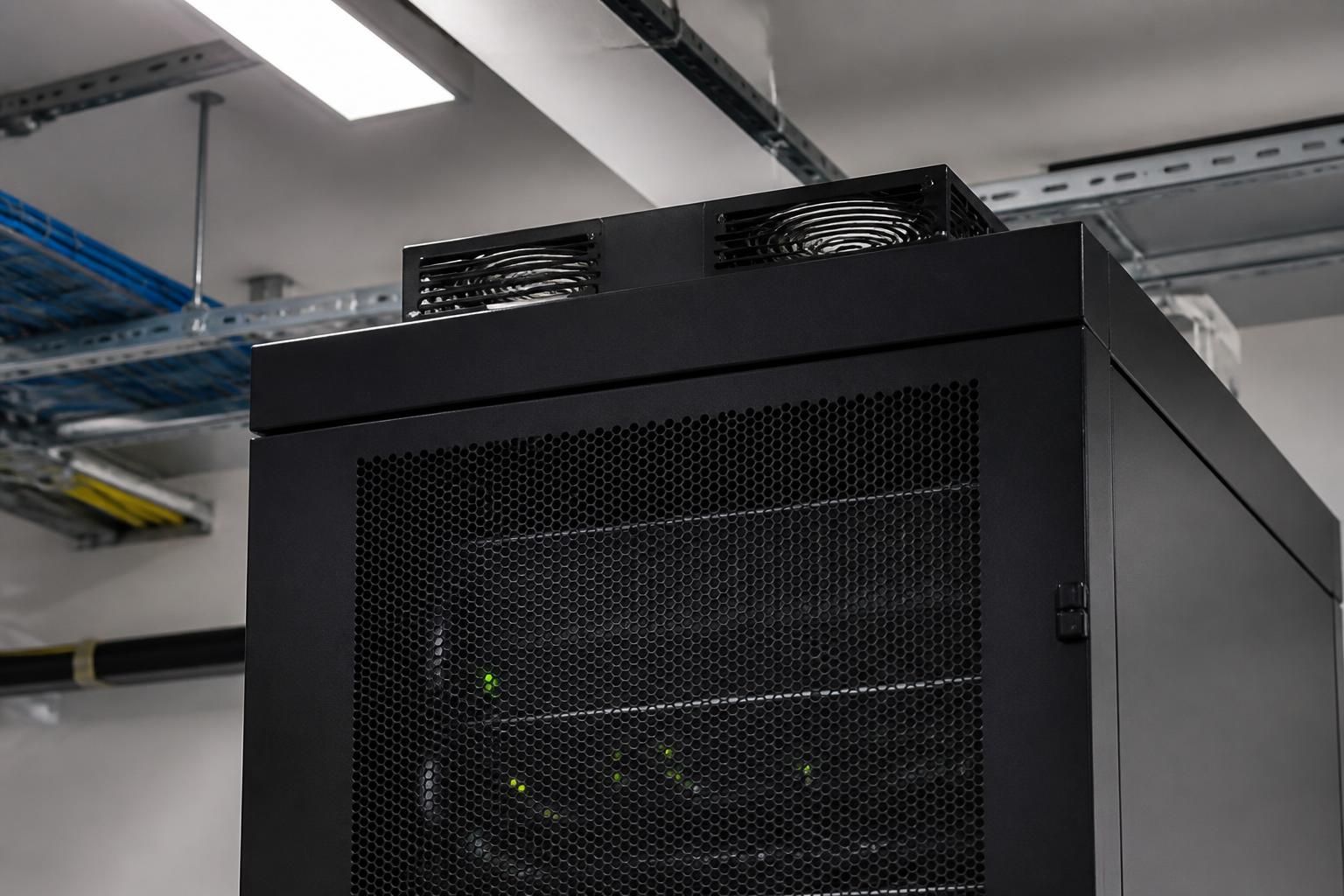
What ventilation should you consider when choosing a server rack cabinet?
Consider equipment heat output, cabinet airflow, perforated doors or fan panels, clearance around components, and the room’s cooling provision. The correct ventilation approach should match the server cabinet design, equipment requirements and installation site.
Choose ventilation that matches the cabinet’s equipment layout, cooling method, maintenance needs and installation constraints. A suitable approach should keep air moving through the cabinet without creating avoidable service problems.
Start with the equipment’s air direction. Most server equipment draws air from one side and exhausts it from another. The cabinet should support that path rather than forcing warm air back towards equipment intakes. Check every device, including network hardware, power equipment and future additions.
Consider passive and fan-assisted ventilation. Passive ventilation may suit installations with modest cooling demands and strong room-level cooling. Fan-assisted ventilation can support higher or more concentrated cooling demands, but it introduces power, noise, filter and maintenance considerations.
Do not select fans by cabinet size alone. Compare the proposed equipment arrangement with the fan unit’s stated capacity and the cabinet manufacturer’s guidance. The final choice should reflect the actual equipment mix and its operating conditions.
Check where ventilation components fit. Roof-mounted and base-mounted fan units affect the cabinet’s overall arrangement. They may also influence cable routes, access for servicing and the position of equipment inside the enclosure.
- Allow room for fan removal, inspection and cleaning.
- Check that cable entry points do not obstruct ventilation components.
- Confirm that the cabinet can connect safely to the required electrical supply.
- Consider noise if the cabinet sits near occupied office areas.
- Specify replacement filters and fan access before installation.
Plan for uneven heat distribution. Equipment does not always produce heat evenly across the cabinet. Dense equipment groups can create local hot spots, particularly when equipment is added later. The rack arrangement should therefore consider equipment position, intake direction and future changes together.
Blanking panels and sensible cable management can support the intended cooling path. Untidy cables, unused openings and poorly positioned equipment can interfere with air movement. These details matter when several devices share one cabinet.
Review the room and cabinet relationship. A cabinet ventilation system cannot replace suitable room cooling. It moves heat within the installation or into the surrounding room, so the building’s cooling provision must deal with the resulting heat load.
For several cabinets, consider how exhaust air from one enclosure reaches the next. Cabinet positioning, aisle arrangement and nearby obstructions can affect the way heated air leaves the installation. A site review can identify these issues before equipment is installed.
Include monitoring where the equipment requires it. Temperature monitoring can provide information about changing conditions inside the cabinet. Consider where sensors should sit, what they should monitor and how staff will respond to abnormal readings.
Monitoring does not correct a ventilation problem by itself. It should support a planned response, such as checking fans, filters, cable obstructions, equipment loading or the room’s cooling provision.
Fan systems also need consideration during maintenance. Filters can collect dust, while fans may become less effective or require replacement. Choose an arrangement that permits inspection without unnecessary disturbance to connected equipment.
Spartan Direct can discuss the cabinet’s intended use as part of a no-obligation consultation. A site meeting or survey may review the room, access, equipment arrangement and service requirements. We can then prepare written proposals and working drawings where required.
For projects involving wider office or commercial changes, project management may cover proposal and tender stages through installation and final commissioning. This helps coordinate the cabinet arrangement with the surrounding workspace.
Before selecting a ventilation arrangement, record the equipment list, air directions, cabinet position, planned additions, maintenance access and room cooling method. Those details provide a sound basis for choosing the cabinet configuration.
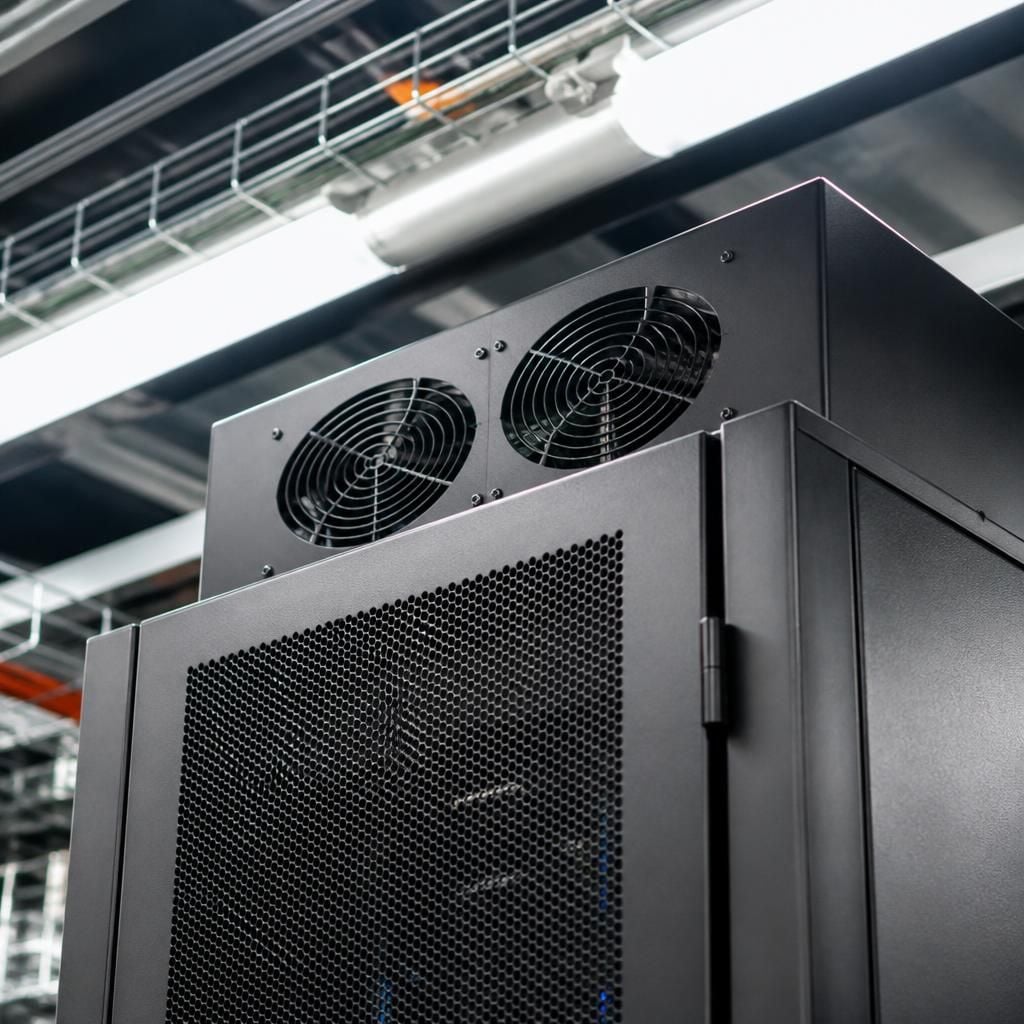
Roof-mounted fans need clear space above the cabinet to discharge warm air and allow servicing. Check ceiling height, lighting, cable trays and nearby obstructions before choosing this arrangement.
Limited overhead clearance may make another ventilation position more practical. A site survey can review these constraints alongside the cabinet location and access requirements.



