


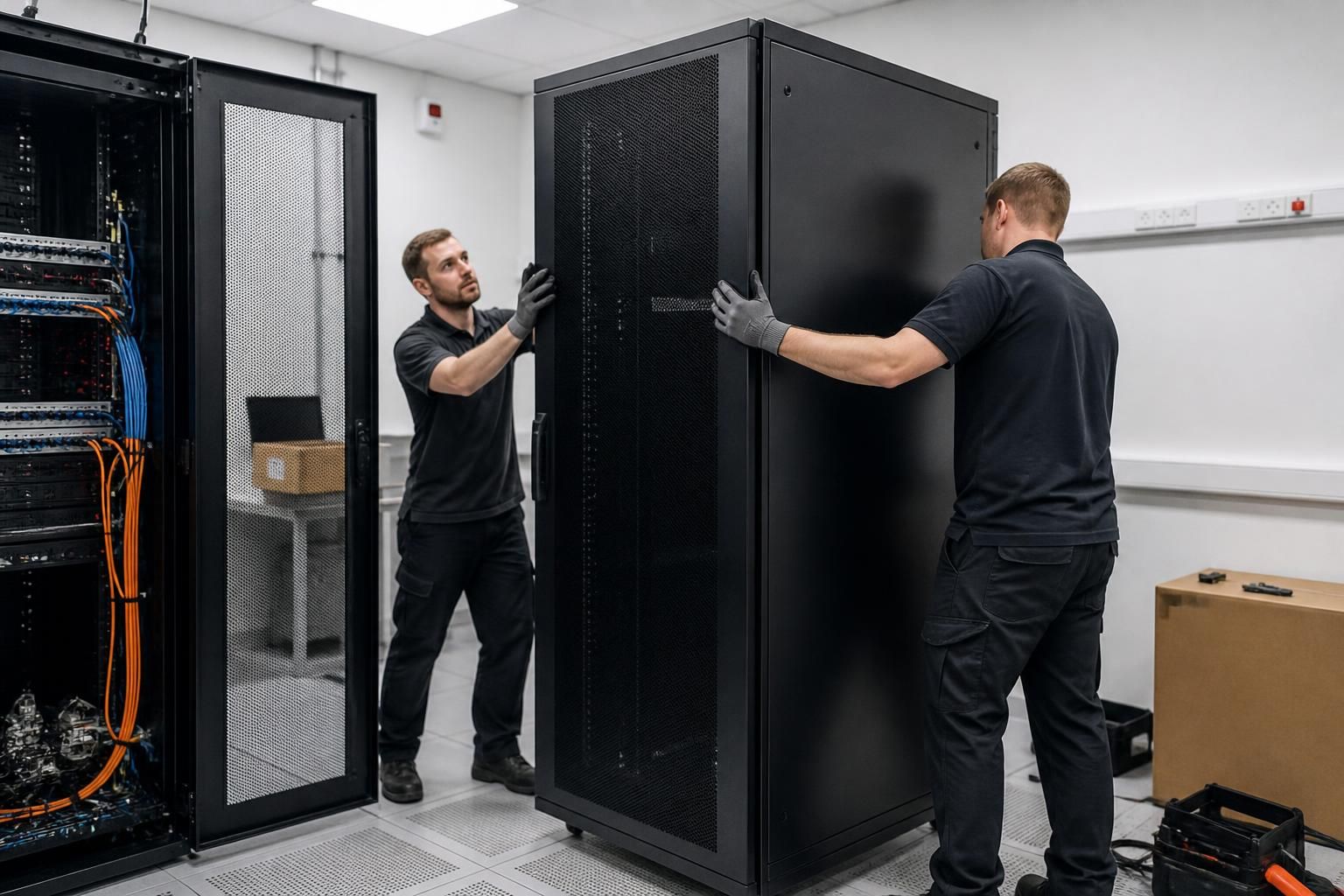
What disruption can installation of a server rack cabinet involve?
Installation disruption depends on site access, equipment movements and whether existing systems need relocating. A site meeting and survey can identify these requirements, allowing us to set out the installation in a written proposal and working drawings.
Server rack cabinet installation can involve physical access, equipment handling, temporary service interruptions and testing. The actual disruption depends on the cabinet location and the systems around it.
Planning the work
Before installation, identify the cabinet position, access route, working area and equipment that may need moving. Record any restrictions affecting deliveries, lifting, cable routes or access to existing services.
Agree who will isolate, move or reconnect live equipment. This prevents uncertainty during the installation and helps separate building work from IT work.
Possible operational disruption
Existing servers, network equipment or power supplies may need temporary disconnection. Even a short interruption can affect users, production systems or warehouse operations.
Plan any required downtime with the people responsible for those systems. If equipment remains operational, protect it from dust, impact and accidental contact while installation takes place.
Some projects involve an empty cabinet position. Others require work around occupied cabinets, cables or nearby workstations. Occupied areas usually need more careful sequencing and protection.
Access and working space
Installation may restrict corridors, doorways or adjacent workstations while the cabinet reaches its final position. The route should be clear before work begins.
Check floor condition, thresholds, door widths and turning space. These details affect how the cabinet enters the building and reaches the installation point.
Keep staff, stock and unrelated equipment away from the working area. Clear separation reduces obstruction and protects both the installation team and surrounding operations.
Equipment movement and cable work
Moving existing equipment into the cabinet can extend the work. Each item may require identification, disconnection, relocation, reconnection and checking.
Cables may also need rearranging to suit the final cabinet position. Poorly planned cable routes can make access difficult during installation and future changes.
Label connections before any move and keep a record of their original positions. This gives the responsible IT team a clear reference during reconnection.
Testing and handover
Allow time to check the cabinet, equipment position, cable connections and power arrangements after installation. Testing should follow the requirements agreed for the site.
Do not return affected systems to normal use until the responsible person confirms that essential functions operate correctly. Where required, project management can continue through installation and final commissioning.
How to reduce disruption
- Confirm the cabinet location and access route before equipment arrives.
- List equipment, cables and services that could be affected.
- Agree responsibility for isolation, movement, reconnection and testing.
- Prepare a suitable working area and protect nearby equipment.
- Plan communication with staff who rely on affected systems.
- Allow time for checks before normal operations resume.
Our no-obligation consultation may include a site meeting and survey. We can then account for practical installation requirements within the agreed project information.
Spartan Direct Limited has worked on commercial and industrial space since 1982. That experience supports a considered approach to access, layout and installation planning across different working environments.
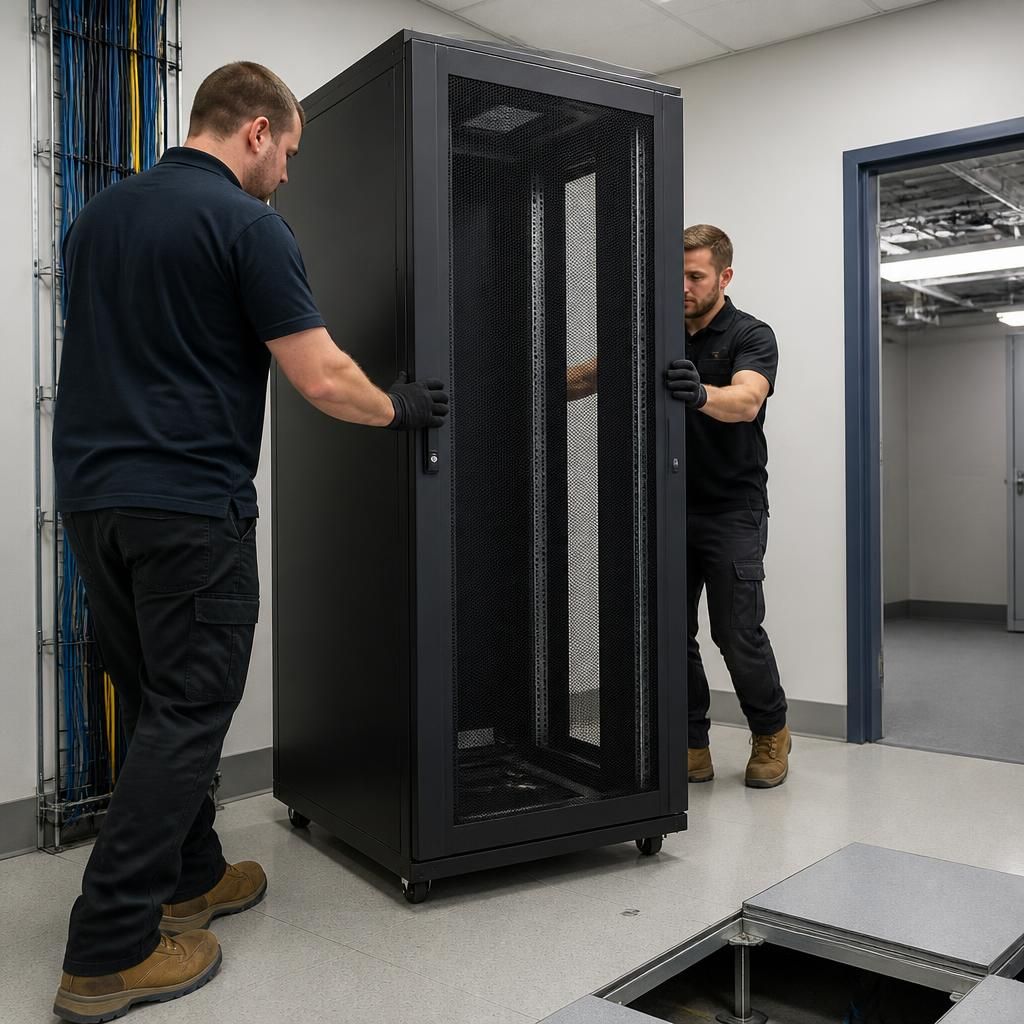
An empty cabinet position usually limits disruption to delivery, positioning and securing the cabinet. Integrating live equipment creates a longer sequence.
Before work starts, confirm whether the installation covers the cabinet only or includes equipment migration, cable changes and system checks. This distinction helps you plan staff access and operational impact accurately.



