


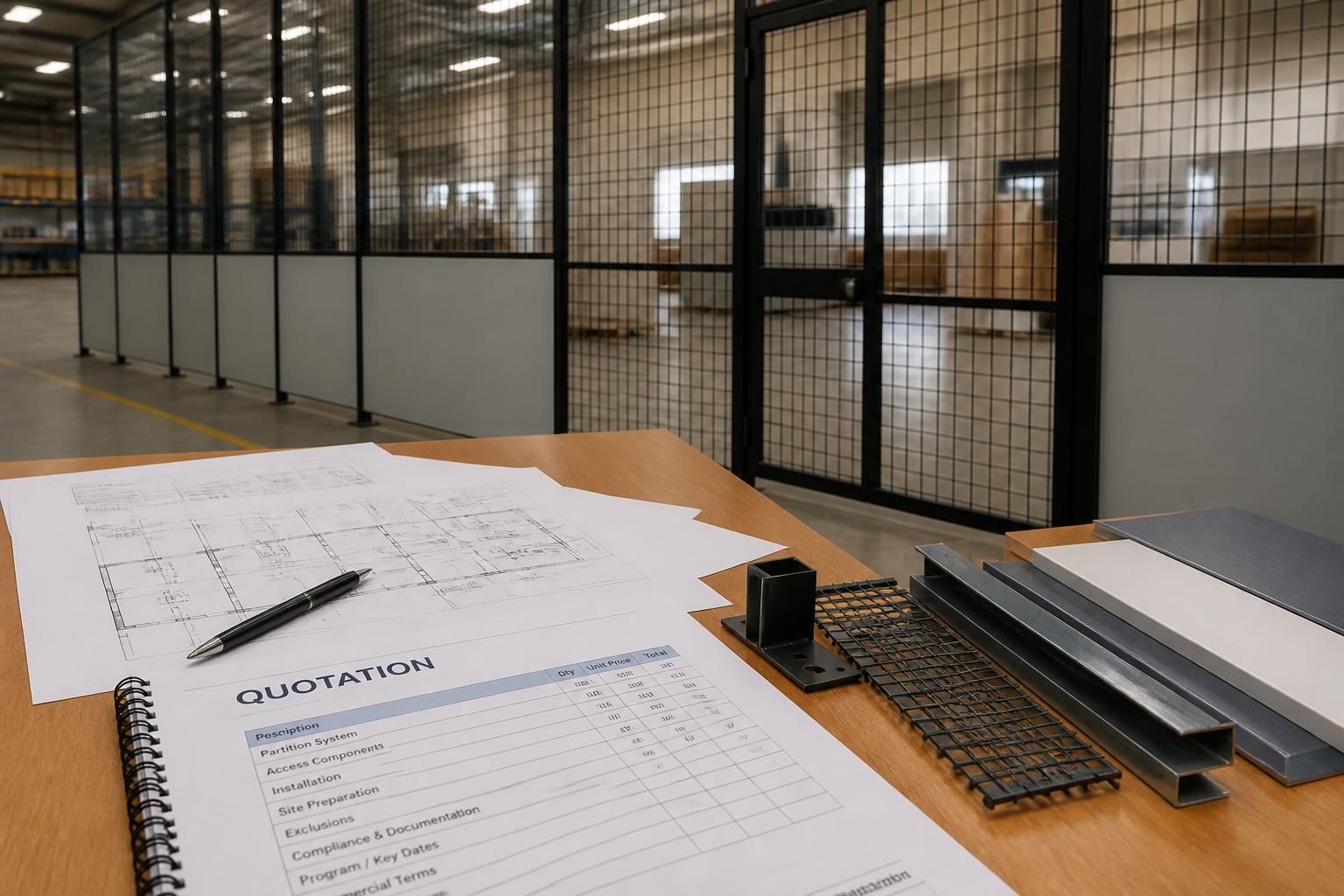
What should an industrial partitioning quotation include?
An industrial partitioning quotation should set out the surveyed layout, system materials, drawings, installation scope, costs, compliance requirements and proposed dates. It should identify project management and commissioning where required, so you can compare what the work includes and what the site requires.
An industrial partitioning quotation should explain the proposed layout, construction, access arrangements, installation work, exclusions, costs and commercial terms. It should give you enough information to compare options against the site, stock, workflow and safety requirements.
Start with the intended use. The quotation should identify what the partitioning will separate and why. This might include stock areas, production space, offices, workstations or controlled access zones. It should also record relevant site requirements, including available floor area, ceiling height, access routes and nearby operations.
The intended use affects the system selected. A mesh partition may support visibility and airflow, while a solid system may provide greater separation. Fixed and modular systems can also suit different installation constraints. The quotation should explain the selected arrangement rather than naming a system without context.
Check the drawings and layout information. A quotation should refer to the surveyed plan or working drawings used for pricing. These documents should show partition lines, doors, gates, corners, openings and interfaces with existing walls or equipment.
Look for dimensions and clearances that affect stock access and movement. The layout should show whether people, handling equipment and service routes can continue operating safely. Any areas that remain unmeasured or require confirmation should be clearly identified.
Confirm the materials and components. The quotation should describe the partition panels, framing, posts, fixings and access components included. It should state the finish where that affects the working environment or appearance.
Doors and gates need particular attention. Check their position, opening direction, locking arrangements and clear width. If the partition includes viewing panels, mesh sections or solid panels, the quotation should identify their locations and purpose.
Review the installation scope. The price should state whether it includes delivery, positioning, assembly, anchoring, adjustments and removal of installation materials. It should also explain what you must provide before work starts.
Site preparation can affect the final cost. Examples include clearing stock, providing suitable access, confirming floor condition and protecting nearby operations. If specialist trades, electrical work, building alterations or making-good fall outside the quotation, those exclusions should be visible.
Where several workplace changes form one project, the quotation should show how the partitioning connects with related work. This may include safety barriers, line marking, office fit-outs or mezzanine floors where they affect the layout. It should identify which contractor carries out each part.
Ask how disruption is addressed. The quotation should describe the expected installation sequence and any access restrictions affecting the work area. It should identify assumptions about working space, stock movements and coordination with other contractors.
Project management may be included from proposal and tender stage through installation and final commissioning where required. If that service is not included, the quotation should make the distinction clear. This helps you understand who coordinates drawings, site activities and completion checks.
Make the cost breakdown readable. A useful quotation separates the partitioning system from access components, installation and other chargeable work. It should identify optional items rather than including them without explanation.
Check whether delivery, site preparation, alterations, taxes and additional visits appear in the stated price or the exclusions. The quotation should also explain how changes are treated if the surveyed conditions differ from the information originally supplied.
Spartan Direct quotations are valid for 14 Business Days from issue. This gives you a defined period for reviewing the proposal before its commercial terms may need confirmation.
Read the compliance information. The quotation should identify the regulations, site rules and safety requirements considered during the design. It should explain any information you must provide about fire arrangements, access control, machinery, hazardous areas or emergency routes.
Compliance details should match the actual installation. A quotation should not rely on broad wording when a specific drawing, product description or site condition affects the requirement. Ask for clarification where the document refers to approval, inspection or commissioning without defining the responsibility.
Check the commercial assumptions. The quotation should name the contracting supplier, identify the documents forming the agreement and state how acceptance takes place. Spartan Direct Limited is registered in England and Wales under company number 3275287.
Proposed dates should be treated as estimates. The supplier’s terms state that it will use all reasonable endeavours to meet agreed dates, but time is not of the essence. This distinction matters when planning stock movements, contractors and operational changes.
Finally, check the process for reporting material defects and the available remedy under the terms. For qualifying defects notified in accordance with those terms, the supplier may repair or replace the materials without charge, or refund the relevant price, at its discretion.
A clear industrial partitioning quotation therefore links the surveyed conditions, selected system and installation responsibilities to one understandable price. If the layout, components, exclusions, compliance duties and commercial terms are all explicit, you can assess the proposal against the space and workflow before approving it.
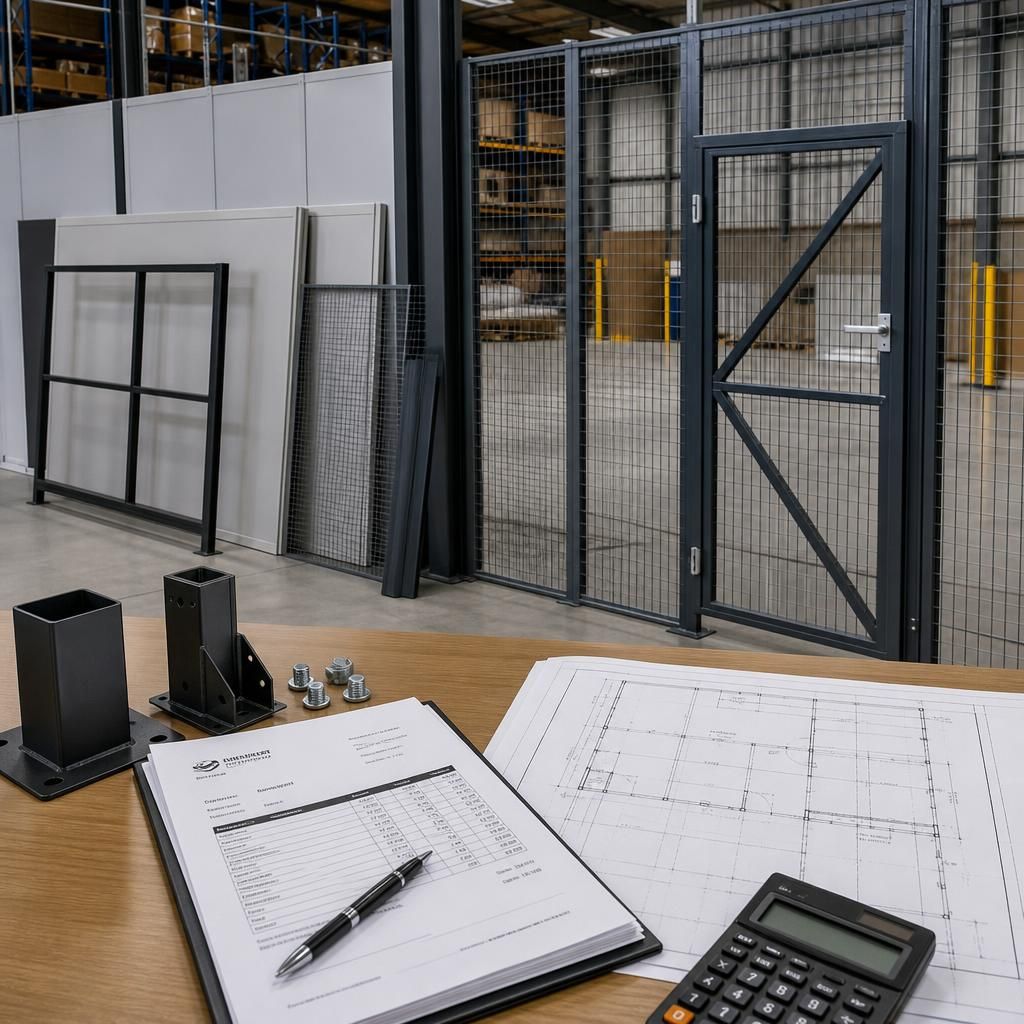
Industrial partitioning quotations should explain how the proposed arrangement accommodates future changes to stock, equipment or working areas.
Ask whether the system can be extended, relocated or altered, and whether the quotation identifies any associated components or later work. This helps you judge the proposal against expected changes, rather than assessing only today’s layout.



